
Which barefoot and zero-drop shoes actually last? Data from 74 shoes reveals surprising patterns about durability, stack height, and which brands deliver the be...
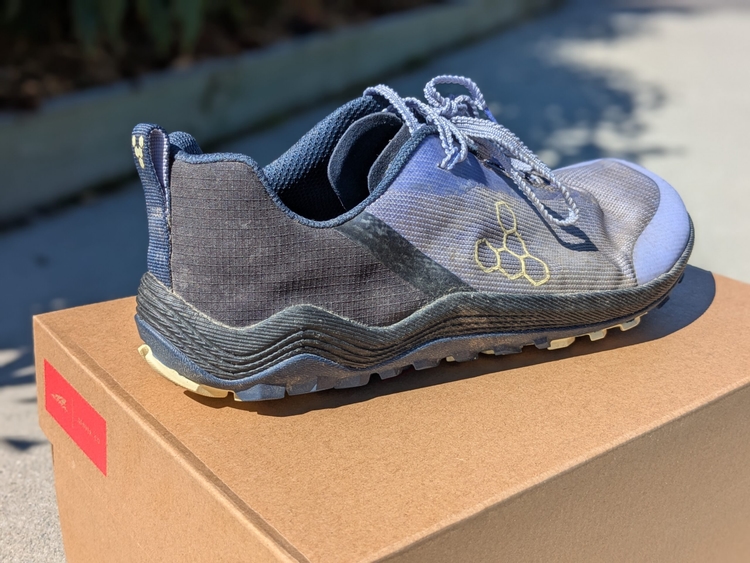
Here’s something nobody talks about enough: buying barefoot shoes that fall apart after 200 miles is expensive and frustrating.
I get it. You’re making the transition to barefoot running. You’ve read the research. You understand the biomechanics. You’ve invested in the right shoes for your foot shape and running style.
And then six months later, the sole is separating, the upper is ripping, and you’re back to square one shopping for replacements.
After reviewing 74 barefoot, minimalist, and zero-drop shoes over the years, I’ve uncovered some surprising patterns about what makes shoes last—and what causes them to fail.
The data reveals something fascinating: durability isn’t random. There are clear correlations between stack height, category, brand manufacturing approaches, and how long your shoes will survive. For an overview of the major shoe categories—barefoot and zero-drop cushioned—see my category guides.
In this deep-dive, I’m sharing exactly what I’ve learned about shoe durability across every category. You’ll see which 29 shoes earned “excellent” durability ratings, which 11 failed early, and most importantly—the patterns that help you predict whether a shoe will last before you buy it. If you want a quick list of just the durable barefoot options, check out my most durable barefoot shoes listicle.
Why Durability Matters More Than You Think
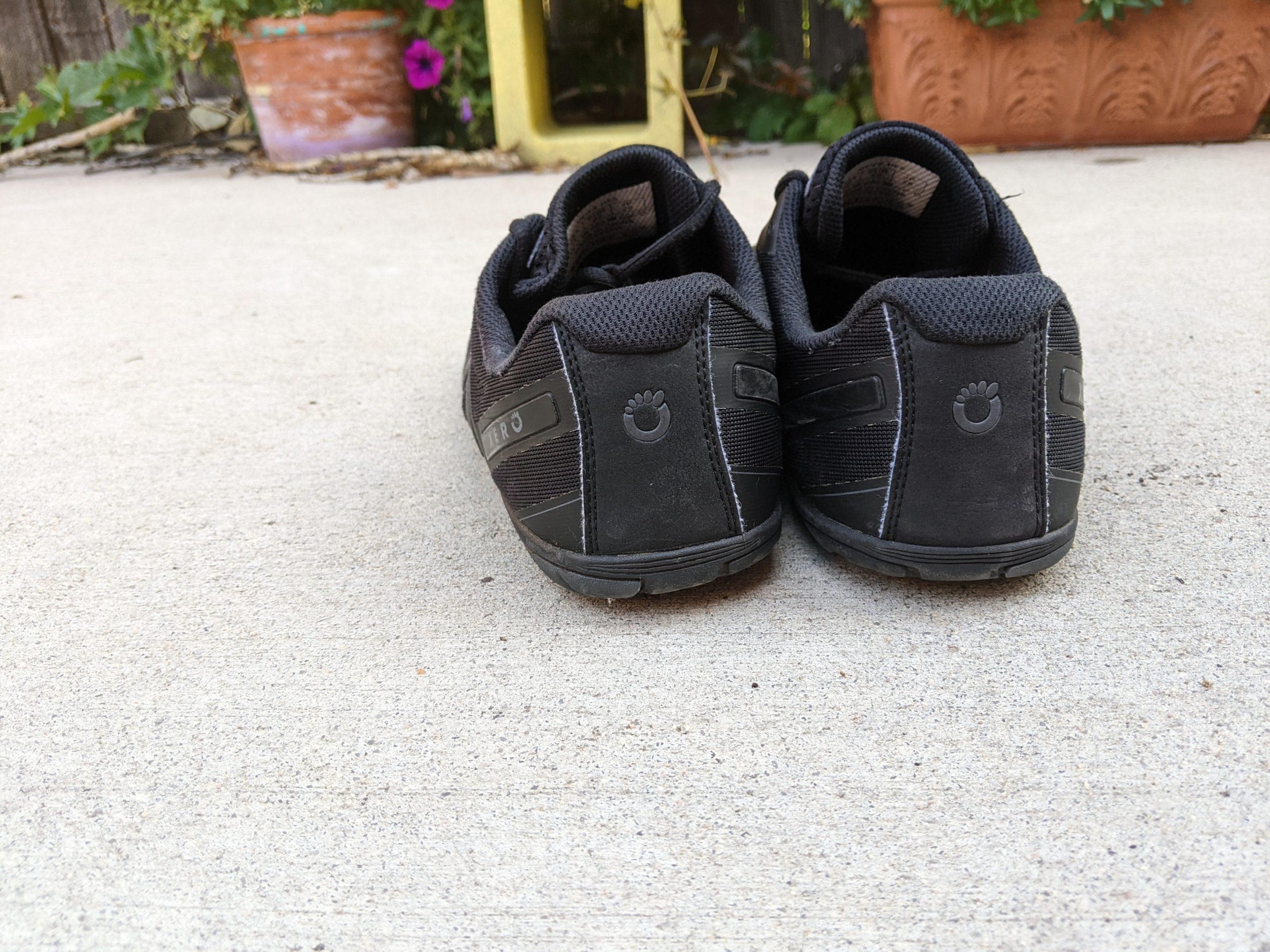
Most runners focus on fit, feel, and ground feel when choosing barefoot shoes—but durability is the hidden cost multiplier that can make or break your budget.
Here’s the math: A $130 shoe that lasts 500 miles costs you $0.26 per mile. That same shoe failing at 200 miles? Now you’re paying $0.65 per mile—2.5 times more expensive.
Over a year of running (let’s say 1,200 miles), the difference between durable and fragile shoes is massive:
- Durable shoe (500 miles): 3 pairs needed = $390/year
- Poor durability (200 miles): 6 pairs needed = $780/year
That’s nearly $400 more per year for shoes that don’t last. And that doesn’t even account for the frustration of constantly shopping for replacements, breaking in new shoes, and losing training time.
But here’s what surprised me most after analyzing 74 shoes: the most expensive shoes aren’t always the most durable. In fact, some of my longest-lasting shoes cost under $120, while several $150+ models failed well before 300 miles.
How I Test Durability: The Real-World Approach
Before we dive into the data, let me be transparent about how I assess durability.
I don’t run every shoe to complete failure in a lab setting. That would take years and isn’t practical for timely reviews. Instead, I use a combination of methods:
- Personal testing: I run in shoes for 50km minimum, noting early wear patterns
- Weak point identification: Checking for design flaws that telegraph future failures
- Material quality assessment: Evaluating rubber compounds, upper construction, and stitching quality
- Long-term follow-up: Revisiting shoes after 300-500km when possible
- Community feedback: Analyzing hundreds of user reviews for durability patterns
- Comparative analysis: Comparing wear rates against similar shoes in the category
The durability ratings in this analysis reflect real-world running, not artificial lab tests. Your mileage will vary based on running surface, gait mechanics, body weight, and usage frequency—but these patterns hold true across most runners.
Now let’s look at what the data reveals.
The Big Picture: Durability Across 74 Shoes
Out of 74 shoes tested, here’s the durability breakdown:
- 29 shoes (39%): Excellent durability – lasting 500+ miles with minimal degradation
- 28 shoes (38%): Average durability – solid 300-500 mile lifespan
- 6 shoes (8%): Above-average durability – better than average but not exceptional
- 5 shoes (7%): Below-average durability – showing premature wear before 300 miles
- 6 shoes (8%): Poor durability – failing before 200 miles or with major defects
That’s nearly 40% of shoes delivering excellent longevity—but also 15% failing early. The goal is to help you land in that top tier consistently.
The 29 Excellent Durability Champions
Let me introduce you to the shoes that genuinely last. These 29 models earned “excellent” durability ratings through consistent performance, quality construction, and proven longevity.
Ultra-Barefoot (4-9mm Stack) – 13 Excellent Shoes
The ultra-barefoot category delivered the highest proportion of excellent durability: 13 out of 29 shoes (44.8%).
Here are the champions in the thinnest stack range:
Pattern observation: Ultra-barefoot shoes (4-9mm) have the LOWEST failure rate at just 6.9%. Only 2 out of 29 shoes in this range rated poor or below-average.
Why ultra-barefoot shoes last longer: Simpler construction with less foam to compress. Thin midsoles mean less material to break down. Direct ground contact promotes a softer foot fall reducing wear (unless there’s biomechanical issues).
Light Barefoot & Minimal (10-14mm Stack) – 4 Excellent Shoes
This middle range had mixed results (only 30.8% excellent), but these four stood out:
Zero-Drop Cushioned (21-33mm Stack) – 12 Excellent Shoes
The zero-drop category delivered 42.9% excellent durability, but with important caveats.
Here’s the surprising finding: While zero-drop shoes have a 17.9% poor/below-average rate (higher than barefoot), the excellent shoes in this category are REALLY excellent. The issue is inconsistency across the lineup.
The Pattern Everyone Misses: Stack Height vs. Durability
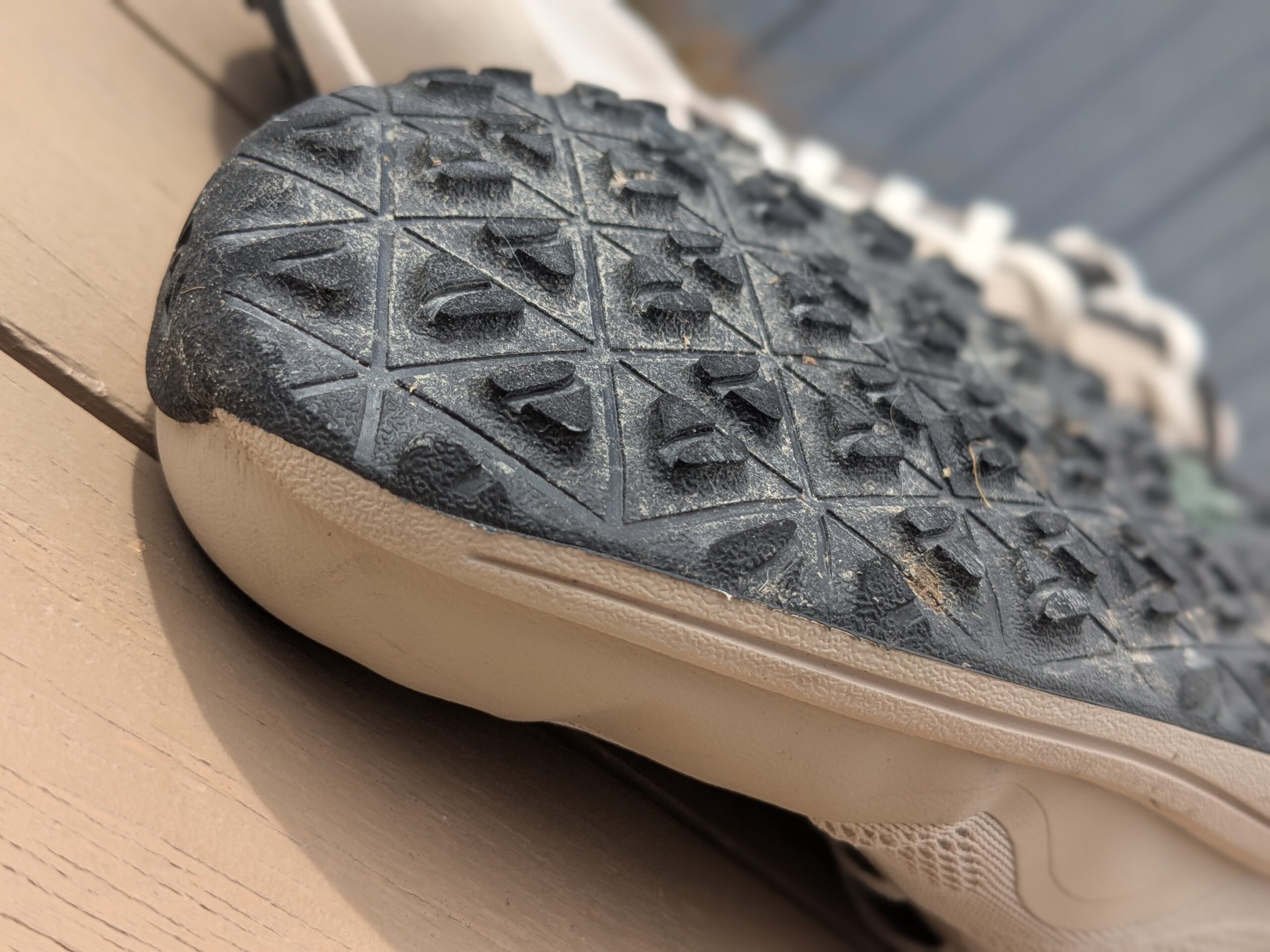
Here’s what surprised me most in this analysis: ultra-barefoot shoes (4-9mm stack) are nearly 3X more reliable than mid-stack shoes.
Look at the failure rates by stack height:
The thinnest shoes have the lowest failure rate. This contradicts the common assumption that “more cushioning = more durable.”
Why does this happen?
-
Optimized gait reduces ground reaction forces: Research shows that barefoot running biomechanics naturally decrease ground reaction forces by 10-20% within 2-8 weeks of transition. When you run in thin-soled shoes, your body adapts to land more softly—shorter stride length, increased cadence, midfoot/forefoot strike instead of heel striking. This gentler landing pattern means less pounding on the shoe materials, which translates directly to slower wear rates. Cushioned shoes mask poor form and allow harder impacts that accelerate outsole degradation.
-
Less foam to compress: Thick midsoles break down over time. The more material, the more degradation. EVA foam loses 30-40% of its cushioning properties after 300-400 miles through compression cycling. Thin rubber soles don’t compress—they wear gradually but predictably.
-
Simpler construction: Minimal shoes have fewer layers, fewer glue points, fewer things to fail. A barefoot shoe typically has 2-3 layers total (outsole, thin midsole, upper). A cushioned shoe has 5-8 layers with multiple foam densities, plates, and bonding surfaces. Each layer is a potential failure point.
-
Direct force distribution: Thin soles spread impact forces more evenly rather than concentrating them in foam compression zones. Cushioned shoes create hotspots where the foam compresses most, leading to uneven breakdown patterns.
-
Material quality: Barefoot manufacturers often use better rubber compounds since they can’t hide poor quality under thick foam. When your entire shoe is 6mm thick, every millimeter matters—brands invest in durable rubber. Cushioned brands can use cheaper materials because the foam does most of the work.
The sweet spot for durability: 4-9mm stack or 21-25mm stack. The 10-14mm middle ground had the worst track record (23.1% failure rate) which I can’t fully explain.
If you want shoes that last, go thin (under 10mm) or commit to light zero-drop (21-25mm). The middle ground is where durability suffers most.
The 11 Durability Disappointments (Poor & Below-Average)
Let’s talk honestly about the shoes that didn’t last. These 11 models showed premature wear, structural failures, or quality issues that cut their lifespan short.
I’m not trashing these shoes—some have redeeming features. But if durability matters to you (and it should), these deserve scrutiny.
Below-Average Durability (5 shoes)
Poor Durability (6 shoes)
These are the failures—shoes that broke down well before 200 miles or had major structural defects.
The most concerning pattern here: Altra shoes dominate the poor durability list. While Altra also has 11 excellent-rated shoes, their lineup is inconsistent. Some models are bombproof (Lone Peak 6-9, Timp 4-5), while others fail early (Mont Blanc series, Olympus 5).
What causes these failures?
- Foam compression: Thick EVA midsoles break down faster than thin rubber soles
- Upper construction: Lightweight mesh sacrifices durability for weight savings
- Aggressive lugs: Deep tread patterns can chunk out on hard surfaces, which makes sense so you have know where you’re using the shoe
- Quality control inconsistencies: Some batches/generations better than others
- Material trade-offs: Softer compounds for comfort wear faster than firm compounds
Brand Durability Report Card
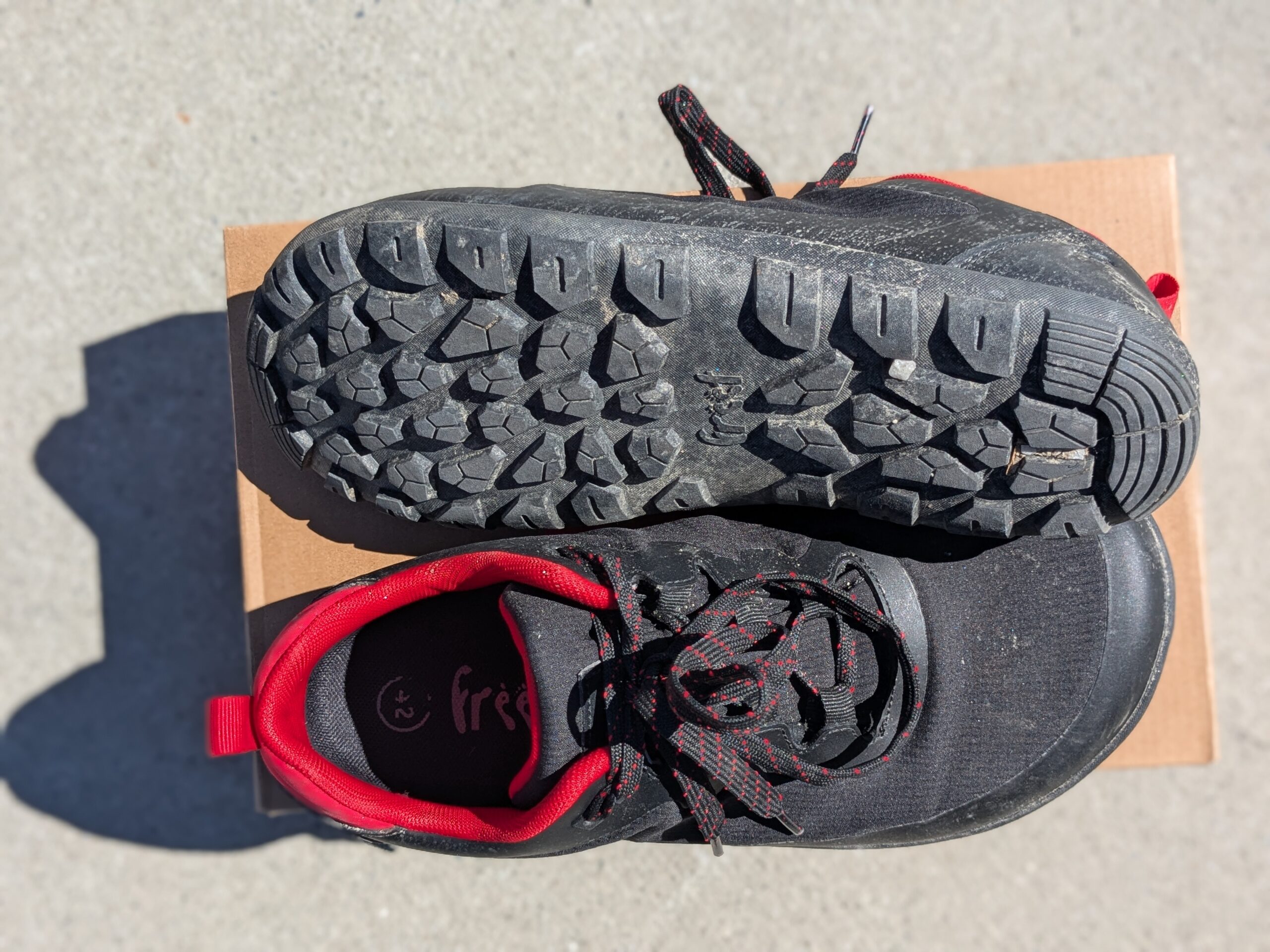
After testing 74 shoes from multiple brands, here’s how they stack up on durability:
Xero Shoes (18 shoes tested)
- Excellent: 7 shoes (38.9%)
- Average: 9 shoes (50%)
- Poor/Below-average: 1 shoe (5.6%)
Verdict: Most consistent brand for durability. Nearly 90% of Xero shoes deliver average or better durability, with only 5.6% failing early. I find that there’s a big difference between the road shoes and trail shoes.
Best bets: HFS, Speed Force II, Forza Runner, Prio Neo
Altra (28 shoes tested)
- Excellent: 11 shoes (39.3%)
- Average: 11 shoes (39.3%)
- Poor/Below-average: 6 shoes (21.4%)
Verdict: Inconsistent. When Altra gets it right (Lone Peak, Superior 7), they’re excellent. But they also have the highest failure rate among major brands at 21.4%.
Best bets: Lone Peak 9, Superior 7, Avoid: Mont Blanc (both versions)
Freet (8 shoes tested)
- Excellent: 1 shoe (12.5%)
- Above-average: 2 shoes (25%)
- Average: 4 shoes (50%)
- Below-average: 1 shoe (12.5%)
- Poor: 0 shoes (0%)
Verdict: Mixed durability performance with only 12.5% below-average failure rate. Innovative designs and good ground feel. The excellent and above-average models (Feldom, Feldom 2, Vibe 2) show what Freet can do when they get it right, and most average models hold up well too. Connect 4 remains the only durability concern.
Best bets: Feldom, Feldom 2, Vibe 2, Keld 2, Skeeby (all average or better) Use caution with: Connect 4
Vivobarefoot (6 shoes tested)
- Excellent: 2 shoes (33.3%)
- Average: 3 shoes (50%)
- Poor/Below-average: 1 shoe (16.7%)
Verdict: Solid mid-tier durability. Premium pricing ($180+) should deliver better results, but quality is generally good. Flow rubber trades durability for ground feel.
Best bets: Primus Trail FG Note: Flow versions wear faster but feel better
Merrell (2 shoes tested)
- Excellent: 2 shoes (100%)
Verdict: Perfect record in limited sample size. Vibram rubber outsoles are legendary. Trail Glove 7 and Vapor Glove 6 both deliver good durability for the price.
Price vs. Durability: Does Spending More Get You More Miles?
The short answer: Not always.
Here’s what the data shows about price and durability:
Under $100 shoes:
- Merrell Vapor Glove 6: $20 (clearance) – Excellent
- WHITIN shoes: Budget pricing – Excellent
$100-130 range:
- Xero HFS: $119.99 – Excellent
- Freet Feldom 2: $110 – Excellent
- Lems Primal 2: $110 – Excellent
- Altra Superior 7: $120 – Average
$150-180 range:
- Altra Lone Peak 9: $150 – Excellent
- Altra Timp 5: $155 – Above-average
- Vivobarefoot Primus Trail FG: $180 – Excellent
- Vivobarefoot Primus Trail Flow: $190 – Below-average
$200+ range:
- Altra Mont Blanc Carbon: $260 – Poor
What does this tell us?
- Budget shoes can deliver excellent durability: WHITIN and clearance Merrells prove you don’t need premium pricing.
- Mid-range ($100-130) is the sweet spot: Best value-to-durability ratio.
- Premium pricing doesn’t guarantee durability: The $260 Mont Blanc Carbon failed early while the $20 Vapor Glove 6 is still going strong.
- Brand matters more than price: A $120 Xero outlasts a $260 Altra.
The most economical approach: Buy proven mid-range models ($100-130) from brands with good durability track records (Xero, Merrell, Topo). You’ll get 80% of the durability at 50% of the price.
How to Predict Durability Before You Buy
Based on 74 shoes tested, here’s my framework for predicting whether a shoe will last:
1. Check Stack Height
- 4-9mm: 93% chance of average or better durability
- 10-14mm: Only 77% chance – higher risk
- 21-25mm: 81% chance – decent odds
- 26mm+: 75% chance – more variable
Safest bet: Under 10mm or 21-25mm range.
2. Evaluate Brand Track Record
- Xero, Merrell, Topo: Proven consistency
- Altra: Research specific model (inconsistent across lineup)
- Vivobarefoot: Generally good but premium priced
3. Look for These Durability Red Flags
- Extremely soft midsole foam: Compresses quickly
- Lightweight mesh uppers: Tear on trails
- Deep aggressive lugs: Chunk out faster
- Complex multi-layer construction: More failure points
- Budget brands with no track record: Risky
4. Look for These Durability Green Flags
- Simple construction: Fewer layers = fewer problems
- Vibram or FeelTrue (Xero Shoes road shoe) rubber: Proven compounds
- Reinforced toe caps: Protect high-wear areas
- Quality stitching: Double-stitched seams hold up
- Moderate lug depth: Deep enough for traction without chunking
- Established models with multiple generations: Refinement over time
The Bottom Line: How to Buy Shoes That Actually Last
After analyzing durability patterns across 74 shoes, here’s what I’ve learned:
If you want shoes that last 500+ miles consistently:
- Choose ultra-barefoot (4-9mm stack) from Xero, Merrell, or Vivobarefoot
– Lowest failure rate at 6.9% – Simple construction = fewer problems – Best value per mile
- Or choose proven zero-drop models (21-29mm stack) from Altra
– Lone Peak 6, 7, 8, or 9 – Timp 4 or Timp 5 – Superior 5 or 6
- Avoid the 10-14mm middle ground unless specific models proven
– Highest failure rate at 23.1% – Only reliable options: Trail Glove 7, Topo ST
- Research specific models, not just brands
– Altra has both excellent (Lone Peak) and poor (Mont Blanc) durability – Don’t assume brand consistency
- Don’t assume expensive = durable
– $260 Mont Blanc Carbon failed early – $119 Xero HFS still going strong after 500+ miles – Sweet spot is $100-130 range
My personal go-to durable shoes:
- Road running: Xero HFS ($119.99) – Simple, reliable, lasts forever
- Trail running: Vivobarefoot Primus Trail FG ($180) – Firm Ground rubber is nearly indestructible, excellent durability for technical terrain
- Speed work: Xero Speed Force II ($109.99) – Racing flat that doesn’t sacrifice longevity
- Budget option: Merrell Vapor Glove 6 (clearance pricing) – When you can find it on sale
- Max cushion: Altra Torin 8 ($170) – Road-specific max cushion with reliable durability
The durability truth nobody wants to admit: The thinnest, simplest shoes often last the longest. Not because they’re “better” overall, but because there’s less to break down.
If you’re tired of replacing shoes every 200 miles, go thin (under 10mm) or stick with proven zero-drop models. Avoid the middle ground. Buy from brands with track records (Xero, Merrell, Topo). And rotate your shoes to extend their life.
Your wallet will thank you. And you’ll spend less time shopping for replacements and more time actually running.