
Can barefoot shoes help with plantar fasciitis? A running coach's honest take on the controversy, what the research says, and how to transition safely.
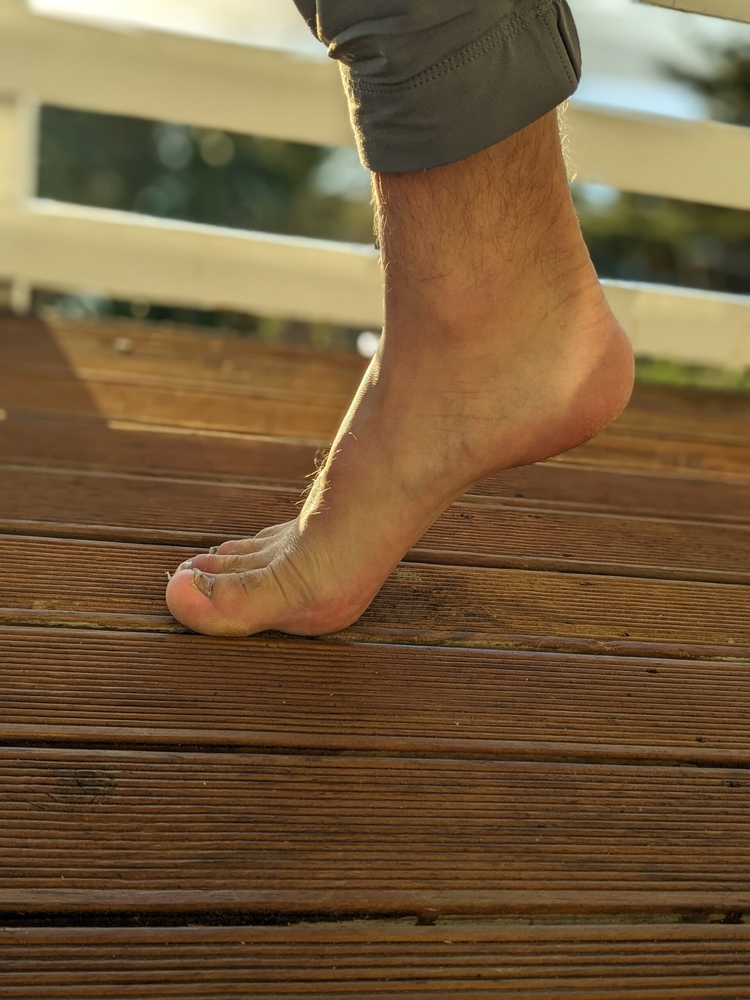
I developed plantar fasciitis while working in a running shoe shop. Ironic, right? I was on my feet all day on concrete floors, running heavily outside of work, and completely failing to do any prehab or foot strengthening. My feet paid the price.
That experience taught me something important: plantar fasciitis doesn’t care how much you know about shoes. It cares about how you treat your feet.
Since then, I’ve tested 37+ barefoot and minimal shoes, earned my UESCA running coaching certification, and helped hundreds of people transition to more natural footwear. The question I get asked more than almost any other? “Can barefoot shoes help with plantar fasciitis — or will they make it worse?”
The honest answer is: it depends. Let me explain.
I’m not a doctor or physiotherapist. I’m a UESCA-certified running coach who has tested 37+ barefoot shoes. This guide shares my experience and interpretation of research — it is not medical advice. If you have plantar fasciitis, consult a medical professional before changing your footwear.
Affiliate Disclosure: By clicking through the links on this page and purchasing the products, you’ll be helping me out. This is done because I receive a kickback from the sellers at no extra cost to you! Thank you so much for supporting us!
What Is Plantar Fasciitis?
The plantar fascia is a thick band of connective tissue that runs along the bottom of your foot, from your heel bone to the base of your toes. It supports your arch and plays a critical role in the “windlass mechanism” — the process that stiffens your foot during push-off when you walk or run.
Plantar fasciitis — or more accurately, plantar fasciopathy, since research shows it’s often more degenerative than inflammatory — is one of the most common causes of heel pain. It affects roughly 10% of people over their lifetime and accounts for about 10% of all running injuries.
The risk factors are well-established: higher BMI, prolonged standing on hard surfaces (hello, running shoe shop on concrete), reduced ankle flexibility, weak intrinsic foot muscles, and simply doing too much too soon. Runners are particularly vulnerable because of the repetitive load on the plantar fascia with every stride.
Here’s the thing — many of these risk factors point back to how we use our feet. And that’s where the barefoot shoe debate gets interesting.
Can Barefoot Shoes Help with Plantar Fasciitis?
This is genuinely controversial. Ask a podiatrist and you’ll get one answer. Ask a barefoot running coach and you’ll get another. So let me lay out both sides honestly.
The case for barefoot shoes
The strongest argument for barefoot shoes is that they strengthen the intrinsic muscles in your feet. These are the small muscles that support your arch from the inside — think of them like a “foot core,” similar to how your trunk core stabilises your spine.
When these muscles are weak, the plantar fascia has to pick up the slack. It bears more of the load, and over time, that excess strain can contribute to fasciopathy.
Research backs this up. A 2016 systematic review found a significant association between intrinsic foot muscle weakness and painful foot conditions, including plantar fasciitis. And a 2015 study by Harvard researcher Daniel Lieberman and colleagues showed that the toe springs built into most conventional shoes actually reduce the work your foot muscles have to do — essentially letting them get lazy.
Barefoot and minimal shoes reverse this. Without the built-in support, your foot muscles are forced to work. And they respond. A 2021 study from the University of Liverpool found that six months of daily activity in minimal footwear increased foot strength by an average of 57.4%. Another study found that simply walking in minimalist shoes was as effective as dedicated foot strengthening exercises for building foot muscle size and strength.
There’s also the zero-drop argument. Most conventional shoes elevate your heel 8-12mm above the forefoot. Research has shown that habitual heel elevation can shorten your calf muscle fibres by around 13%. A tight posterior chain — calves, Achilles tendon, and plantar fascia are all connected — means more tension on the plantar fascia itself. Zero-drop shoes allow your foot to sit in a more natural position, potentially reducing this tension over time.
The case against barefoot shoes
Here’s where I have to be honest: barefoot shoes can absolutely make plantar fasciitis worse if you do it wrong. And “doing it wrong” is far easier than most people think.
A well-known 2013 study tracked runners transitioning to Vibram FiveFingers over 10 weeks. The result? 53% of them developed bone marrow edema in their feet, and two sustained stress fractures. Ten weeks of gradual transition wasn’t enough for most of them.
If you’re already dealing with an irritated plantar fascia, suddenly stripping away all the cushion and support is like asking someone with a sore shoulder to start doing heavy overhead presses. The tissue needs to be loaded progressively, not shocked.
The timing matters enormously. During an acute flare-up, when every step hurts, your plantar fascia needs load management — not a new challenge. Jumping into barefoot shoes at this stage is one of the worst things you can do.
So which is it?
My position, after years of coaching and personal experience: barefoot shoes are part of the long-term solution, not a short-term fix. Strengthening your feet is genuinely important for plantar fascia health. The research supports this clearly. But the transition has to be managed carefully, especially if you’re already in pain.
I’ve advised readers dealing with PF to start extremely slowly. One reader came to me with plantar fasciitis and Achilles tendonitis — I recommended starting with cushioned zero-drop shoes like the Altra Torin 8 or Rivera 4, then progressing to more flexible options like the Escalante 4 after six months, and eventually stepping down to truly minimal shoes. Another reader with PF, high arches, and a higher body weight — I suggested going straight to minimal shoes like Xero Shoes HFS II, but with an incredibly slow buildup. Five minutes of walking per day to start.
Both approaches work. The common thread? Go slow.
What the Research Actually Says
I want to be transparent about what we know and what we don’t. As a UESCA-certified coach, I think it’s important to separate what’s well-proven from what’s plausible but not yet confirmed.
Well-supported by research:
- Minimal footwear strengthens intrinsic foot muscles. Multiple studies with MRI and ultrasound measurements confirm this — increases of 18-57% in muscle size and strength over 12-24 weeks.
- Weak intrinsic foot muscles are associated with plantar fascia problems. The muscles and fascia share the load of supporting your arch.
- Habitual heel elevation shortens calf muscle fibres. This is well-documented in research on high-heel wearers.
- Too-rapid transition to minimal shoes causes injuries. The bone stress evidence is clear.
- Progressive loading helps plantar fasciitis. A 2015 study found that high-load strength training (heel raises with a towel under the toes) was more effective than stretching alone for PF recovery.
Plausible but not directly proven:
- That the foot-strengthening effect of minimal shoes specifically prevents or treats plantar fasciitis. The logic is sound — stronger muscles, less fascial strain — but no large trial has connected these dots directly.
- That zero-drop shoes reverse calf muscle shortening from years of heeled shoes. It’s mechanistically logical, but nobody has measured this in a controlled study.
One small study worth noting: A 2022 case series of 20 runners with plantar fasciitis found that a six-week barefoot running programme on grass significantly reduced their pain. Promising, but it was uncontrolled with a small sample. I wouldn’t call that proof, but it aligns with the broader picture.
I’m not going to oversell this. Nobody has proven that barefoot shoes cure plantar fasciitis. What the evidence does show is that foot strength matters, progressive loading helps, and minimal shoes are one of the most effective ways to build that strength. Connect the dots as you see fit — but ideally, with a physiotherapist’s guidance.
How to Transition If You Have Plantar Fasciitis
If you’ve spoken with a medical professional and want to explore barefoot shoes, here’s how I’d approach it based on my coaching experience.
Start with walking, not running
Much of the benefit from minimal shoes comes from walking. Don’t even think about running in them at first. Walking gives your feet the stimulus they need to adapt without the impact forces that running adds. Your plantar fascia will thank you.
The 5-minute protocol
This is the exact advice I give readers who email me about transitioning with foot pain:
- Week 1: 5 minutes of walking in your new shoes per day. Then switch back to your regular shoes.
- Week 2: 6-7 minutes per day.
- Week 3: 8-10 minutes per day.
- Continue increasing gradually — adding a few minutes each week.
I know it sounds absurdly slow. That’s the point. Your feet need time to build strength, and your plantar fascia needs time to adapt to different loading patterns. Rushing this is how people get hurt.
Two paths to consider
Path A: Cushioned zero-drop first. Start with shoes that have zero heel-to-toe drop but still offer cushion and some stiffness. The Altra Torin 8 or Rivera 4 are good examples — they’ll change how your foot loads without stripping away all protection. After six months, move to something more flexible like the Altra Escalante 4. Eventually, step down to truly minimal shoes.
If you’re not sure about the differences between these categories, I break it down in my barefoot vs minimalist vs zero-drop guide.
Path B: Straight to minimal with very slow buildup. If you’re willing to go extremely slowly — we’re talking months before wearing them for a full day — you can start with genuinely minimal shoes like Xero Shoes HFS II. The advantage is that you get more ground feel and muscle engagement from day one. The trade-off is that there’s less margin for error. This path works best if you’re patient and disciplined about the 5-minute protocol.
For a detailed framework on progression, check out my 4 phases of transitioning to barefoot shoes and the best bridge shoes for the transition.
Rotate your shoes
Don’t go all-in on one pair. Rotating between different shoes changes the forces and loading patterns your feet experience. This spreads the load across various muscles and joints, which reduces the risk of overuse injury — the most common type of running injury. I rotate through multiple pairs myself, and I recommend the same for anyone transitioning, especially with PF.
Listen to your body
If your heel pain increases, back off. This isn’t a “push through it” situation. A little foot fatigue after your 5 minutes of walking is normal — your muscles are working in a new way. But sharp pain in your heel or a worsening of your PF symptoms means you’ve done too much, too fast.
If that happens, take a few days off from the minimal shoes, let things settle, and restart at a lower duration. And if it keeps happening, see a physiotherapist. There’s no shame in getting professional help — I always tell readers that the best people to guide you on injury recovery are physios, not shoe reviewers.
Frequently Asked Questions
Can barefoot shoes cause plantar fasciitis?
Yes, if you transition too quickly. Switching abruptly from cushioned, supportive shoes to minimal footwear dramatically changes the forces on your feet. Without a gradual buildup, this can overload the plantar fascia and other structures. The research is clear that too-fast transitions cause injuries. Go slow.
Should I wear barefoot shoes if I have plantar fasciitis?
It depends on where you are with it. During an acute flare-up with significant pain, focus on load management and consult a physio first. Once the acute phase has settled and you’re looking at long-term foot health, a very gradual transition to barefoot shoes — starting with just minutes per day of walking — can be part of the picture. But this is a months-long process, not a quick fix.
How long does it take to transition to barefoot shoes with PF?
Months, not weeks. For someone without foot issues, I typically suggest 6-12 months for a full transition. With plantar fasciitis, expect it to take longer. Listen to your body, progress gradually, and don’t set a deadline. The goal is lifelong foot health, not a sprint to a specific shoe.
Do I need arch support for plantar fasciitis?
This is where it gets interesting. Conventional wisdom says yes. But the “foot core” research suggests that external arch support may actually weaken the muscles that should be doing that job. Orthotics can provide short-term relief, and there’s evidence for that. But they don’t address the underlying weakness. Long-term, building intrinsic foot strength — through exercises, minimal footwear, or both — is worth considering. Talk to your physio about what makes sense for your situation.
The Bottom Line
Barefoot shoes are not a cure for plantar fasciitis. Let’s be clear about that. But strengthening your feet is part of the long-term picture, and the research strongly supports minimal footwear as an effective way to do it.
The key is transition speed. Every person I’ve helped with this has succeeded by going painfully slow — 5 minutes a day to start, building up over months. The ones who get hurt are the ones who jump in too fast.
Consider trying barefoot shoes for PF if:
- Your acute pain has settled and you’re focused on long-term prevention
- You’re willing to commit to a very gradual transition (months, not weeks)
- You’ve consulted a physiotherapist or medical professional
- You’re open to starting with just a few minutes of walking per day
Hold off on barefoot shoes if:
- You’re in the middle of an acute PF flare-up with significant pain
- You want a quick fix (barefoot shoes aren’t one)
- You’re not willing to go slow — the transition demands patience
- You haven’t had your condition assessed by a medical professional
If you’re interested in starting, my transition guide lays out the full framework. And remember — I’m just Nick, a running coach writing on the internet. For anything injury-related, a good physiotherapist is worth their weight in gold.
If you want extra guidance, my inbox is always open on Instagram and via email.