
Discover the best barefoot and zero-drop road shoes. Expert reviews and comparisons of the Vivobarefoot Primus Flow, Freet Vibe 2, Xero Speed Force 2, ...
You know that feeling when you’re standing at your door, trying to decide which road shoe to grab for today’s run, and nothing feels quite right? Too stiff here, too narrow there, too much shoe everywhere?
Finding the best barefoot road shoescan be challenging. Here’s the thing:** the biggest factor in choosing a road shoe isn’t stack height, weight, or even brand—it’s fit.** A shoe can have the perfect amount of ground feel and be featherlight, but if it doesn’t match your foot shape, you’re not going to have a good time on the roads.
I’ve spent 2025 testing eight different zero-drop and minimalist road shoesacross the entire barefoot spectrum—from ultra-minimal racers to cushioned trainers. I’ve raced in some of them. I’ve logged easy recovery miles in others. And I’ve reached for each of them for very different reasons throughout the year. These** barefoot running shoes** represent the best options available for foot-shaped, natural running in 2025.
What makes this roundup different is that I’m organizing these shoes by fit profile AND minimalism level, not just by price or brand. Because that’s what actually matters when you’re trying to decide which shoe works for your foot and where you are in your barefoot journey.
Here’s what we’re covering:
Ultra-Minimal (4-7mm Stack):
- Vivobarefoot Primus Flow – Lightest option for narrow feet
- Vivobarefoot Primus Lite III – Eco-friendly everyday minimal for narrow feet
- Xero Shoes Speed Force 2 – True barefoot racing flat for average feet
- TSLA Minimal – Budget-friendly entry point
Balanced Minimalism (10-15mm Stack):
- Freet Vibe 2 – Wide-fit versatility champion
- Bahé Revive Flex – Grounding technology with balanced cushion
Minimal with Cushion (18-24mm Stack):
- Altra Escalante Racer 2 – Zero-drop speed with responsive foam
- Altra Escalante 4 – Maximum cushion daily trainer
All eight are zero-drop. All offer excellent ground feel relative to their stack heights. And all have proven themselves throughout the year. But each one fits a very different foot and serves a different purpose—and that’s exactly what makes them worth talking about.
Let’s break down which one belongs in your rotation.
Section 1: Ultra-Minimal Road Shoes (4-7mm Stack)
These shoes are for experienced barefoot runners who want maximum ground connection.
Vivobarefoot Primus Flow
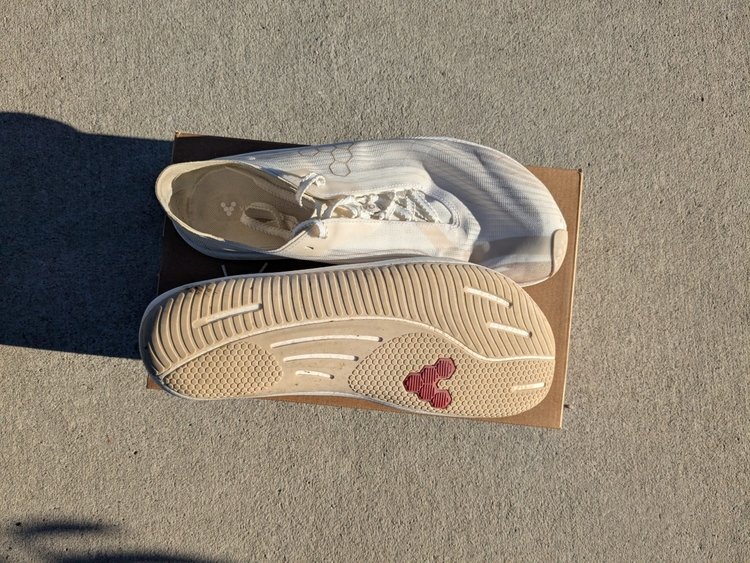
If you’ve got narrower feet and you’re already well-conditioned to barefoot running, the Primus Flow is one of the most connected, responsive road shoes you can put on your feet. At just 150g for a men’s EU 42, this is a performance-focused option that delivers as close to barefoot as road shoes get.
Fit: Narrow, Long, and Deep
The Primus Flow runs relatively narrow for a barefoot shoe, especially around the little toe area. The taper comes in pretty quickly on that side, creating a more restrictive toe box than most barefoot runners expect. The big toe side is nicely squared off, but if you have a wide forefoot, this shoe likely won’t work for you.
The shoe fits quite long, which is typical for Vivobarefoot. But here’s the thing: because of the narrow nature of this shoe, even though it runs long, you’ll likely still need that extra length to get adequate width through the midfoot and forefoot. Don’t be tempted to size down.
The shoe fits deeper than many other Vivobarefoot models , mainly because it ships without an insole. You’re sitting right on top of the footbed, which gives you immediate ground connection from the start. This added depth is a welcome change from shallower Vivo models and will particularly benefit those with higher arches or more volume.
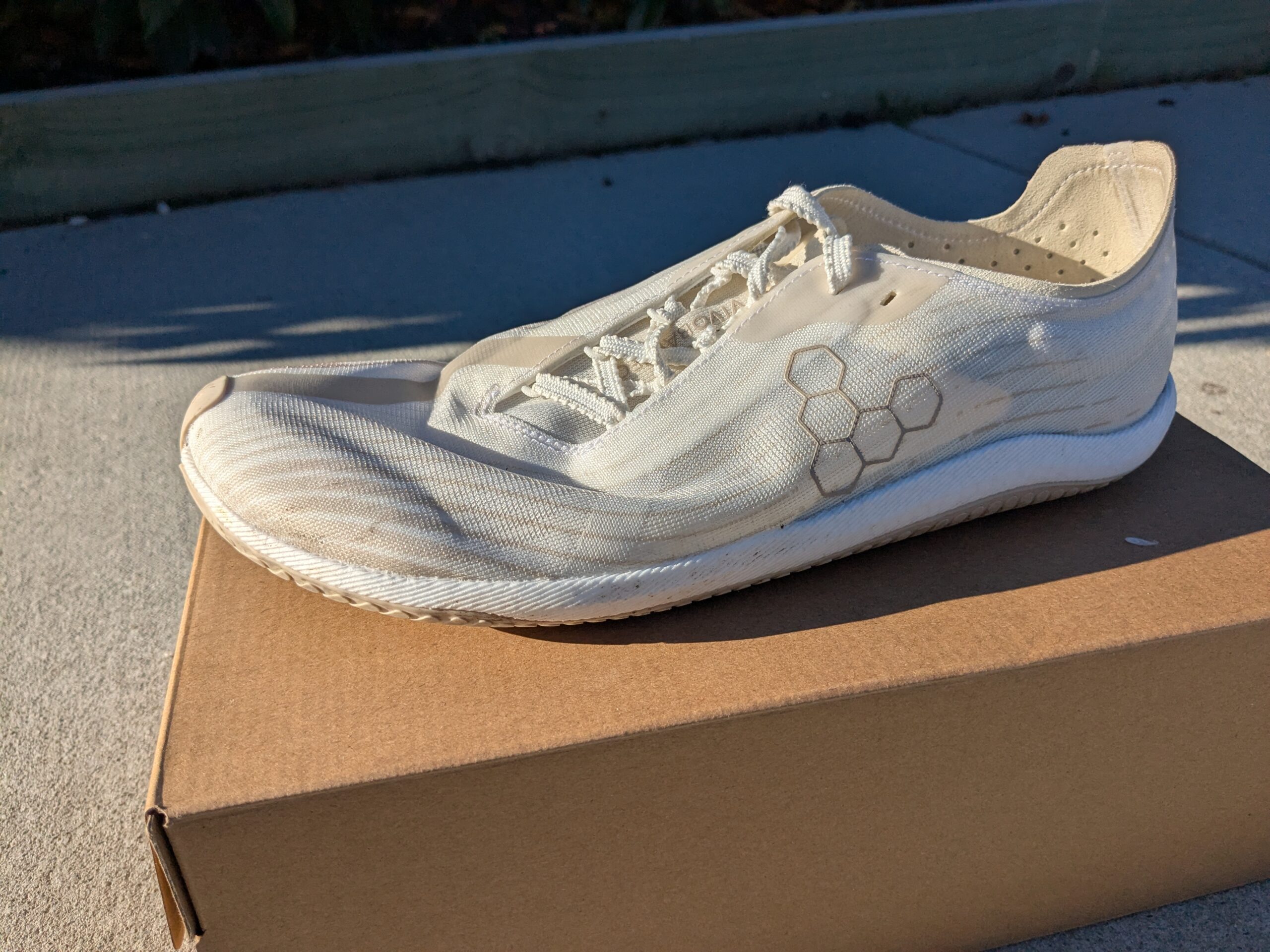
The heel lockdown is exceptional. The internal collar uses a faux vegan leather that feels slightly tacky, allowing the heel to seat deeply and lock in with minimal slippage. Combined with the extended eyelet system, the shoe provides an impressive, dialed-in rearfoot hold. Even using the lower eyelet, the lockdown is fairly aggressive—you’ll need to fully loosen the laces to get these off.
The tongue is made from a thin, grippy material that makes getting your foot in and out somewhat challenging. You’ll need to reposition the tongue pretty much every time you put the shoe on. On the plus side, this grippy nature means the fit over the midfoot is very secure—there’s no slipping around at all.
Feel: Truly Minimal Protection
This is a very stripped-down road shoe. We’re talking minimal materials, minimal protection, and maximum ground feel. And you know what? That’s exactly what makes it special.
The underfoot cushioning is minimal—we’re talking 6mm total stack height. There’s a thin layer of foam between your foot and the outsole, but it’s so minimal that you get pure, unfiltered ground feedback. You feel quite a lot underfoot, though not to the point where it becomes painful. But make no mistake:** you need to be very well-conditioned to barefoot running to use this shoe comfortably for any distance.**
At 150g, this is one of the lightest road options out there. That low weight definitely improves agility and speed. You can move quickly and change direction easily. There’s a definite sense of “am I even wearing shoes?” that every minimal runner craves.
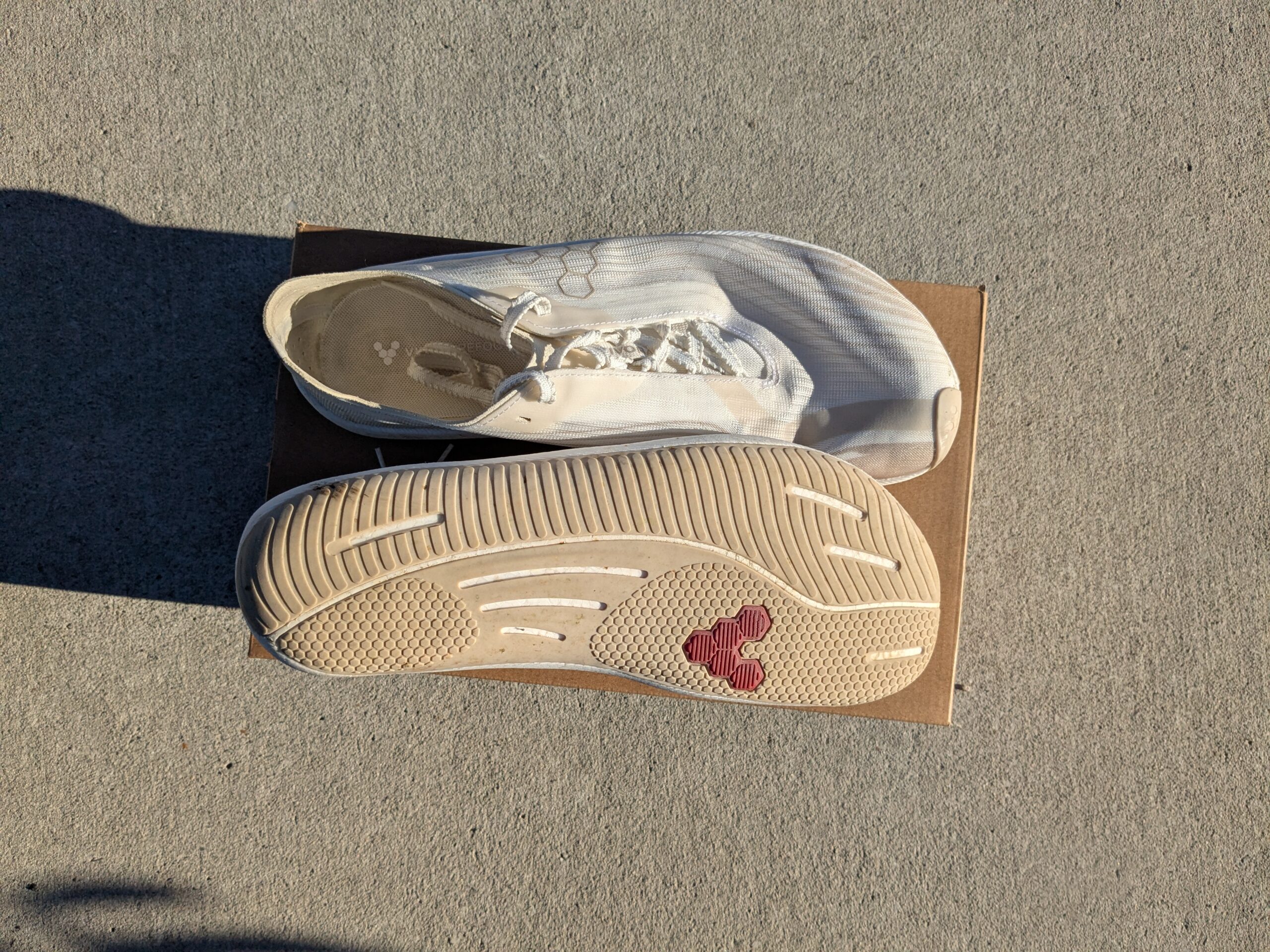
The outsole is a continuous, full-coverage rubber about 2mm thick —lightweight for sure, but it doesn’t deliver much grip, especially on wet surfaces. In dry conditions, it’s fine, but add water, and I felt the shoe getting skittish. For controlled training or dry pavement, it works. For wet-weather running or aggressive cornering, look elsewhere.
The upper is surprisingly stiff and structured for such a minimal shoe. The woven plastic mesh upper offers breathability but minimal give. There’s very little stretch—great for secure running, less so if you want casual flexibility. The result is a shoe that doesn’t let your foot slide around even at high speed, but also doesn’t mold or soften with time like softer meshes can.
Performance: Pure Barefoot Connection
I’ve trained in this shoe extensively, and it delivers when you want that pure barefoot connection. The lightweight design makes you feel fast and precise on roads. You can pick up the pace and really feel the ground beneath you, which is invaluable for form work and technique refinement.
This shoe forced me to run differently—and that’s the point. It pushes you into a precise, efficient barefoot strike. If you’re looking to re-train your form or want a shoe that demands proper technique, this is actually a solid platform.
But this is not a beginner barefoot shoe. If you’re new to minimal running, start with something more forgiving and work your way down. The Primus Flow is for runners who’ve put in the time conditioning their feet and lower legs.
Durability: The Compromise You’re Making
Here’s where things get concerning, especially given the premium price tag.
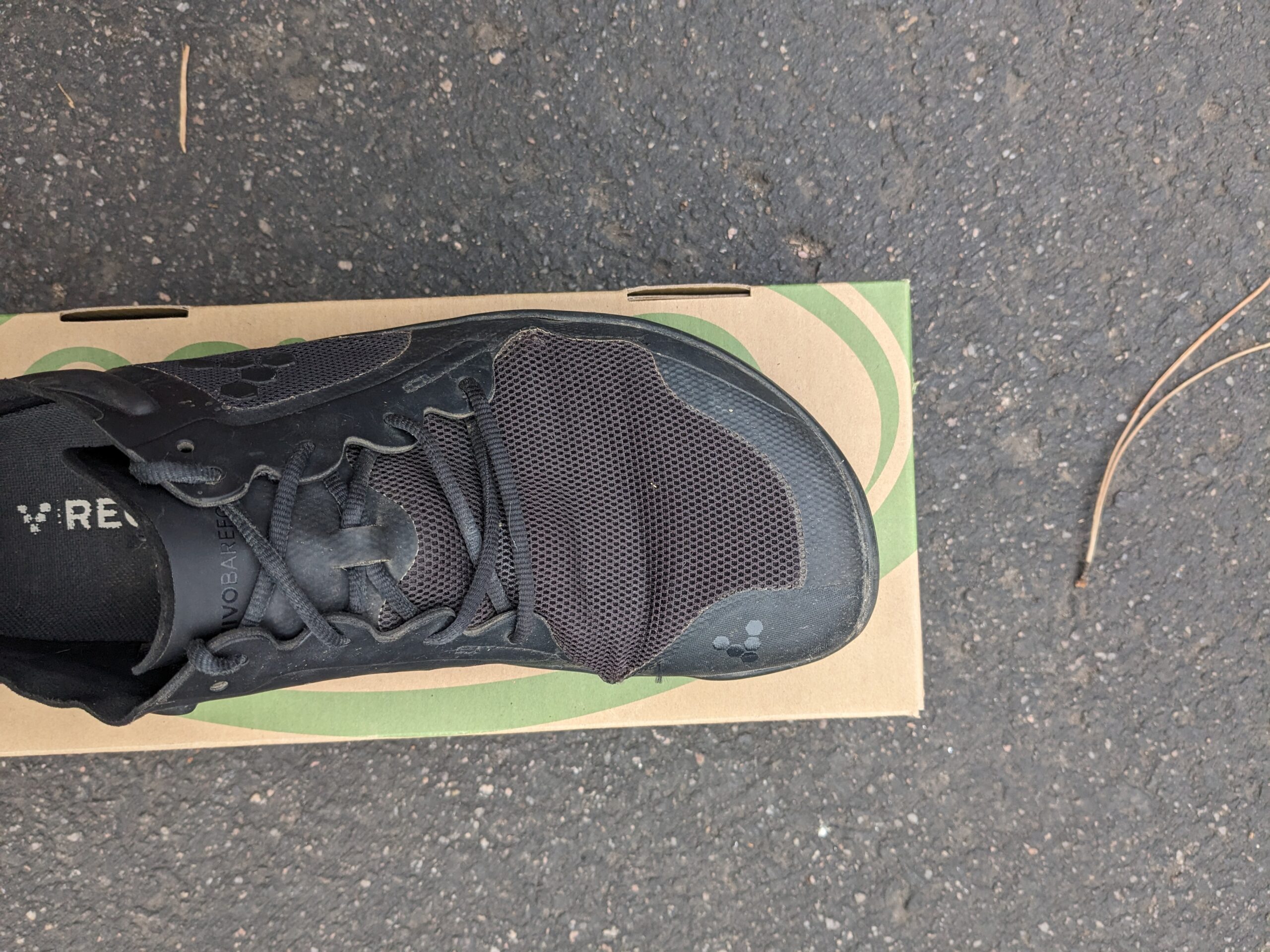
The mesh upper has minimal reinforcement in the toe box area. This means the mesh over your toes will likely be the first thing to wear through. At the crease points—a common weak spot on Vivobarefoot shoes—there’s minimal protection.
The outsole is only 2mm of rubber, and I’m already seeing wear after moderate mileage. I don’t expect this outsole to last a huge amount of distance. The rubber compound seems to prioritize grip over longevity, which is a choice Vivobarefoot made, but it’s one you need to be aware of.
Bottom line: this is not the most durable option. If you’re putting in serious mileage on roads, you’ll be replacing these sooner than you’d like. This is clearly a performance-focused shoe where weight and feel were prioritized over longevity.
Who Should Buy This
Get the Primus Flow if:
- You have narrower feet, especially through the little toe area
- You’re already well-conditioned to barefoot running
- You prioritize ultra-lightweight agility and pure ground feel
- You primarily run dry roads and want maximum barefoot connection
- You want the lightest, most minimal road shoe available
Skip this shoe if:
- You have wider feet or need volume through the midfoot
- You’re new to barefoot running and need more protection
- You put in high mileage and need shoes that last
- You frequently run in wet conditions or need reliable traction
- You want cushioning for longer recovery runs
Vivobarefoot Primus Lite III
The Primus Lite III is what happens when Vivobarefoot takes their minimal philosophy and makes it accessible for everyday life. At 7.5mm stack (4mm + removable 3.5mm insole), this sits between the ultra-minimal Flow and more cushioned options, making it ideal for all-day wear and varied activities.
Fit: Narrow European with Better Toe Room
The Primus Lite III shares Vivobarefoot’s narrow European fit profile, but with slightly more accommodation than the Flow. The toe box is genuinely wide and squared off , allowing natural toe splay even during long wear periods.
The midfoot runs narrow, which works well for slender feet but may feel constrictive for those with wider foot shapes. The heel cup is shallow and unpadded—typical of Vivobarefoot’s minimal aesthetic.
Sizing runs long like most Vivobarefoot models. I recommend going true to size—the extra length helps accommodate the narrow fit through the midfoot. The low volume means you’ll want to ensure you don’t size down, as you need that length to prevent toe crowding.
The fit is shallower than average , which benefits runners with low-volume feet but can feel restrictive for those with higher arches or thicker feet. Remove the insole if you need more vertical space.
Feel: Balanced Minimal for Everyday
At 7.5mm total stack, the Primus Lite III delivers substantial ground feel while offering slightly more protection than the Flow. With the insole removed, you’re at just 4mm—pure minimal territory. With it in, you get enough cushioning for comfort during all-day wear.
The flexibility is excellent. The shoe bends and moves naturally with your foot, making it suitable for varied activities from running to gym work to casual wear. There’s no rigid spots or stiff sections that restrict natural foot motion.
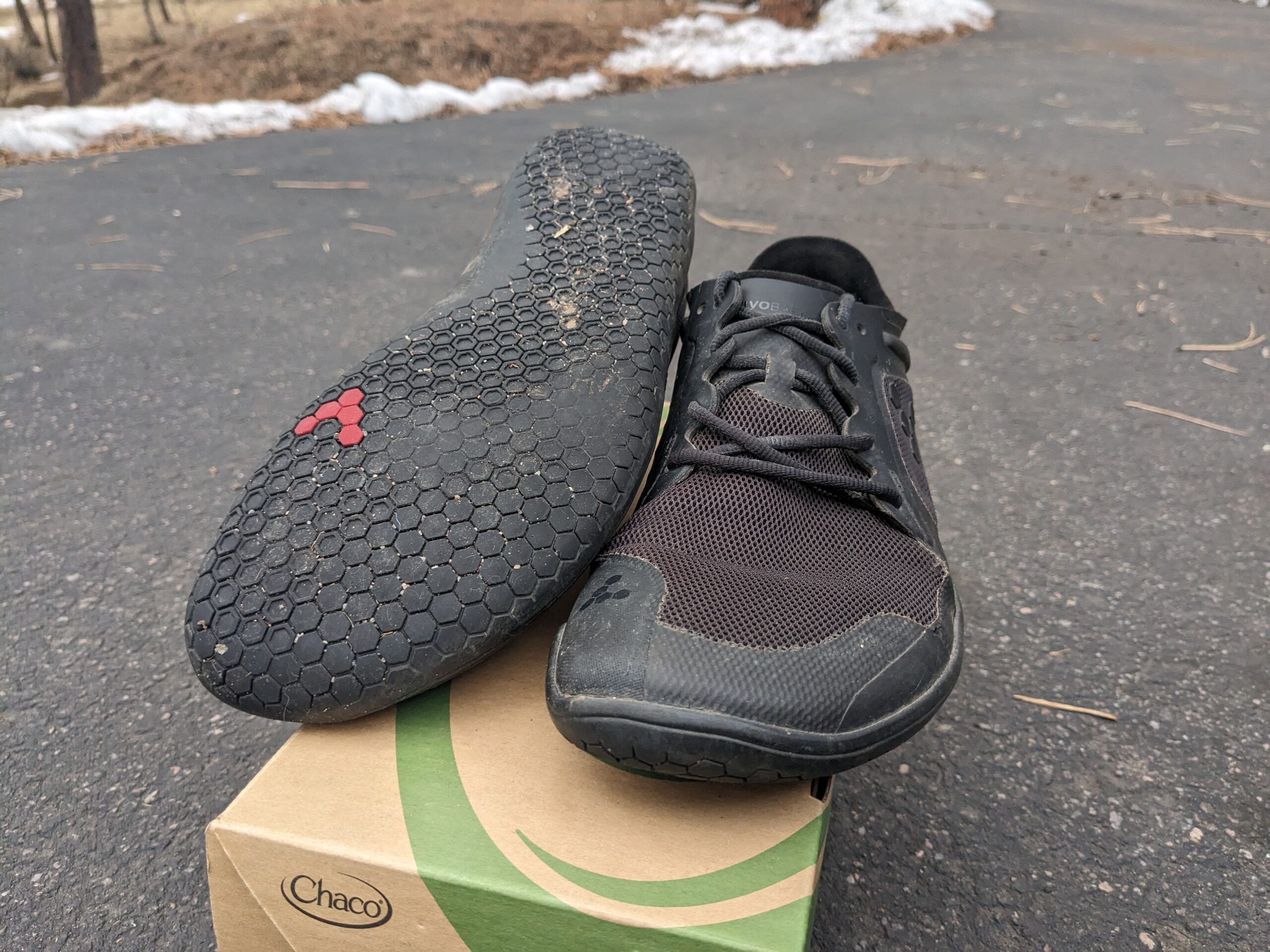
The upper uses recycled materials that feel softer and more forgiving than the Flow’s structured mesh. This makes the Lite III more comfortable for extended wear and gives it a more lifestyle-friendly aesthetic. You can wear these to the office or out casually without looking like you’re wearing running shoes.
The outsole uses a 4mm rubber layer that provides decent traction on roads and smooth surfaces. It’s not as grippy as dedicated running shoes, but it’s adequate for most dry conditions.
Performance: Versatile All-Purpose Minimal
Where the Primus Flow is a dedicated running shoe, the Lite III is a true do-everything option. I’ve used it for easy runs, gym sessions, casual wear, and even travel. The versatility is its strongest feature.
For running, it works best at easy to moderate paces. The minimal cushioning means you need conditioned feet for longer efforts, but it’s perfectly capable of 5-10K runs once you’re adapted.
For gym work and cross-training, it excels. The flat, stable platform makes it ideal for lifting, and the flexibility works well for dynamic movements. The minimal heel means you’re connected to the ground during squats and deadlifts.
As a lifestyle shoe, the styling is more refined than typical minimal shoes. The recycled materials give it an eco-conscious aesthetic that works in casual settings.
Durability: Better Than Flow
The Primus Lite III holds up better than the Flow , likely due to the slightly thicker materials and less aggressive minimal construction. I’ve gotten over 500km out of my pair with reasonable care.
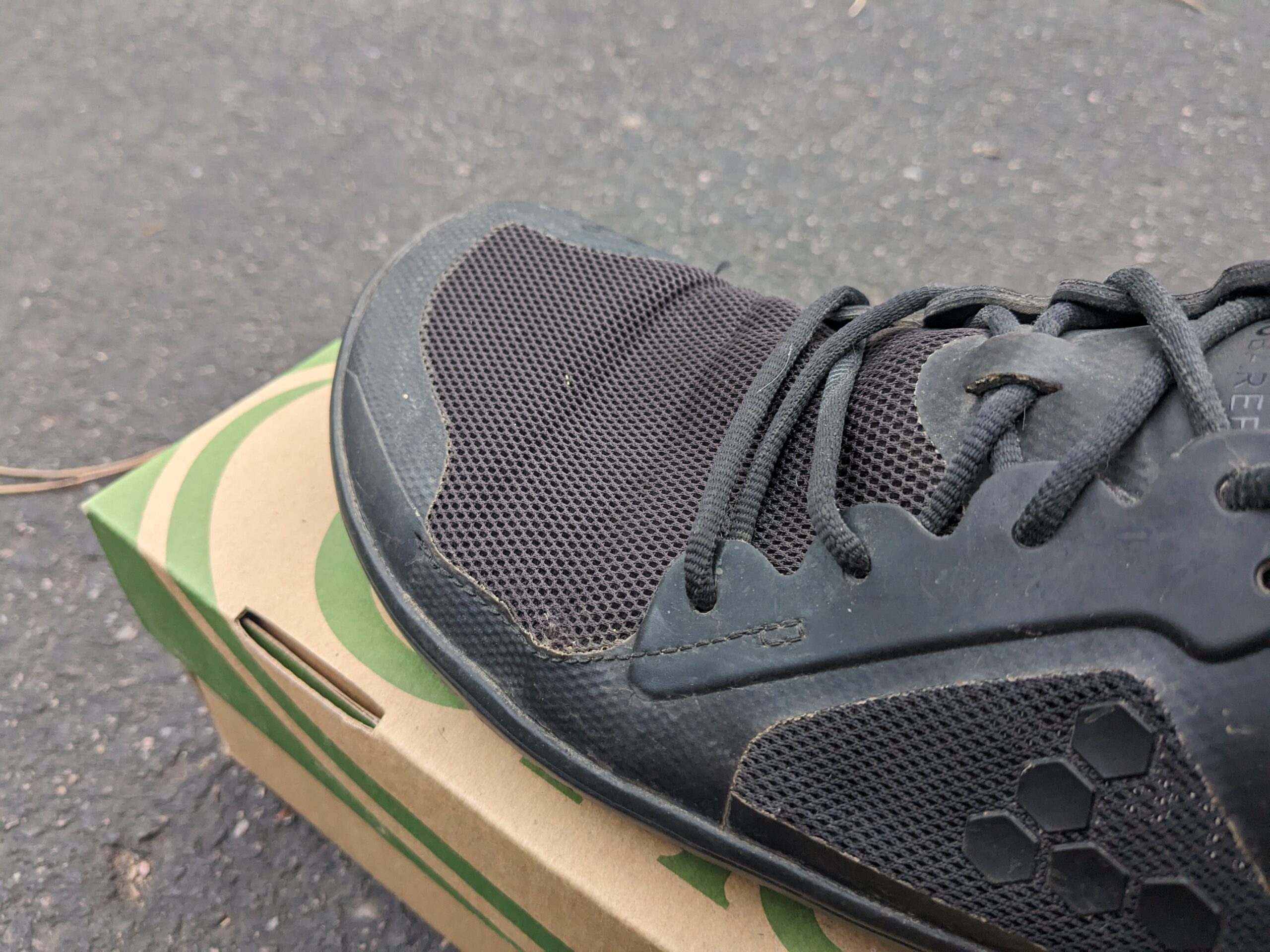
The upper materials show wear at typical stress points —the toe box and sides where it flexes during gait. But they hold together better than the Flow’s more minimal construction. The recycled materials are surprisingly robust.
The outsole wears gradually but predictably. At 4mm thick, you’ll eventually wear through it, but it lasts longer than you might expect for such a minimal shoe. High-mileage runners should expect 600-800km before replacement.
The trade-off for better durability is slightly more weight (180g vs 150g for the Flow) and less pure minimal feel. But for most runners, that’s a worthwhile compromise.
Who Should Buy This
Get the Primus Lite III if:
- You have narrow, low-volume feet
- You want one shoe for running, gym, and casual wear
- You value eco-friendly, recycled materials
- You’re transitioning to barefoot and want something versatile
- You need a travel shoe that handles multiple activities
- You want Vivobarefoot quality at a lower price than the Flow
Skip this shoe if:
- You have wide or high-volume feet
- You want the absolute lightest, most minimal option (get the Flow)
- You need aggressive traction for wet conditions
- You prefer dedicated running vs. lifestyle shoes
- You have very wide feet (consider Freet instead)
Freet Vibe 2
The Freet Vibe 2 is what happens when you take a wide, accommodating fit and pair it with just enough cushion to make it versatile across everything from speed work to casual wear. At 10.5mm stack height (including a 4mm removable insole), this sits right in the sweet spot for runners wanting barefoot benefits without going full minimal.
Fit: Wide, Deep, and Accommodating
Like most Freet options, the Vibe 2 features a genuinely wide toe box, especially around the big toe area. This design element allows your toes to splay naturally without restriction. If you’ve ever felt cramped in other barefoot brands, this is your solution.
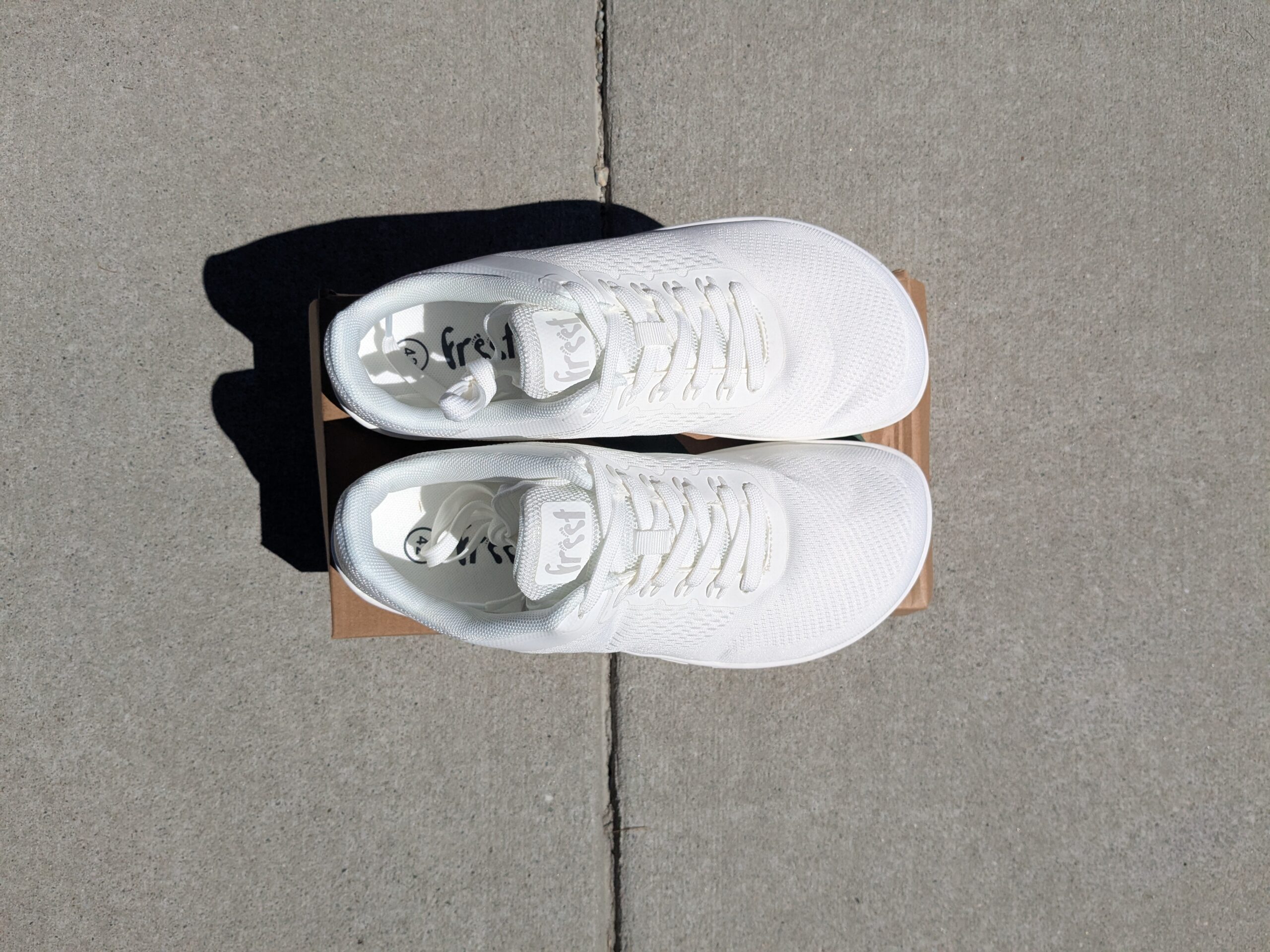
The midfoot width is what makes Freet unique. Unlike the narrower designs in brands like Vivobarefoot and Xero Shoes, the Vibe 2 provides a generous midfoot area that many long-term barefoot wearers crave. I’ve constantly measured shoes across different brands, and Freet always comes out on top for midfoot width. If you’re bulging out the sides of your current shoes, any Freet model could be the key for you.
It’s not just the width; it’s the depth too. Have you ever worn shoes that felt too tight over the top of your foot? Or perhaps you don’t sit deeply enough in the heel cup? Freet can help with both of these issues. While this design benefits those with voluminous feet, it may result in a less secure fit for those with narrower feet.
The heel design balances structure and flexibility. While there are minor structural elements in the heel to prevent slipping, it remains flexible enough to promote natural movement. The softer nature of the heel ensures your foot remains secure without feeling clamped down.
Sizing runs about half a size short. This is an important detail to keep in mind. I always suggest sizing up in the Vibe 2 unless you’re certain you want that super snug fit. I ordered my usual EU 42, and my toes are very close to the end, sometimes rubbing against the upper material. Size up.
Feel: Secure Flexibility with Bounce
The Vibe 2 strikes a perfect balance between a secure fit and flexibility. Often, very flexible shoes have a forgiving upper, which can lead to a loose fit and slipping inside the shoe. The Vibe 2 features strategically placed overlays to ensure a more secure fit, keeping your foot firmly locked onto the outsole.
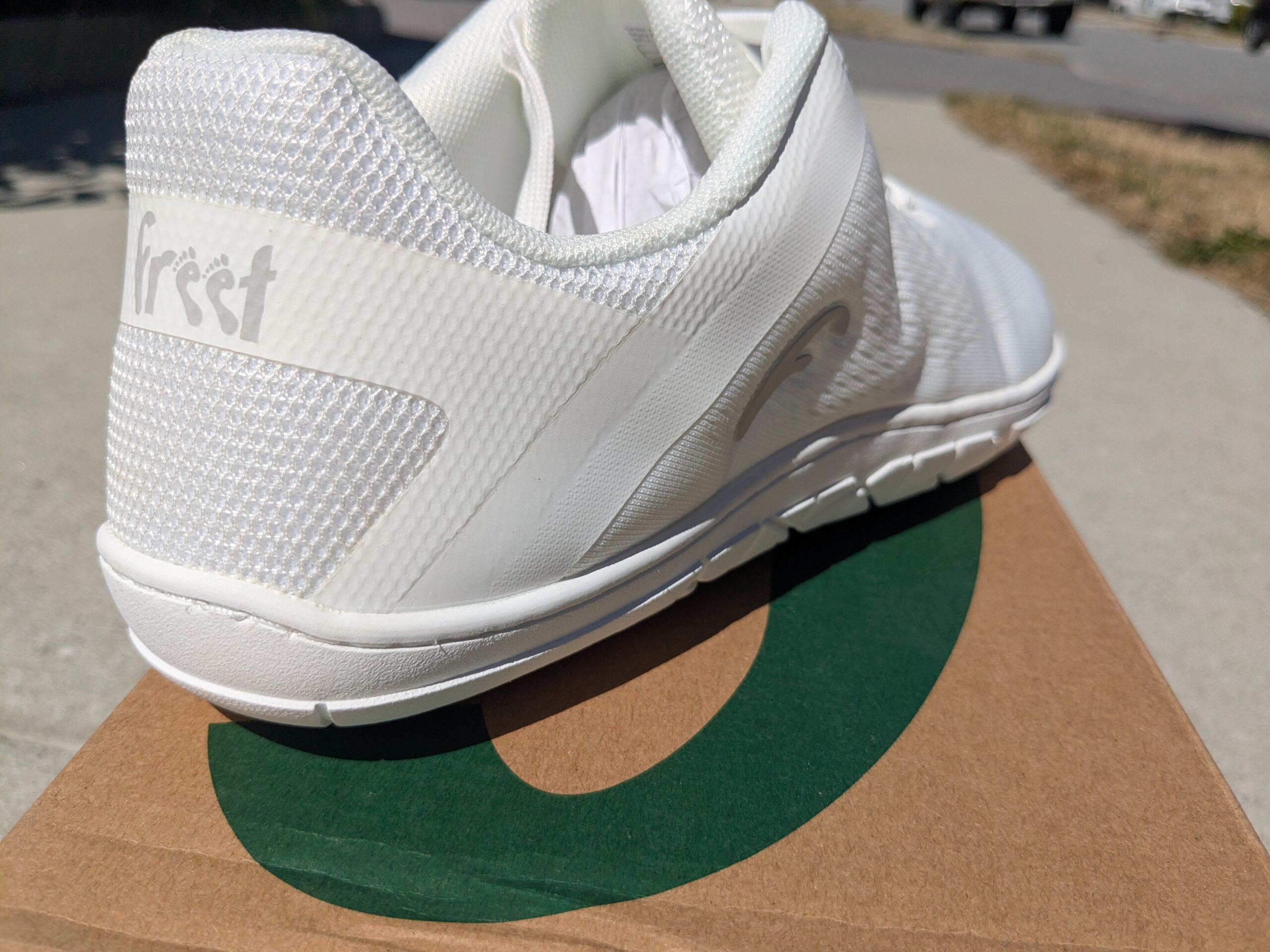
Even with a 10.5mm stack height, it remains flexible throughout. I’ve seen 4mm shoes that are stiffer than this. The shoe is designed to reflect the qualities typical of many minimalist footwear options while still providing adequate cushioning. That small amount of cushioning can be exactly what transitioning individuals are looking for, or perhaps even ideal for your longer runs.
The insole features a new rebound material that provides a bouncy, cushioned feel. This springy element is especially enjoyable during tempo work and intervals, as it adds a lively bounce to your step without feeling overly padded. The ability to easily swap out the insole for a firmer option is also a great addition, allowing runners to customize their experience. Remove it entirely for more ground feel and you’re at about 6.5mm stack.
While not the lightest option, it’s sufficiently light. Weighing approximately 270 grams, the Vibe 2 doesn’t feel cumbersome, but it may not meet your expectations for a truly lightweight choice. For those prioritizing speed and agility, the Primus Flow or Speed Force 2 are lighter options.
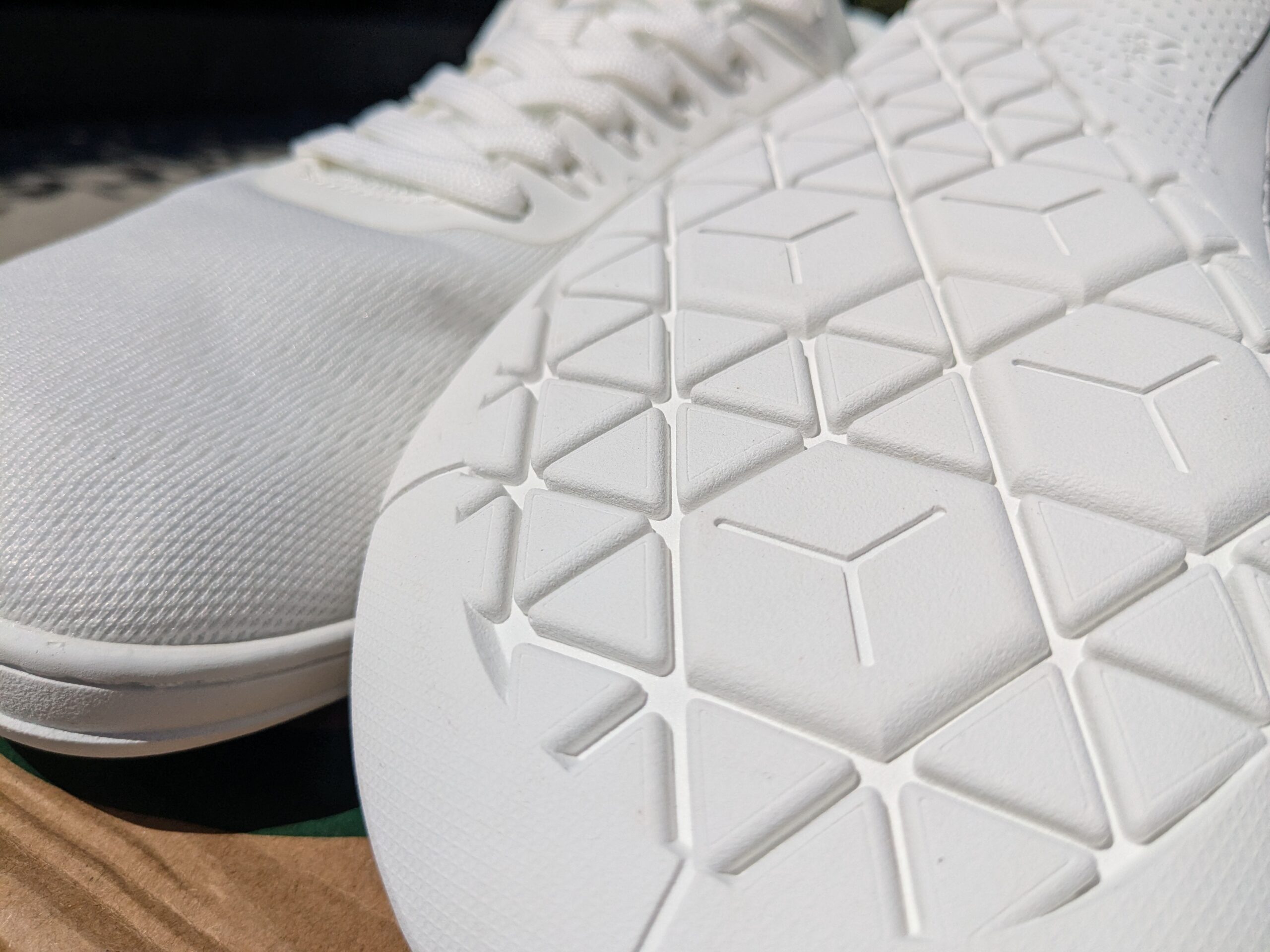
The outsole features a full rubber construction with a well-structured lug pattern that provides flexibility and durability. Although this is a lugged design, there is a large surface area in contact with the ground that minimizes wear. This design is reminiscent of the classic Nike Free models, which offered flexibility and long-term durability.
Performance: Versatile Workhorse
The Vibe 2 is a perfect choice for some barefoot training with a bit of cushioning. For me, that means faster tempo workouts and interval training. But it’s equally at home on easy days, casual wear, and even gym sessions. This is a true do-everything shoe.
I’ve used this shoe for speed work, and it delivers. The secure upper keeps your foot locked down during quick turnover, and the slight bounce from the insole adds a responsive feel. It’s not race-day light, but it’s capable.
For longer runs, the balanced cushioning works beautifully. You get enough protection to keep your feet comfortable over distance, but enough ground feel to maintain natural mechanics. This is especially valuable for runners midway through their barefoot transition who aren’t ready for full minimal shoes yet.
Durability: Built to Last
The heavier weight is likely due to durable material choices. The construction seems robust, featuring reinforced eyelets in the lacing system, a fully stitched outsole, and carefully placed overlays to reduce wear. All these features come at the cost of weight, but they’re often worth it if you want a shoe that lasts.
The upper is made from breathable mesh created from recycled bottle yarn , which is excellent for ventilation but appears fragile if scraped or snagged. This is unlikely to occur since it’s a road/casual shoe, but I wouldn’t recommend taking this shoe on trails or paths with a lot of vegetation.
After running approximately 50 kilometers, I observed minimal wear on the outsole. With about 3mm of rubber remaining on the lugs, these won’t wear through anytime soon. The large surface area in contact with the ground is key—it spreads wear across the entire forefoot rather than concentrating it in high-stress zones.
Who Should Buy This
Get the Freet Vibe 2 if:
- You have wide feet, especially through the midfoot
- You need deep volume and can’t fit shallow shoes
- You want versatility across training speeds and casual wear
- You’re looking for barefoot flexibility with balanced cushion
- You’ve struggled to find barefoot shoes that actually fit
- You want a wider toe box option that still performs
Skip this shoe if:
- You have narrow feet or low volume
- You need the absolute lightest option for racing
- You want ultra-minimal stack height (under 8mm)
- You primarily need a dedicated race shoe
Use code BRR10 for 10% off at Freet!
Xero Shoes Speed Force 2
If there ever was a barefoot shoe, this is it. At 4.5mm outsole plus a 3mm removable insole, the Speed Force 2 delivers as close to barefoot as you can get while still wearing shoes. And here’s the thing: this shoe is criminally overlooked in the barefoot community, which is a shame because it’s genuinely excellent.
Fit: Deep, Average Width, Adaptable
The Speed Force 2 fits like other Xero Shoes—deep, average width, and featuring that signature Xero strap system that delivers great lockdown.
Order half a size larger than your standard. Like many other Xero Shoes models, it’s recommended to go up by half a size to ensure enough space for your toes. This extra length will prevent your toes from bumping against the front and provide more room for the big toe to splay.
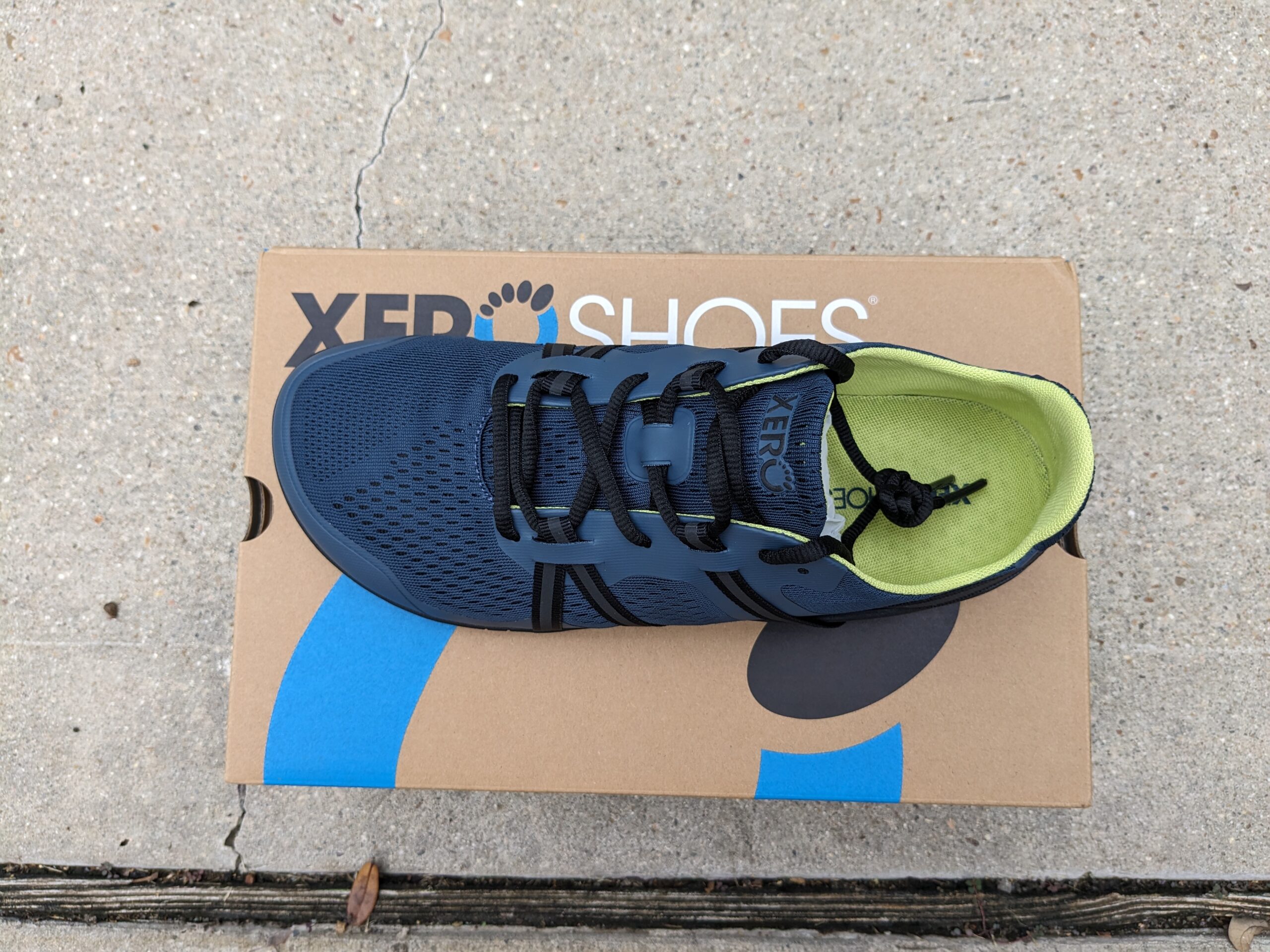
Xero Shoes have never made the widest toe box shoes, and the Speed Force is similar. The toe box is not quite squared off like other barefoot shoes. For 70% of you out there, the toe box will be “wide enough.” Although it’s not as wide as Freet, it’s just big enough for most—as long as your forefoot is precisely locked down onto the center of the base.
The upper material is pliable enough to wrap around the foot perfectly. And when you pair that with the strapping system you find on Xero Shoes, you end up with a snug and comfortable fitting upper that adapts to your foot shape.
The unstructured heel and the Xero Shoe strapping system lock the heel perfectly in place. I have always found that Xero Shoes have the best-fitting heel for me. The unstructured heel and strap that wraps around it locks my heel perfectly onto the sole. However, if you have a narrow and shallow heel, you may find it too baggy to keep you locked in place.
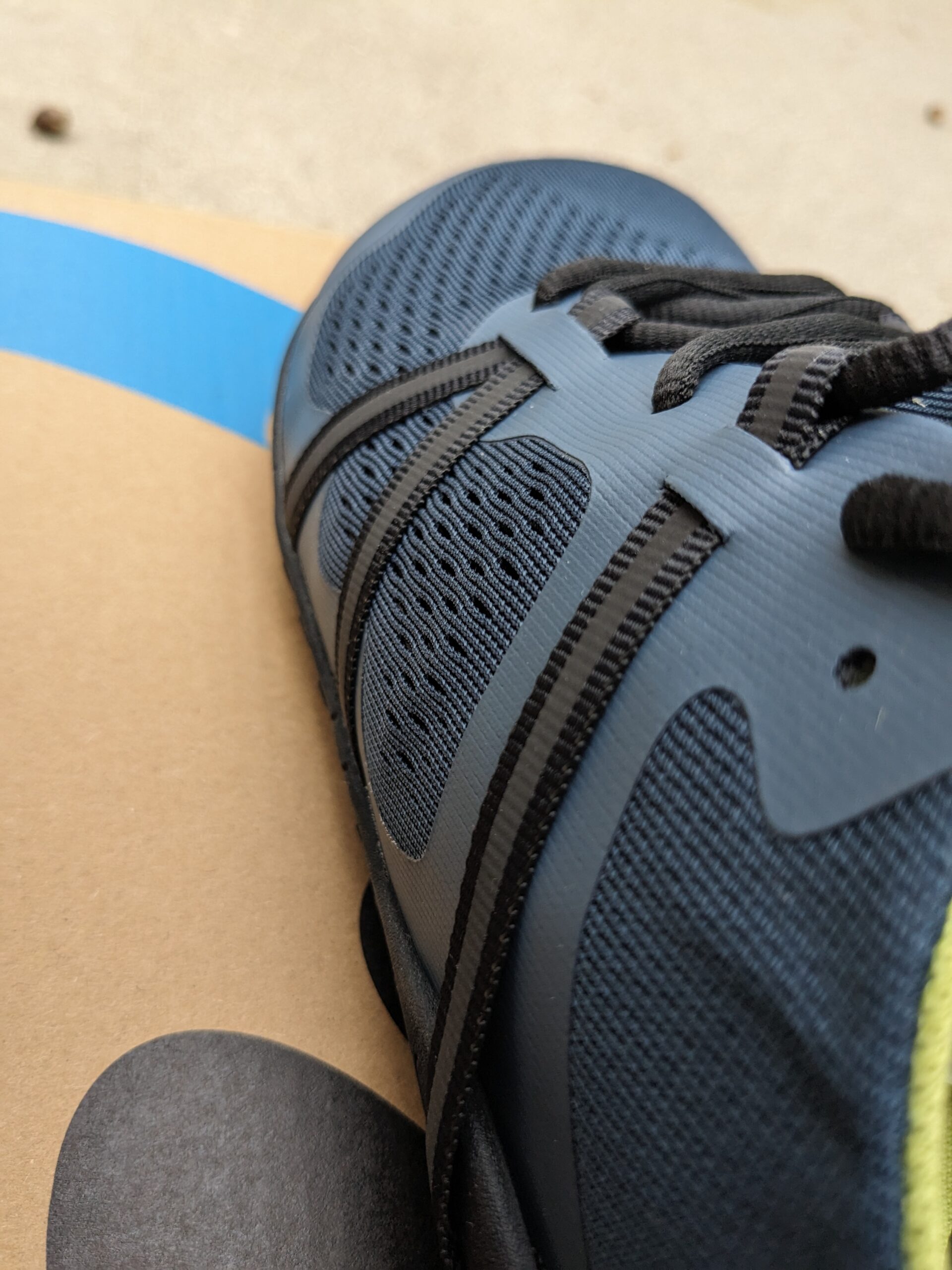
Xero Shoes isn’t known for their shallow fit. Even with the insole in the shoe, it still fits deep. Hence, I would recommend this shoe only for those with average-to-deep feet. You can take out the insole for more room if you have super deep feet—and you’ll get even more ground feel in the process.
Feel: Super Duper Barefoot
These shoes are the closest to barefoot that I’ve felt. From the flexibility to the ground feel, this is a genuinely minimal model to practice your barefoot running.
Yes, yes, yes! The whole shoe can roll into your hand. The shoe can be folded in any direction, ideal for barefoot practice. During running, your foot doesn’t just bend in one direction but expands and morphs throughout the gait cycle. Therefore, your shoe needs to allow for this natural movement. There are no stiff spots to the shoe.
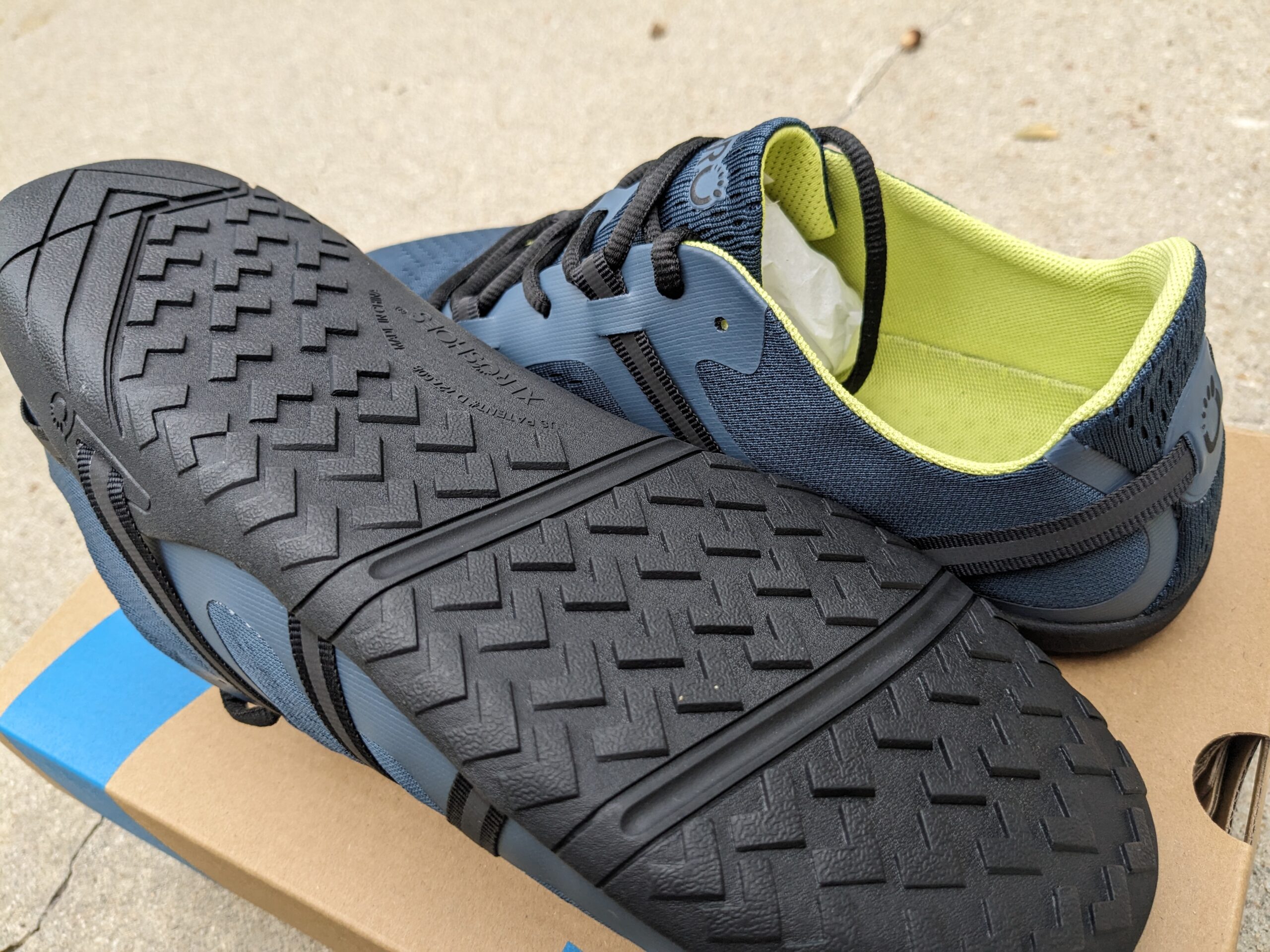
If you step on something sharp, you will feel it, but that’s a good thing. When running barefoot, the sensation of the ground under your feet is crucial. It provides you with direct information on how to improve your running form. However, it’s important to strike a balance between getting enough feedback and protecting your feet from sharp objects.
The sole is flat, with little to no turned-up edges when the upper attaches. This surface is completely flat, which reduces pressure points and places your foot in a natural position. Combined with the 4.5mm stack, you get pure, unfiltered ground feedback.
Even though the upper is flexible, it’s not overly stretchy. Buying shoes that are a half size larger will prevent them from being too small and restrictive. There’s a little bit of sag that’ll allow your feet to move as necessary, but you won’t slip around because of the lace and strapping system.
Performance: Perfect Barefoot Training
Stick to the road and watch for rocks and sharp objects. These shoes have a very minimal design. However, this makes them ideal for barefoot training on concrete or asphalt surfaces. The hard surface provides excellent feedback to help you improve your barefoot gait.
I’ve used the Speed Force 2 extensively for form work and technique refinement. The pure ground connection is invaluable when you’re working on your barefoot mechanics. You can feel exactly how your foot is landing, how your weight is transferring, and where you need to make adjustments.
At 184g, this shoe is light but not quite as featherlight as the Primus Flow. That extra weight comes from better build quality and more durable construction—a worthwhile tradeoff in my opinion.
Durability: Improved Build Quality
Newer Xero Shoes models are of better quality now, which gives me hope that they’ll last long enough to approach the impressive longevity Xero advertises.
Xero Shoes mentions impressive durability, and I’m confident they’ll make it to 1000+ miles , which is still pretty impressive for such a minimal shoe. This road shoe has very little stack height, meaning you can run in them for a long time before they wear out completely.
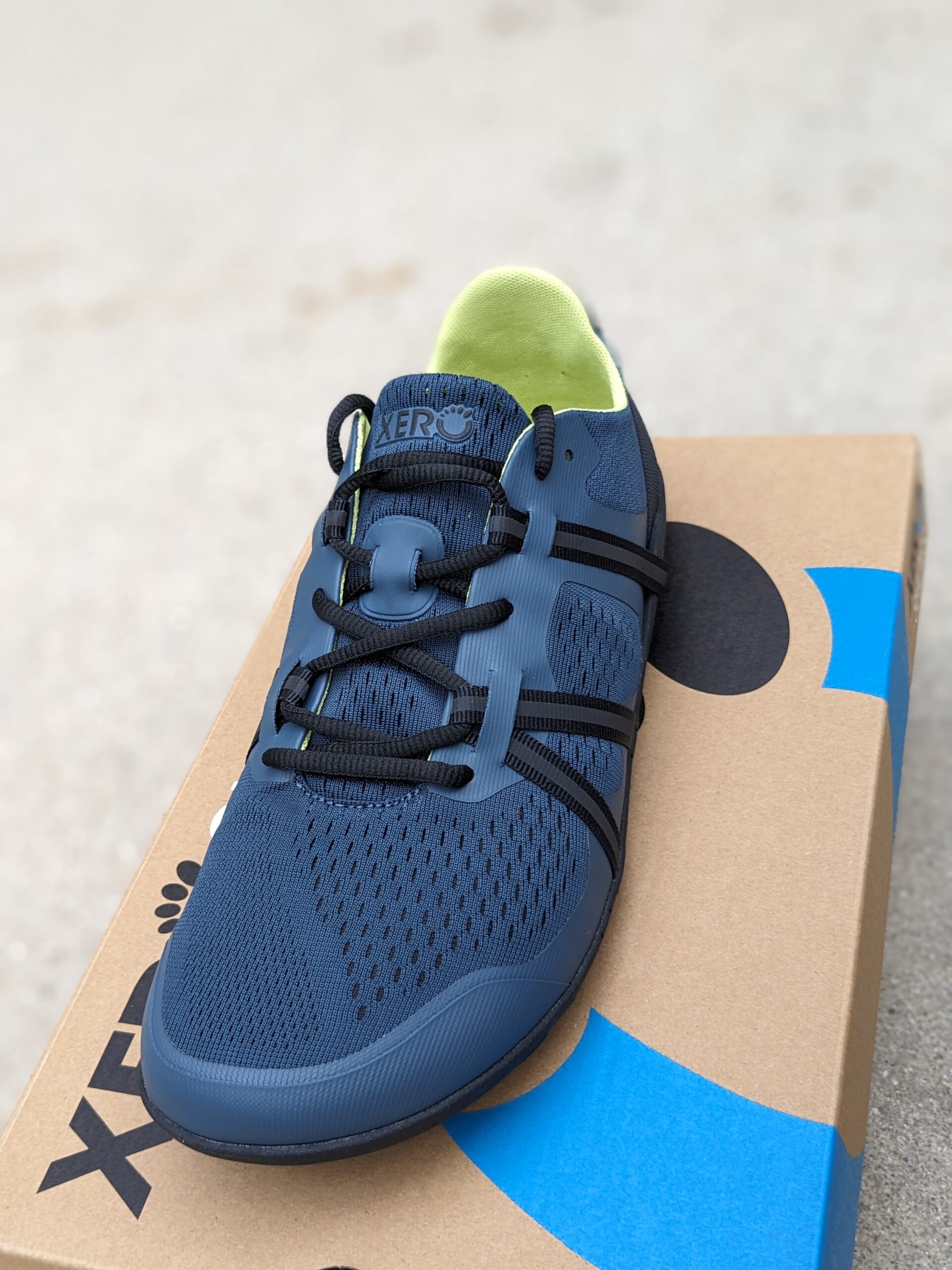
From the upper to the outsole, this model’s quality has drastically increased! I am extremely impressed by the welding of the upper materials and how they are all assembled. The outsole is connected to the upper and safeguarded around the shoe with an overlay that protects against high-wear areas.
The straps are tough and will not snap easily at all. Although others have mentioned weak spots on older models, I have never experienced any issues with the Speed Force 2.
The weakest point is the outsole itself —at 4.5mm of rubber underfoot, it will eventually break down over time. But don’t worry if you have uneven wear patterns; they’re so thin that uneven wear will make little difference. Many people will throw out their shoes when they start to see uneven wear. That makes sense when you’ve got a higher-stacked shoe, but it’s not such an issue when you’re so close to the ground.
Who Should Buy This
Get the Speed Force 2 if:
- You have average-width feet with average to deep volume
- You’re already conditioned to barefoot running
- You want the purest barefoot experience with some protection
- You value flexibility and ground feel above all else
- You want excellent heel lockdown from the Xero strap system
- You’re looking for a true barefoot training tool
Skip this shoe if:
- You have very wide feet or need maximum toe splay room
- You’re new to barefoot running and need more cushioning
- You want a shoe for wet conditions (limited traction)
- You need something for trail running (road-only design)
- You want cushioning for longer recovery runs
TSLA Minimal
Here’s something most barefoot runners don’t want to admit: you don’t need to spend $150+ to experience barefoot running. The TSLA Minimal, typically priced around $30-40 on Amazon, delivers genuine minimal experience at a fraction of the cost of premium brands.
Fit: Average and Accessible
The TSLA Minimal fits true to size with an average width profile that works for most foot shapes. It’s not the widest toe box, but it’s adequately roomy for natural toe splay. If you’re coming from traditional running shoes, the fit will feel familiar yet slightly more spacious in the forefoot.
The upper uses a simple knit mesh that’s breathable and flexible. It’s not as refined as premium brands, but it does the job. The heel cup is unstructured and flexible—exactly what you want in a minimal shoe.
Sizing runs standard , which is actually a relief after dealing with Vivobarefoot’s long sizing and Xero’s half-size-up recommendations. Order your normal shoe size and you’ll likely be fine.
The volume is average to slightly shallow, making it suitable for most foot types. If you have very high-volume feet, you might find it snug, but for the majority of runners, the fit is surprisingly accommodating.
Feel: Genuinely Minimal
At 5mm stack height, the TSLA Minimal delivers real barefoot feel. You get substantial ground feedback—more than enough to work on your form and develop foot strength. This isn’t a cushioned shoe pretending to be minimal; it’s the real deal.
The flexibility is excellent for the price point. The shoe bends and moves naturally with your foot. There’s no rigid sections or stiff materials restricting natural motion. You can roll it up in your hand—a good sign of true minimal construction.
The outsole uses a basic rubber compound that provides adequate traction on dry pavement. It’s not as grippy as premium brands in wet conditions, but for most road running, it’s functional.
The weight is impressively light at 160g. You barely feel them on your feet, which encourages natural, efficient running form.
Performance: Surprisingly Capable
For the price, the performance is shocking. I’ve used these for short runs (5-10K), form drills, and even as travel shoes. They handle everything you’d expect from a minimal shoe—just don’t expect them to last as long as premium options.
The minimal stack means you need conditioned feet. These aren’t training wheels—they’re genuine barefoot shoes that demand proper form and gradual adaptation.
These excel as:
- Beginner exploration shoes – Test barefoot running without major investment
- Backup/rotation shoes – Keep in your car or gym bag
- Travel shoes – Lightweight, packable, inexpensive if lost
- Form work – Practice drills and technique refinement
- Budget transition – Start barefoot journey affordably
Durability: You Get What You Pay For
Let’s be honest: these won’t last 1000km. The materials are basic, the construction is simple, and the outsole is thin. Expect 200-400km depending on your running style and surfaces.
But here’s the thing: at $30-40, that’s still excellent value. You’re paying roughly $0.10-0.20 per kilometer, which is competitive with shoes costing 4-5x more.
The upper materials will show wear quickly at flex points. The outsole wears through faster than premium brands. But none of that matters when the shoe costs less than a month of coffee.
Who Should Buy This
Get the TSLA Minimal if:
- You’re curious about barefoot running but hesitant to invest $150+
- You want an affordable backup or travel shoe
- You need a minimal shoe for short runs and form work
- You’re budget-conscious but want genuine minimal experience
- You want multiple pairs for rotation without breaking the bank
- You’re new to minimalism and unsure if it’s right for you
Skip this shoe if:
- You need premium materials and construction
- You put in high mileage and need long-lasting shoes
- You want the absolute best performance (invest in Flow or Speed Force)
- You need wide fit (get Freet instead)
- You require exceptional wet-weather traction
- You expect 800+ km of durability
Bottom line: The TSLA Minimal proves you don’t need to spend a fortune to experience barefoot running. It’s an excellent entry point, backup option, or budget solution that delivers genuine minimal feel at an unbeatable price.
Section 2: Balanced Minimal with Cushion (10-15mm Stack)
This middle-ground category offers barefoot benefits with protective cushioning—ideal for transitioning runners or those wanting ground feel with more comfort.
Bahé Revive Flex
The Bahé Revive Flex occupies a unique space in the barefoot market—not quite minimal, not quite cushioned, but balanced right in the middle with an interesting twist: conductive grounding technology. At 12mm stack height, it bridges the gap between pure barefoot shoes and cushioned trainers while offering earthing benefits through conductive materials in the sole.
Fit: Wide and Accommodating
The Revive Flex fits wider and deeper than most barefoot shoes not named Freet. If you’ve struggled with the narrow fits of Vivobarefoot or average widths of Xero Shoes, the Bahé might be your solution.
The toe box is generously wide and squared off, allowing natural toe splay without restriction. The midfoot provides ample room—more than Altra, approaching Freet’s width but not quite as extreme.
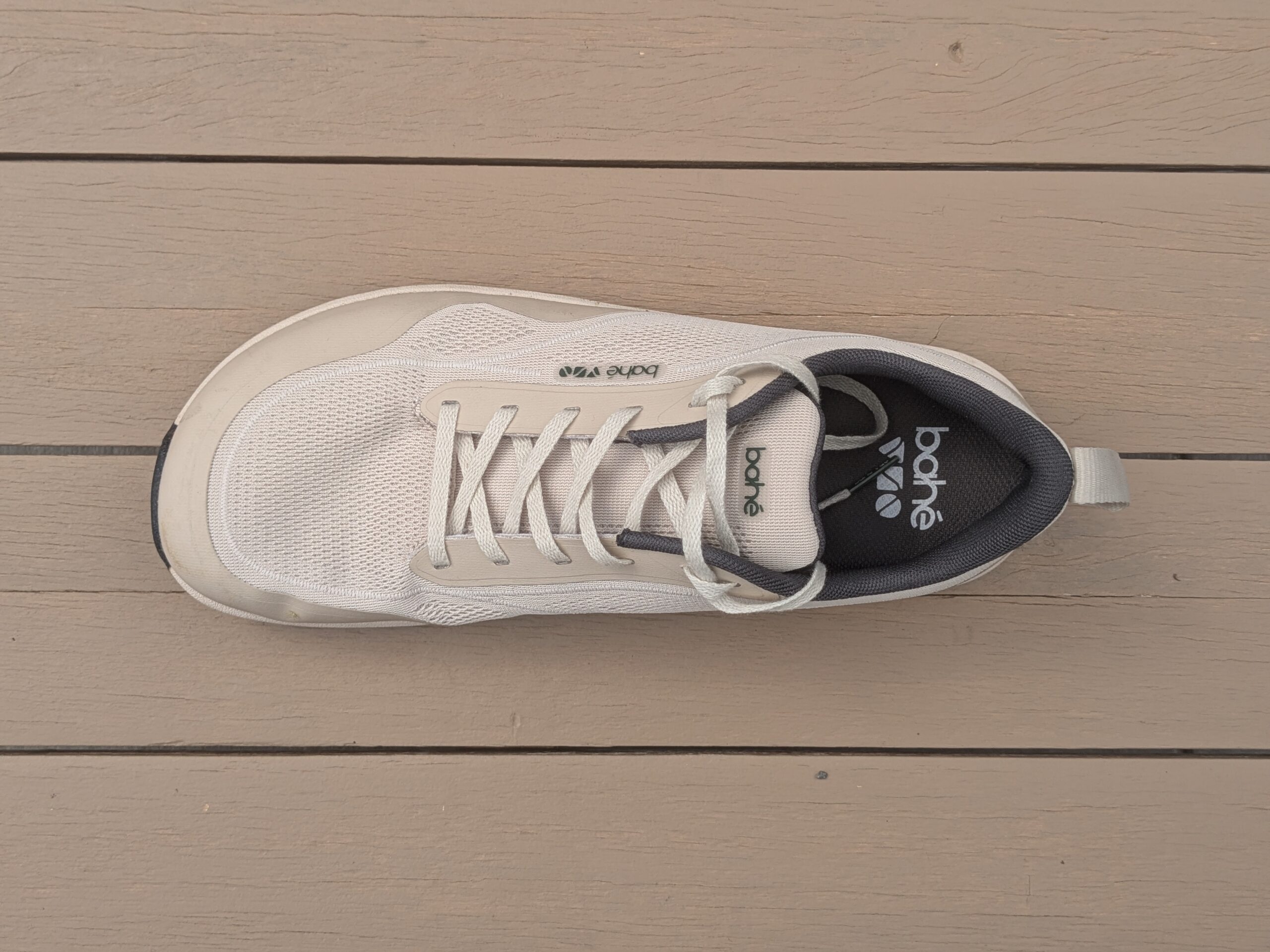
Sizing runs fairly true to length. I recommend ordering your normal size. The generous width means you won’t need to size up for width like you might with narrower brands.
The depth is above average, making these suitable for higher-volume feet or runners who prefer thicker socks. The heel cup is flexible but provides enough structure to keep your foot positioned correctly.
Feel: Balanced Ground Connection with Cushion
At 12mm stack, the Revive Flex delivers a balanced feel—enough ground feedback to maintain barefoot connection, enough cushioning to protect during longer efforts.
The unique feature is the grounding technology. Conductive materials in the insole and outsole are designed to electrically connect you to the ground, potentially reducing inflammation. Whether you buy into earthing science or not, the shoe functions excellently as a barefoot-cushioned option regardless.
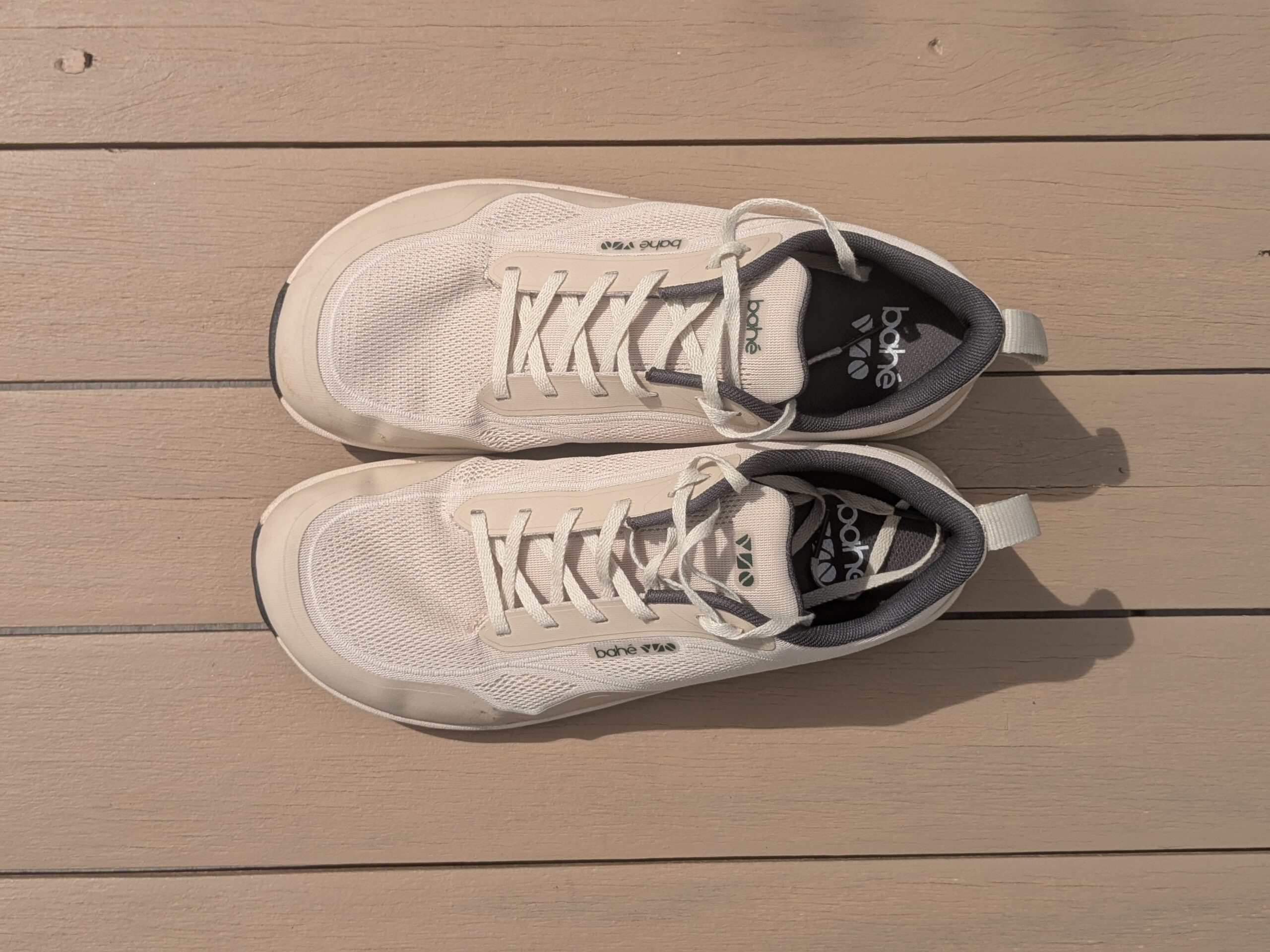
The flexibility is very good for a 12mm stack shoe. The sole bends naturally at the ball of the foot, allowing proper toe-off mechanics. It’s not as flexible as 5mm minimal shoes, but it’s significantly more flexible than traditional 12mm trainers.
The cushioning feels protective yet responsive. It’s not soft or mushy—instead, it provides a firm, supportive platform that still allows ground feel. Think of it as “barefoot with training wheels” rather than traditional cushioning.
Performance: Versatile Middle Ground
The Revive Flex excels as a transition shoe or for runners who want barefoot benefits without going full minimal. I’ve used it for:
- Easy runs – The cushioning protects fatigued feet
- Long runs – Enough padding for extended efforts
- Speed work – Responsive enough for tempo efforts
- Recovery runs – More protective than ultra-minimal options
The 12mm stack makes it suitable for runners midway through barefoot transition. You get meaningful ground feel without the extreme demands of 5mm shoes.
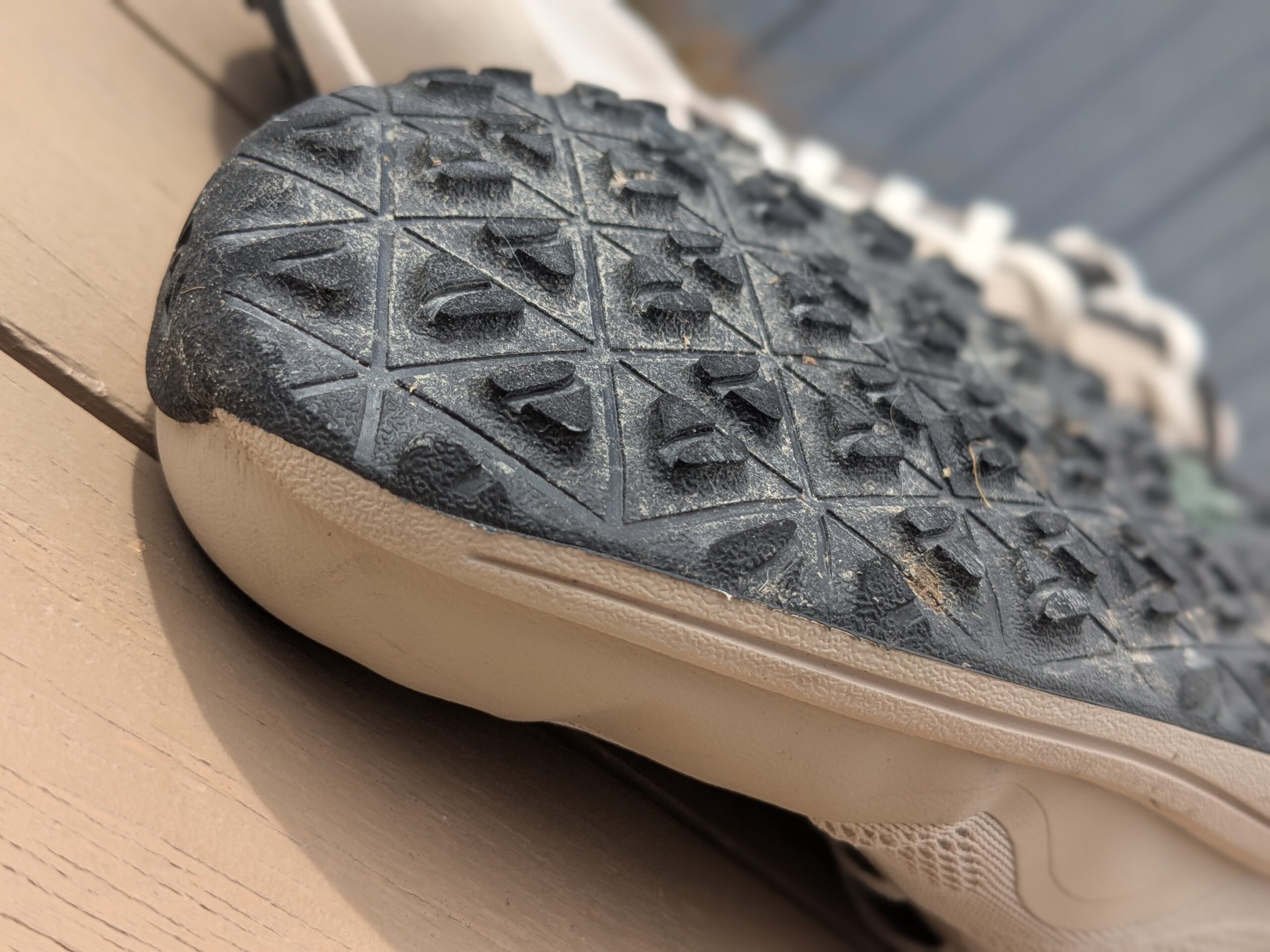
The grounding feature is intriguing , though subjective. Some runners report reduced inflammation and better recovery. Others notice no difference. The shoe works excellently regardless of whether you experience grounding benefits.
Durability: Built to Last
At 220g, the Revive Flex is heavier than ultra-minimal options, but that weight translates to durability. The construction is robust, with quality materials throughout.
The outsole features full rubber coverage with adequate thickness—expect 600-800km before replacement. The upper materials are durable and breathable, showing minimal wear even after extensive use.
The conductive elements are integrated into the construction rather than added on, so they don’t compromise durability or require special care.
Who Should Buy This
Get the Bahé Revive Flex if:
- You want barefoot benefits with protective cushioning
- You’re midway through barefoot transition
- You have wider feet or need accommodating volume
- You’re intrigued by grounding/earthing concepts
- You need a versatile shoe for varied training paces
- You want something between minimal and cushioned
- You’re looking for unique offerings in the barefoot space
Skip this shoe if:
- You want ultra-minimal ground feel (under 8mm)
- You have narrow feet (too much volume)
- You need the lightest possible option
- You prefer pure minimal without cushioning
- You’re skeptical of grounding technology and don’t want to pay for it
- You need dedicated racing shoes (it’s a trainer)
Use code BRR10 for 10% off at Bahé!
Section 3: Minimal Road Shoes with Cushion (18-24mm Stack)
These shoes offer barefoot benefits with significant cushion for longer efforts and transitioning runners from traditional shoes.
Altra Escalante Racer 2
The Altra Escalante Racer 2 bridges the gap between minimal and cushioned, offering zero-drop geometry with enough foam to protect your feet during fast efforts. At 20mm stack height with 195g weight, this is a legitimate racing option that doesn’t compromise on natural foot positioning.
Fit: Wide Toe Box, Narrow Midfoot
The Escalante Racer 2 features Altra’s signature FootShape toe box, which provides significantly more room than conventional racing flats. Your toes can splay naturally, even during hard efforts when your feet are swelling.
The midfoot, however, runs narrower than other Altra models. This creates a more secure, race-ready fit that prevents slippage during quick turnover. If you have very wide feet through the midfoot, this may feel restrictive compared to the standard Escalante.
The shoe fits true to length for most runners, though Altra’s sizing can vary slightly between models. The upper uses a engineered mesh that’s breathable and flexible while still providing structure for faster paces.
Feel: Responsive Cushioning
The 20mm of Ego foam provides a responsive, springy feel that works well for uptempo efforts. It’s not soft or pillowy—instead, it feels firm and energetic underfoot, encouraging quick turnover.
The zero-drop platform means your heel and forefoot sit at the same height, maintaining natural foot positioning even with the added cushion. This is what separates it from traditional racing flats that often have significant heel elevation.
The flexibility is good for a cushioned shoe, though not as unrestricted as truly minimal options. The shoe bends naturally at the ball of the foot, allowing for proper gait mechanics during faster running.
Performance: Race Day Ready
I’ve used the Escalante Racer 2 for everything from 5Ks to half marathons, and it delivers. The lightweight design disappears on your feet, while the cushioning protects against impact fatigue over longer distances.
The responsive foam works particularly well during intervals and tempo runs. You get energy return without feeling disconnected from the ground—a difficult balance that Altra has managed well here.
For runners transitioning from traditional racing flats to zero-drop, this shoe provides a familiar level of cushioning with natural foot positioning. It’s an excellent bridge option.
Durability: Good for a Racer
For a lightweight racing shoe, durability is reasonable. The outsole uses Altra’s rubber strategically placed in high-wear zones, with exposed foam in less critical areas to save weight.
I’ve gotten several hundred kilometers out of my pair, though the exposed foam does show wear. This is typical for racing flats—they’re designed for performance over longevity.
The upper has held up well with no premature tearing or separation. The engineered mesh breathes well and maintains its structure even after many washes.
Who Should Buy This
Get the Escalante Racer 2 if:
- You want zero-drop with race-day cushioning
- You’re transitioning from traditional racing flats
- You need protection for longer races (half marathon+)
- You have average-width feet with wider forefeet
- You want a versatile shoe for racing and fast training
Skip this shoe if:
- You want true minimal ground feel
- You have very wide feet through the midfoot
- You’re looking for maximum durability
- You prefer firmer, less responsive foam
Altra Escalante 4
The Altra Escalante 4 is for runners who love the idea of barefoot principles but need maximum cushioning for high-mileage training or recovery runs. At 24mm stack height, this is the most cushioned shoe in this roundup, but it maintains zero-drop geometry and a foot-shaped toe box.
Fit: Roomy and Accommodating
The Escalante 4 features Altra’s most generous FootShape toe box, providing ample room for toe splay and swelling during long runs. This is one of the roomiest shoes in the zero-drop category.
The midfoot and heel fit more generously than the Racer, creating a comfortable, accommodating feel that works well for all-day wear and long training runs. The knit upper conforms to your foot without feeling restrictive.
Sizing runs true to length, and the deeper volume throughout the shoe makes it suitable for runners with higher-volume feet or those who prefer thicker socks.
Feel: Plush Protection
With 24mm of Ego foam, the Escalante 4 provides the most cushioning of any shoe in this guide. The foam is soft and plush, absorbing impact effectively while maintaining enough responsiveness for daily training.
The zero-drop platform keeps your body in natural alignment despite the generous cushioning. This is what makes it different from traditional max-cushion trainers that often have 8-12mm of heel elevation.
The shoe flexes well for its stack height, though it’s noticeably less flexible than minimal options. The trade-off is worth it for runners who need cushioning for recovery or high-volume weeks.
Performance: High-Mileage Workhorse
The Escalante 4 excels as a daily trainer for runners putting in serious mileage. The cushioning protects against fatigue accumulation over long runs and back-to-back training days.
I’ve used this shoe for recovery runs after hard workouts, and the plush feel is perfect for active rest days. It’s also great for long weekend runs when you want protection without sacrificing natural foot positioning.
For faster work, it’s less ideal—the extra cushioning and weight make it feel sluggish compared to the Racer or minimal options. But that’s not what this shoe is designed for.
Durability: Built to Last
The Escalante 4 is one of the more durable options in the Altra lineup. The generous outsole coverage and durable upper materials mean this shoe can handle high mileage.
The Ego foam is known for maintaining its cushioning properties over hundreds of kilometers, though it will eventually compress with use. Plan on 600-800km of use before replacement.
The knit upper breathes well and has proven resistant to premature wear, though it can show dirt more easily than darker materials.
Who Should Buy This
Get the Escalante 4 if:
- You want maximum cushion with zero-drop
- You’re doing high-mileage training weeks
- You need a comfortable recovery shoe
- You have higher-volume feet
- You’re transitioning from traditional cushioned trainers
- You want all-day comfort for casual wear
Skip this shoe if:
- You want minimal ground feel
- You prioritize lightweight racing performance
- You prefer firmer, more responsive cushioning
- You’re looking for the most flexible option
Final Thoughts: Choose the Right Shoe for Your Feet
After testing dozens of barefoot and zero-drop road shoes across the entire minimalism spectrum, I’ve learned that there’s no single “best” option—only the best option for your specific feet, running goals, conditioning level, and budget.
Ultra-Minimal Options (4-7mm Stack)
If you have narrow feet and want the lightest minimal shoe: The Vivobarefoot Primus Flow delivers maximum ground feel in the lightest package at just 150g, but requires well-conditioned feet and narrow foot shape.
If you want narrow-fit minimalism with everyday versatility: The Vivobarefoot Primus Lite III offers eco-friendly construction and lifestyle-friendly styling that works for running, gym, and casual wear.
If you have average-width feet and want pure barefoot feel: The Xero Shoes Speed Force 2 provides true barefoot racing flat performance with excellent heel lockdown from the signature strap system.
If you’re budget-conscious or exploring barefoot running: The TSLA Minimal delivers genuine minimal experience at $30-40—perfect for beginners, backups, or travel shoes.
Balanced Minimalism (10-15mm Stack)
If you have wide feet and need versatility: The Freet Vibe 2 provides generous width with balanced cushioning that works across all training paces and casual wear.
If you want barefoot benefits with protective cushioning: The Bahé Revive Flex offers unique grounding technology with 12mm of balanced cushion—ideal for mid-transition runners or those wanting ground feel with comfort.
Minimal with Cushion (18-24mm Stack)
If you want zero-drop speed with race-day cushioning: The Altra Escalante Racer 2 offers responsive foam in a lightweight package, perfect for fast efforts without compromising natural foot positioning.
If you need maximum cushion for high mileage: The Altra Escalante 4 provides plush 24mm protection with zero-drop geometry—ideal for recovery runs and long training days.
Looking for a broader selection that includes lightly cushioned options? See my best minimalist running shoes roundup for the full spectrum.
Your Next Steps
The best way to find your perfect barefoot road shoe is to:
- Know your foot shape – Are you narrow, average, or wide? Shallow or deep?
- Assess your conditioning – How adapted are your feet to minimal footwear?
- Set your priorities – Ground feel, speed, cushioning, or versatility?
- Start conservative – If you’re new to barefoot running, begin with more cushion and work your way down
Most importantly, remember that transitioning to barefoot road running takes time. Even the best shoe won’t prevent injury if you ramp up too quickly. Start with shorter runs, focus on form, and let your feet gradually adapt to the reduced cushioning.
Your feet are capable of amazing things when given the freedom to function naturally. The right barefoot road shoe simply protects them while they do what they evolved to do.
Happy running.
Where to Buy
Vivobarefoot Primus Flow
Vivobarefoot Primus Lite III
Freet Vibe 2
Xero Shoes Speed Force II
TSLA Minimal
Bahé Revive Flex
Altra Escalante Racer 2
Altra Escalante 4
We earn a small commission from qualifying purchases at no extra cost to you. This helps support our independent testing.