I've been wearing Injinji toe socks for years. Here's my honest take on four variants — from lightweight merino to the Ultra Run Crew — and which one you should actually buy.
Toe socks are one of those things you either get immediately or think are completely weird. I’ve been in the first camp for a long time now. Whether you’re running in barefoot shoes, zero drop shoes, or conventional trainers, toe socks will help you. Full stop.
I had rubbing between toes before I switched. I haven’t had it since.
I’ve been wearing Injinji for years, so none of this is a first impression. This is a proper look at four variants I’ve been rotating through — different cushioning levels, different heights, different materials — to help you figure out which one makes sense for you.
Let’s break it down.
Affiliate Disclosure: By clicking through the links on this page and purchasing the products, you’ll be helping me out. This is done because I receive a kickback from the sellers at no extra cost to you! Thank you so much for supporting us!
The Four Variants I Tested
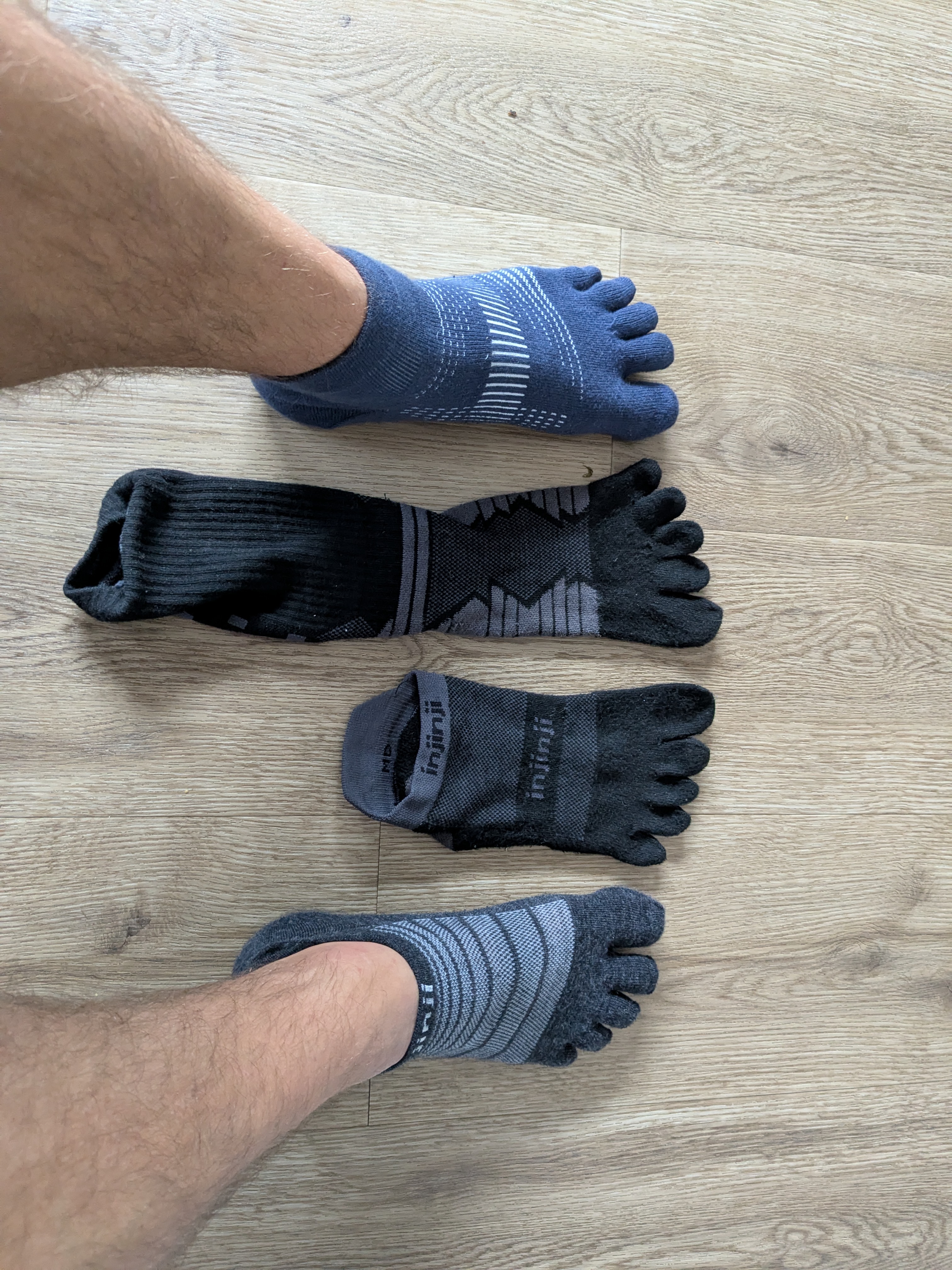
Here’s what I’ve been running in:
| Variant | Cushioning | Height | Material | Price |
|---|---|---|---|---|
| Run Midweight No-Show | Midweight | No-Show | CoolMax EcoMade | $16 |
| Run Lightweight No-Show Wool | Lightweight | No-Show | Merino Wool | $18 |
| Ultra Run Crew | Midweight w/ Padded Toes | Crew | CoolMax EcoMade | $20 |
| Run Original Weight Mini-Crew | Original Weight | Mini-Crew | CoolMax EcoMade | $15 |
Why Toe Socks At All?
Before I get into the variants, let me make the case for toe socks in general — because if you’ve never tried them, the rest of this won’t mean much.
The two main benefits are toe splay and no inter-toe friction. Every toe sits in its own little pocket, which means your toes can spread naturally as you push off, and there’s zero skin-on-skin contact between them. That eliminates the rubbing that causes blisters between toes — something that becomes a very big deal at ultra distances.
I know, it sounds like a small thing. But when you’re deep into a long run and everything starts to hurt, not having hot spots between your toes is genuinely significant. I’d recommend toe socks to any runner, regardless of what shoes they’re in. Barefoot, minimal, conventional — doesn’t matter. Your toes will thank you.
If you’re not sure whether barefoot-style footwear is right for you, my guide to how barefoot shoes should fit is a good starting point.
The Height Question
This is probably the first decision you’ll face with Injinji, and honestly, it’s largely personal. But there are a few practical things worth knowing.
No-Show: Nick’s Default
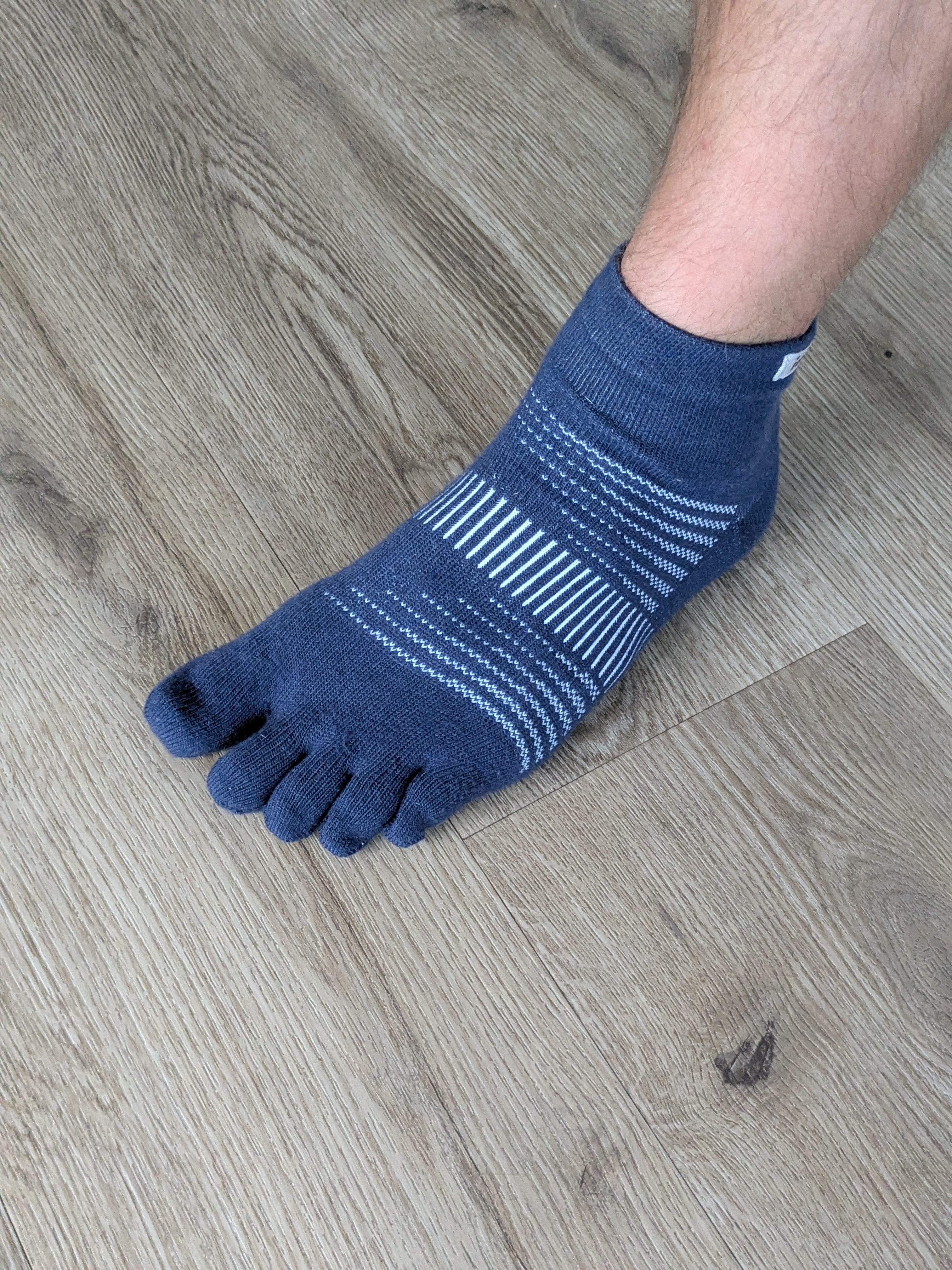
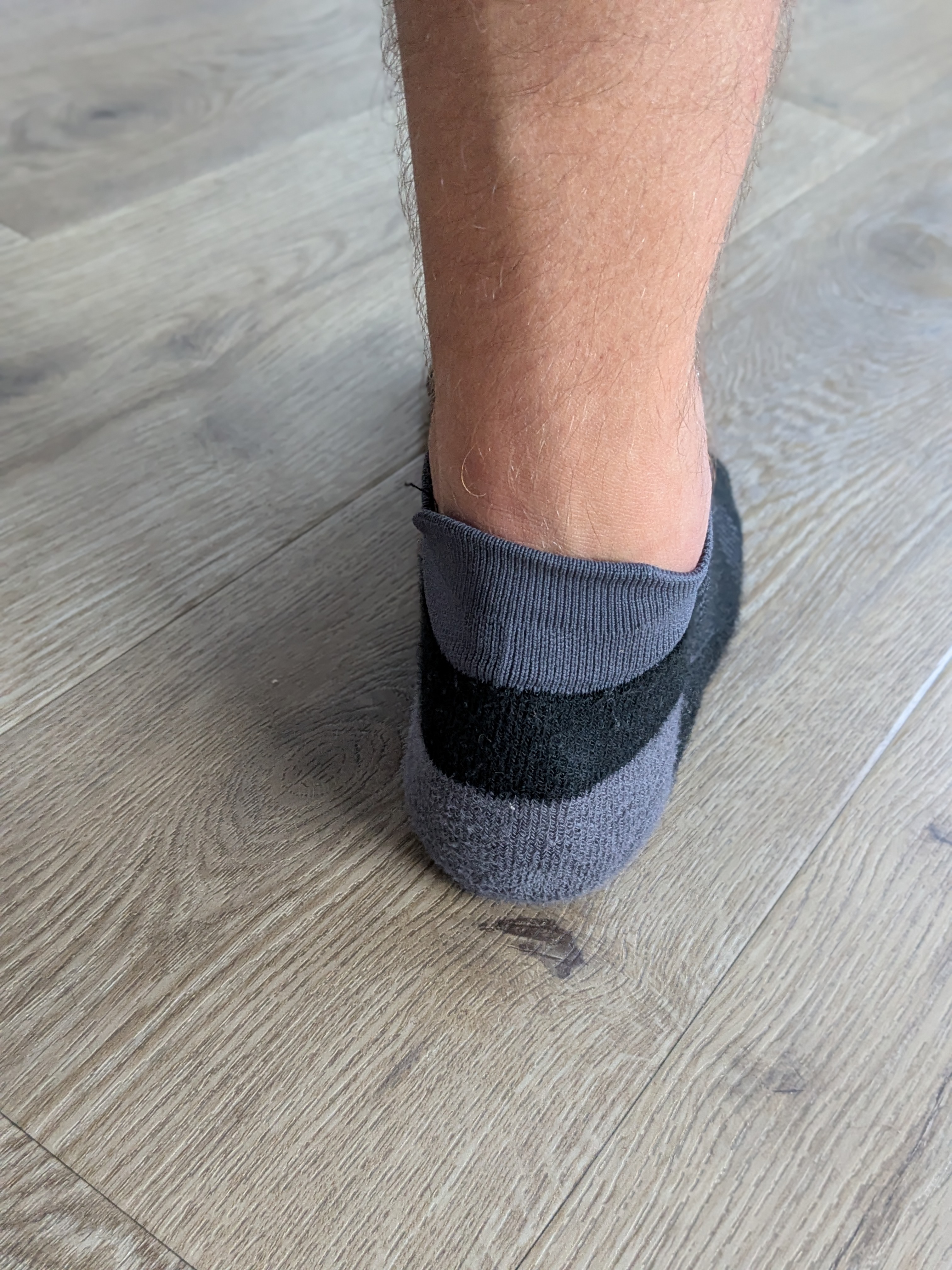
My go-to is no-show, and it will probably be yours too. The no-show sits just below your ankle, and it has a little tab up the back of the heel. That tab is the key thing — it stops the sock sliding down into your shoe and, more importantly, prevents any rubbing on your Achilles. It works for pretty much every shoe I’ve tried. Only a small handful where it doesn’t quite work.
For most running, most people, most of the time: start here.
Mini-Crew: The Practical Middle Ground
The mini-crew earns its place when your shoes have a higher collar. Some shoes — trail shoes especially — sit higher on the ankle, and if you’re in a no-show sock there can be rubbing right where the shoe collar meets your leg. The mini-crew solves that cleanly. It’s still low enough that it doesn’t feel like you’re wearing “proper” ankle socks, but it gives you that bit of extra coverage.
It’s my second choice, not my default. But for higher-cut footwear, it’s the right call.
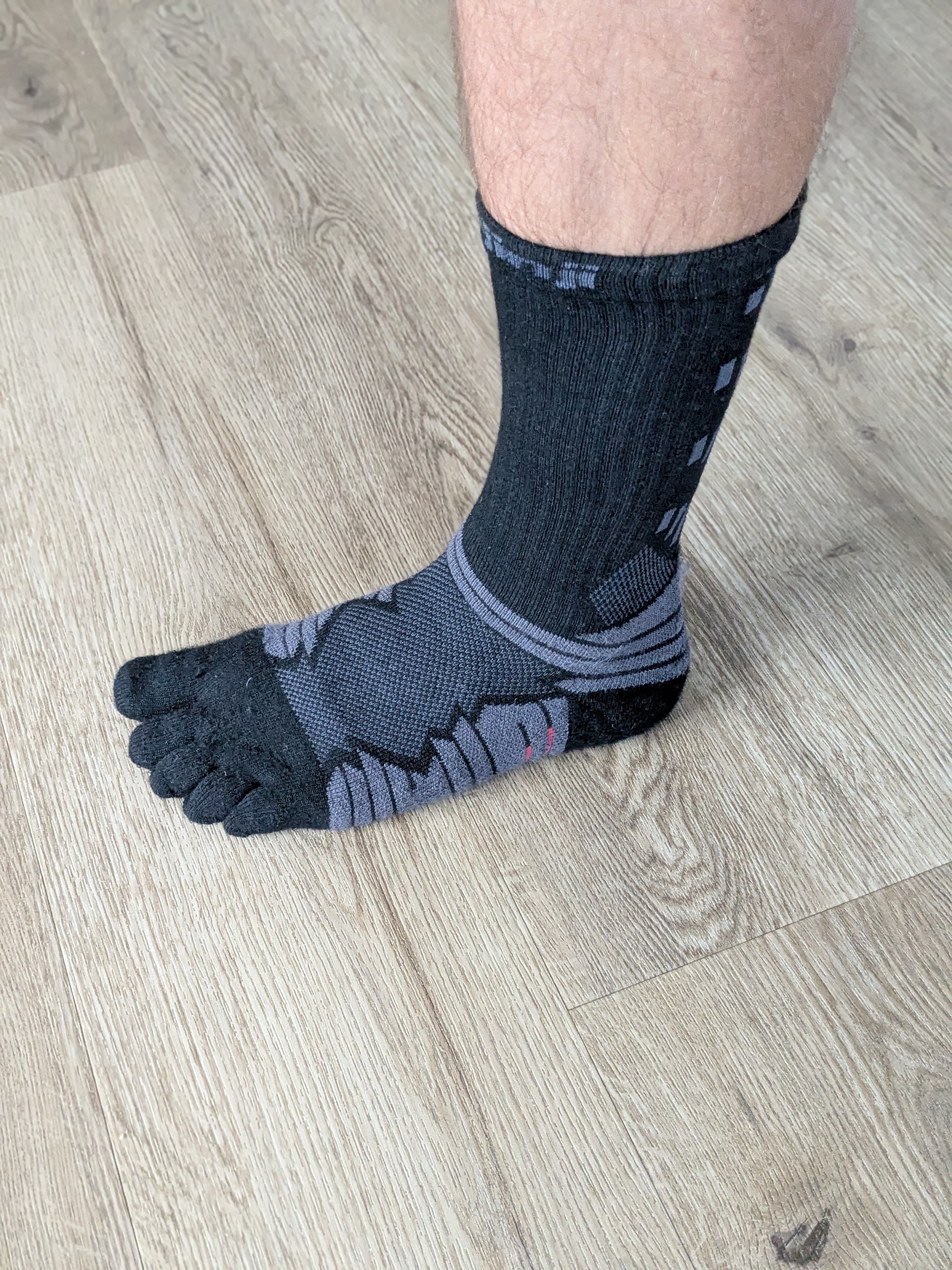
Crew: Longer Than You’d Expect
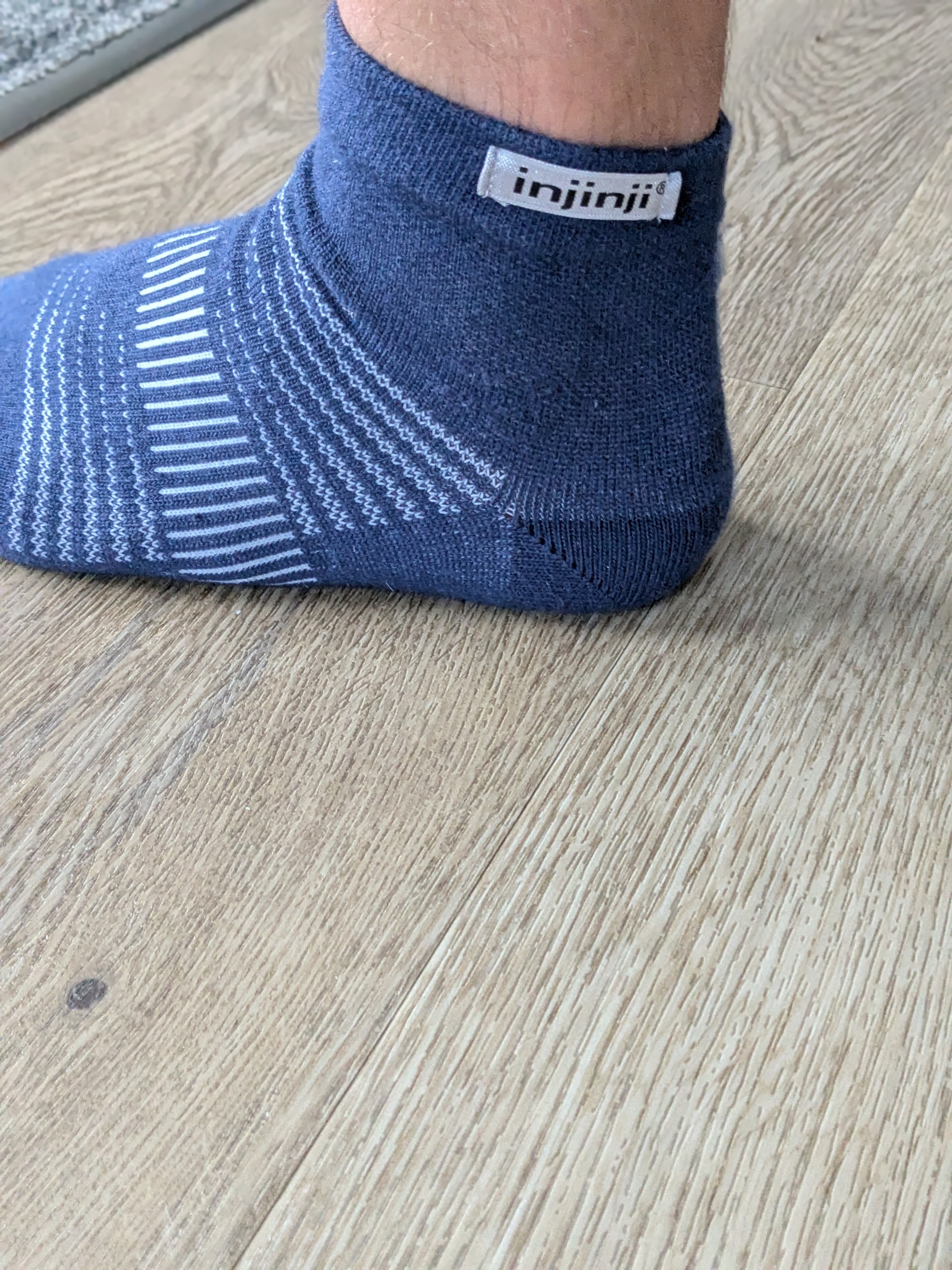
I’ll be honest — the crew length surprised me. It doesn’t sit just above the ankle. It sits halfway up the calf. That’s a lot of sock.
I can see a case for it in very specific conditions — if you’re running through scrubby terrain with low branches, rocks, and vegetation that catch your lower leg. But in practice, if you need that level of coverage, you’re probably looking at gaiters anyway. For most trail running and all road running, the crew length is more sock than you need.
Not bad. Just long.
Cushioning: Which Weight to Choose
Injinji doesn’t measure cushioning in millimetres — they use weight categories. From thinnest to thickest: Lightweight, Original Weight, Midweight, and then the Ultra Run which adds padded toe pockets on top of midweight cushioning.
My Journey from Lightweight to Midweight
I used to run exclusively in lightweight, and then durability got me. The lightweight Injinji socks failed fairly quickly for me. I’m talking roughly half the usable life you’d get from a midweight option. I switched after trying Creepers — another toe sock brand — and noticing how much longer the heavier construction lasted.
I still prefer the feel of lightweight. It’s thinner, it’s closer to barefoot, it breathes better. But if longevity matters to you, go midweight. Simple decision.
One more thing: keep your toe nails trimmed. Injinji toe socks, especially the lightweight variants, will develop holes at the toe tips if your nails are long. Not a design flaw — just physics. But worth knowing.
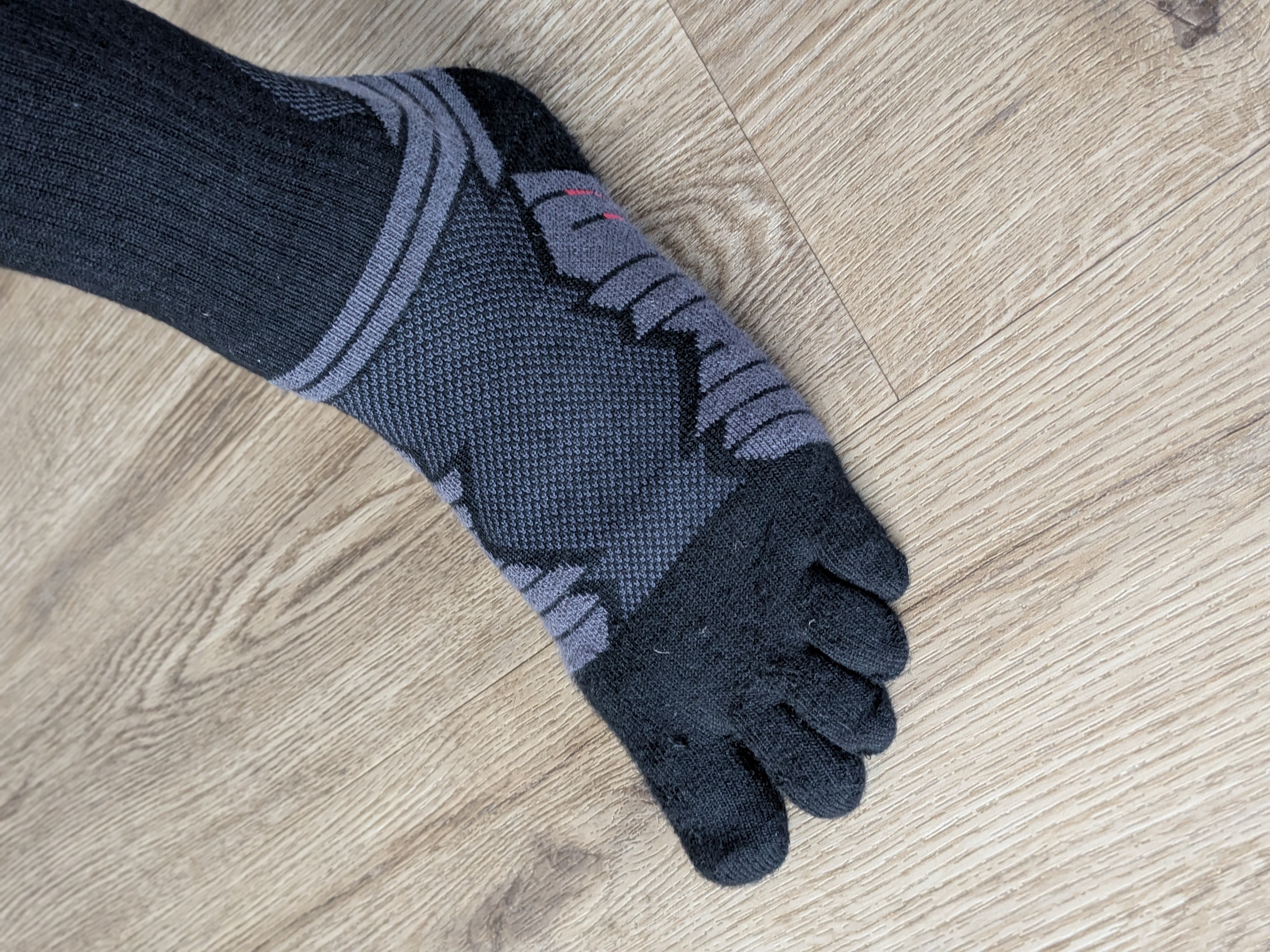
The Ultra Run: Maximum Protection
The Ultra Run Crew is the thickest option Injinji makes. Where the standard midweight has terry cushioning across the footbed, the Ultra Run goes further — individual terry cushioning inside each toe pocket too. More padding throughout.
If you’re regularly running ultra distances or doing back-to-back long days on rough terrain, this makes sense. The extra protection across all five toes adds up over many hours.
Merino Wool vs CoolMax: Does It Matter?
Here’s the thing — it depends on the conditions.
I prefer the feel of merino. There’s a softness to it that the CoolMax blends don’t quite match. If feel is your primary concern, merino wins.
But temperature? I can’t tell the difference. I genuinely don’t notice any meaningful variation in foot temperature between the merino and CoolMax variants. If you’re expecting merino to keep your feet dramatically warmer in cold conditions, I wouldn’t bank on it in this application.
Where merino does stand out is when the sock gets wet. When you’re running through puddles, rain, or streams, the merino wool variant handles moisture noticeably better. It stays more comfortable wet. CoolMax is fine, but merino is better here.
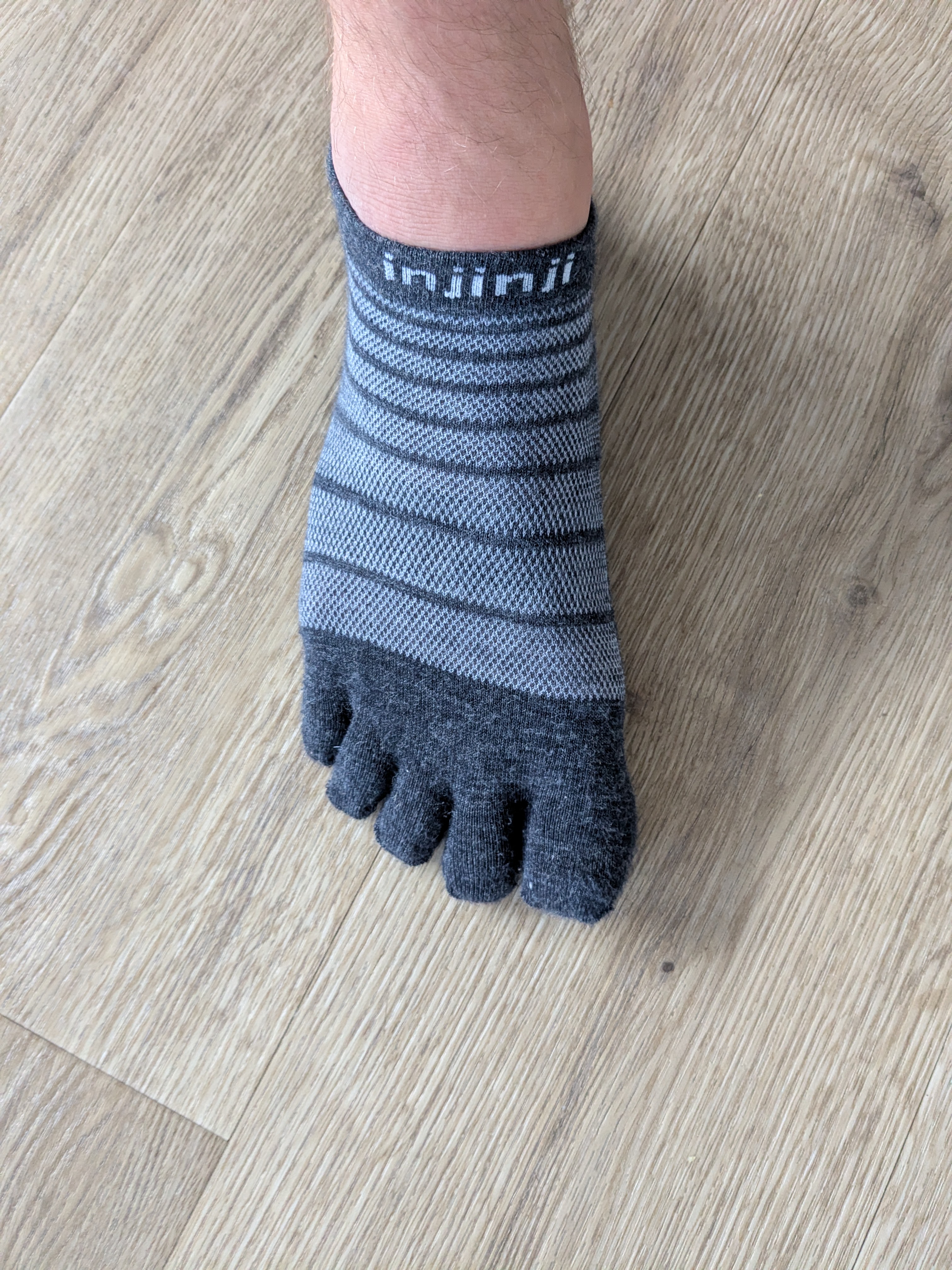
The catch: lightweight merino is fragile. This is the one place where the merino option falls short for me. The lightweight construction combined with merino means the durability concern I mentioned above is amplified. I found the lightweight merino too fragile for regular heavy use. If you want merino, be prepared to treat these more carefully — or accept a shorter lifespan.
The Fit System
All Injinji variants use a noticeably stretchy construction. More so than other toe sock brands I’ve tried — Creepers, for comparison, is considerably less stretchy. Injinji has a higher Lycra content, which is the main reason. I’m not enthusiastic about high synthetic content for its own sake, but I’ll acknowledge the functional benefit: the sock molds to your foot and toe shape better.
This is actually useful in the toe pockets specifically. My big toe is on the larger side, and the stretch accommodates that cleanly. My little toe is quite short, and the little toe pocket does fold over slightly — but it has never caused any issues. It just means there’s a bit of slack fabric there.
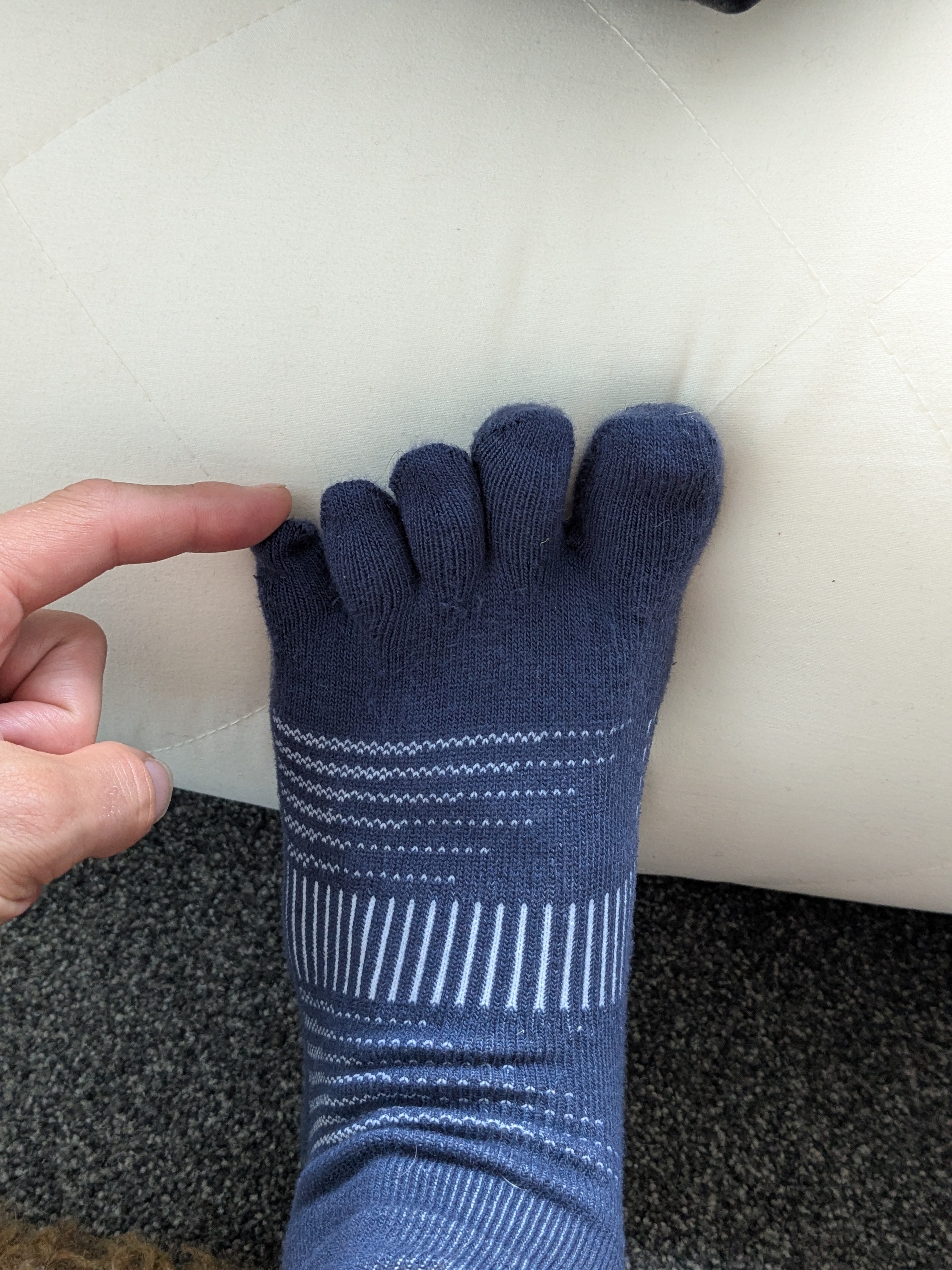
The toe length is, overall, pretty much perfect. This is one of those areas where toe socks either work for your foot or they don’t — and for my foot shape, Injinji works well.
For sizing guidance, Injinji uses a standard unisex size range (S through XL based on shoe size) alongside a narrower women’s-specific fit. If you have wider feet, go unisex. If you have narrow feet, the women’s specific may fit better.
Durability
The lightweight options are the weak point. Half the lifespan of midweight, in my experience. Nail care matters more with the thinner construction. I’ve moved away from lightweight for everyday use specifically because of this.
The midweight and Ultra Run variants hold up considerably better. If you want Injinji socks to last, go midweight or above. The Original Weight sits in a reasonable middle ground — not quite as durable as midweight, but better than lightweight.
That said, all toe socks will eventually wear at the toe tips — it’s the nature of the construction. The individual toe pockets mean more seams, more potential wear points. Keeping nails trimmed isn’t optional, it’s maintenance.
The Bottom Line
Toe socks are worth it for every runner. That’s my starting point, and I stand by it. The combination of natural toe splay and zero inter-toe friction is genuinely useful — and at long distances, it’s significant. If you’ve been curious about making the switch, just do it.
Within the Injinji range, here’s where I land:
Choose the Run Midweight No-Show if:
- You want one sock that does everything well
- Durability is a priority
- You prefer a low-profile sock for most running
Choose the Run Original Weight Mini-Crew if:
- Your shoes have a higher collar and you get rubbing at the ankle
- You want a bit more cushioning than lightweight without going full midweight
- Low sock height is still important to you
Choose the Ultra Run Crew if:
- You’re regularly running ultra distances or multi-day events
- You want maximum toe and foot cushioning
- You don’t mind the higher ankle coverage
Choose the Run Lightweight No-Show Wool if:
- You love the feel of merino and run in wet conditions frequently
- You’re prepared to handle them carefully and replace them more often
- Synthetic content in your kit is something you actively try to minimise
Skip Injinji if:
- You want the lowest possible synthetic content — the Lycra content is higher than some alternatives
- Durability across all variants matters more than feel — there are more durable toe sock options out there
If you’re new to barefoot running and figuring out how to make the transition, my 4-phase guide to transitioning to barefoot shoes is a useful read alongside any sock upgrade.
Also, do you have a different experience with Injinji or another toe sock brand? Share it — my inbox is always open on Instagram and via email.
Ready to try them? Check current prices below:
- Prices on Amazon — Prime shipping
- Prices on Injinji — Full range, all heights and cushioning levels
I’m just Nick, writing on the internet. These are my honest experiences from wearing these socks on real runs. I don’t represent Injinji.
Where to Buy
We earn a small commission from qualifying purchases at no extra cost to you. This helps support our independent testing.