
Best for: Experienced barefoot runners wanting ultra-lightweight performance with maximum ground feel and excellent heel lockdown. Skip if: You need wet traction, have a wide little toe, or aren't willing to pay premium pricing
Specifications
| Stack Height | 6mm total stack height / Zero Drop |
| Weight | 5.3 oz/ 150g for EU42 |
| Best For | Barefoot training, maximum ground feel |
| Fit | Standard fit throughout |
| Feel | Thin sole, close ground feel |
| Sizing | runs large |
Affiliate links support our reviews at no extra cost to you
This is how good “barefoot” running can feel! Yes, I’m slower, but I’m more connected.
That thought had me lacing up the Vivobarefoot Primus Flow for the last few weeks.
Vivobarefoot says this is their performance-driven barefoot running offering—a real contender if you want as little between you and the road as possible.
But does it deliver? Let’s break down the reality, from toes to tread, with all the technical and practical details you’ll need.
Fit
The toe box is squared for the big toe, but sharply tapered on the little toe side. Vivobarefoot’s lineage shows here: the Primus Flow preserves the signature shape many of us have come to associate with the brand. The big toe side is adequately squared off, letting your big toe splay as nature intended (which is a big plus for me), but the little toe side cuts in much earlier and tighter than I’d like. If you have a wider forefoot or a longer little toe, expect a degree of squeeze. In my case, my little toe was pressed in more than I’d prefer—a detail worth noting if you’ve got a foot that fans out more.
The midfoot fit runs medium to wide, with added depth compared to other Vivobarefoots. If you’ve tried the Primus Lite or Primus Lite Trail, the difference here is immediately noticeable: there’s extra depth throughout the instep and midfoot region. For me, it felt wider than my other Vivobarefoot pairs, and the extra interior volume will particularly benefit those with high arches or more voluminous feet. If you’ve found Vivobarefoot too shallow before, this model could fit you better..
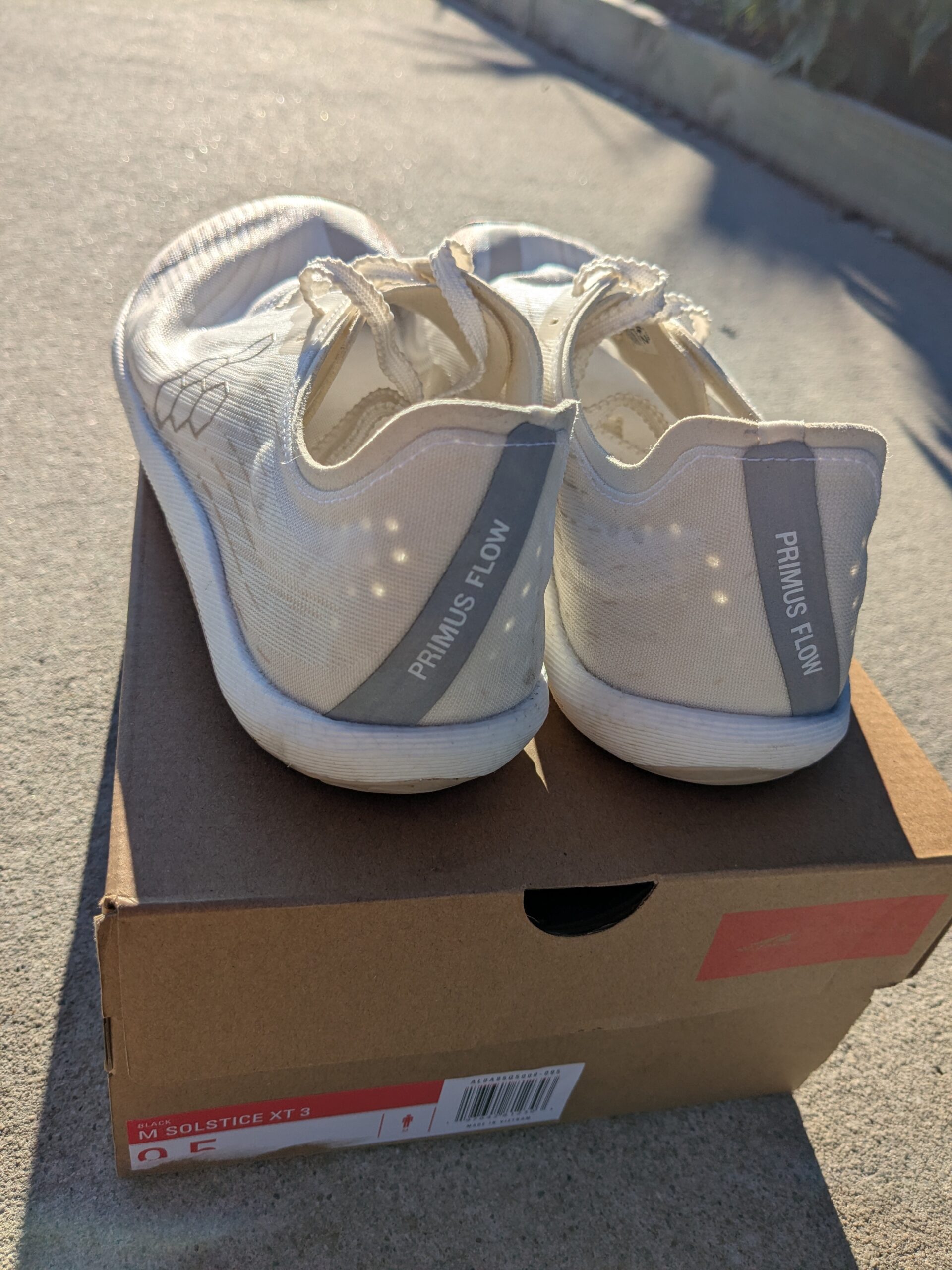
The heel is deep, snug, and locks down securely thanks to unorthodox materials. Heel lockdown gets high marks here: the internal collar uses a faux vegan leather that feels slightly tacky, allowing the heel to seat deeply and lock in with minimal slippage. Combined with the extended eyelet system, the shoe provides an impressive, dialed-in rearfoot hold. Just be aware, even using the lower eyelet, the lockdown is fairly aggressive—you’ll need to fully loosen the laces to get these off, which some may find tedious.
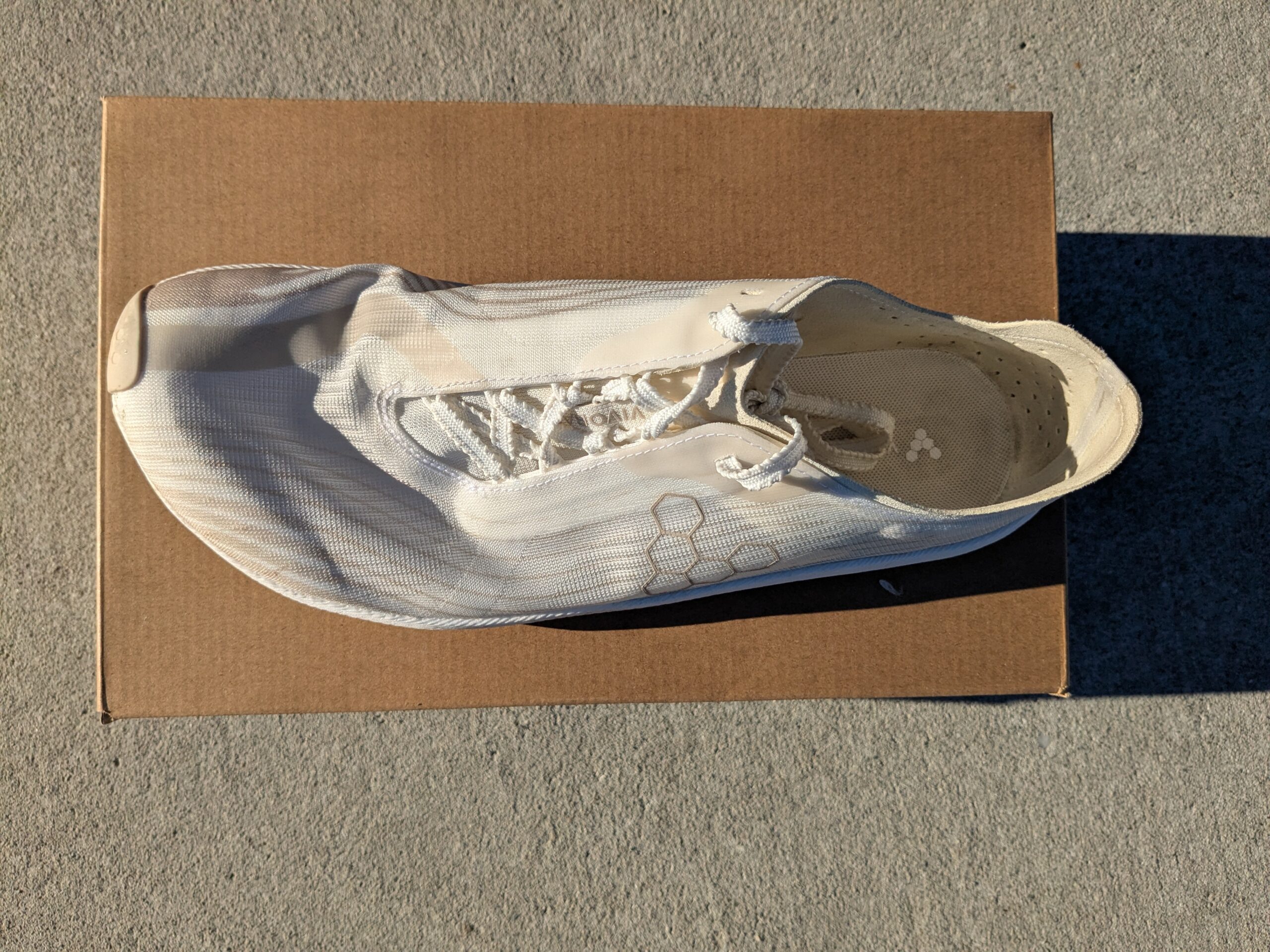
Length runs a touch long but allows for midfoot width. I went with my usual EU 42. While the fit was a bit long for my liking, sizing down would’ve squeezed the forefoot too much. I’d suggest true-to-size for most, but if you’re between sizes and like a more compact fit, dropping half a size is plausible. As always, try before you buy if you can.
No insole means extra depth (and a bit of extra room). There’s no removable insole—just a direct step onto the shoe’s base. That, alongside the intrinsic depth, might make this a solid option for those transitioning from Xero Shoes or sandals and want “just enough” shoe.
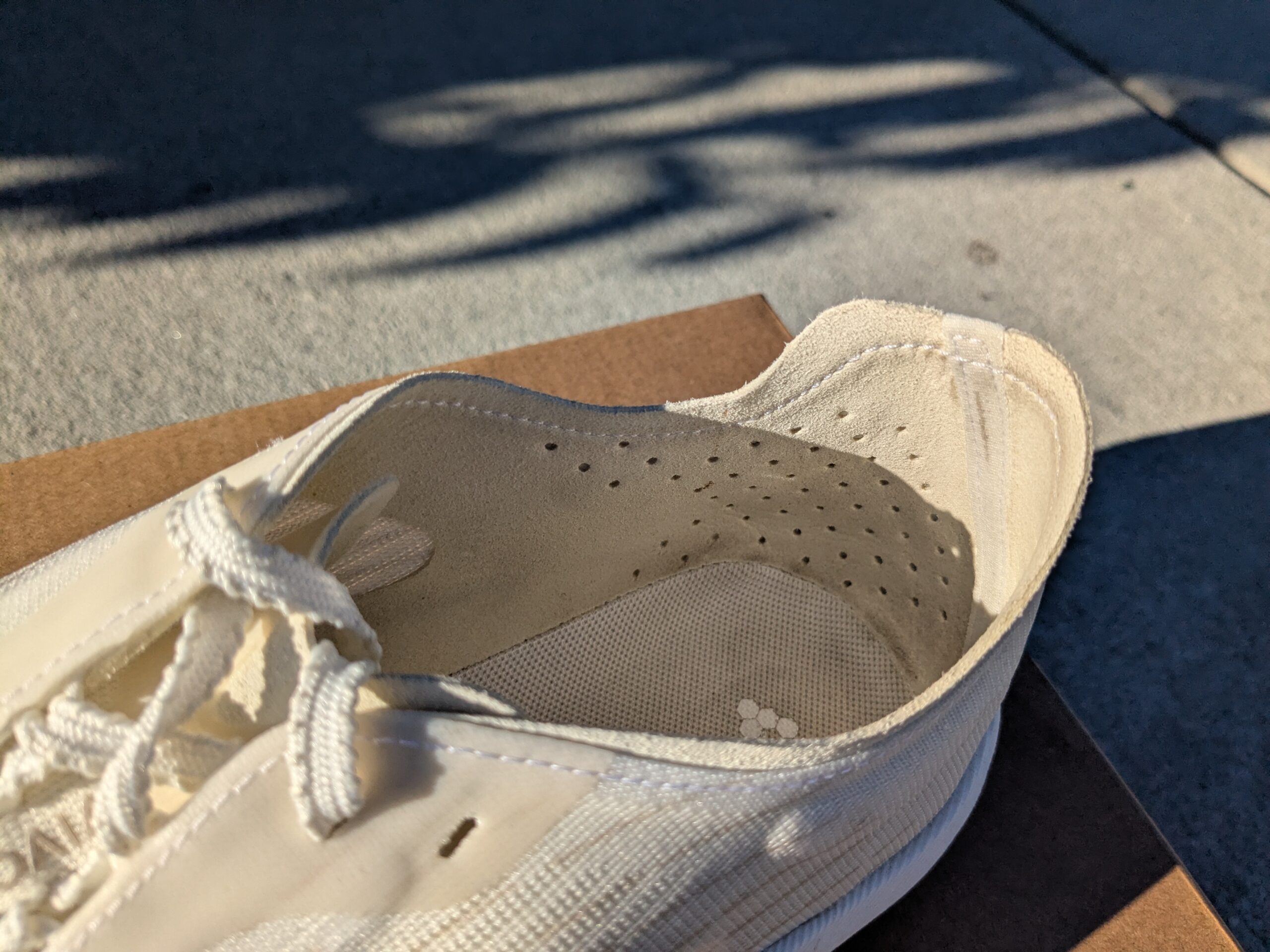
Secure but potentially rubs if used sockless. I haven’t run these barefoot (no socks), and honestly, I wouldn’t. The materials are structured and not soft inside. I suspect rubbing and hot spots could pop up if you try sockless running—something to be wary of if you’re a purist.
Feel
At just 150 grams a shoe (EU42), these are featherlight and truly “barefoot” in feel. The first impression—pure lightness. Put them on, and there’s a definite sense of “am I even wearing shoes?” that every minimal runner craves. At 150g per shoe, this is about as light as modern road shoes get.
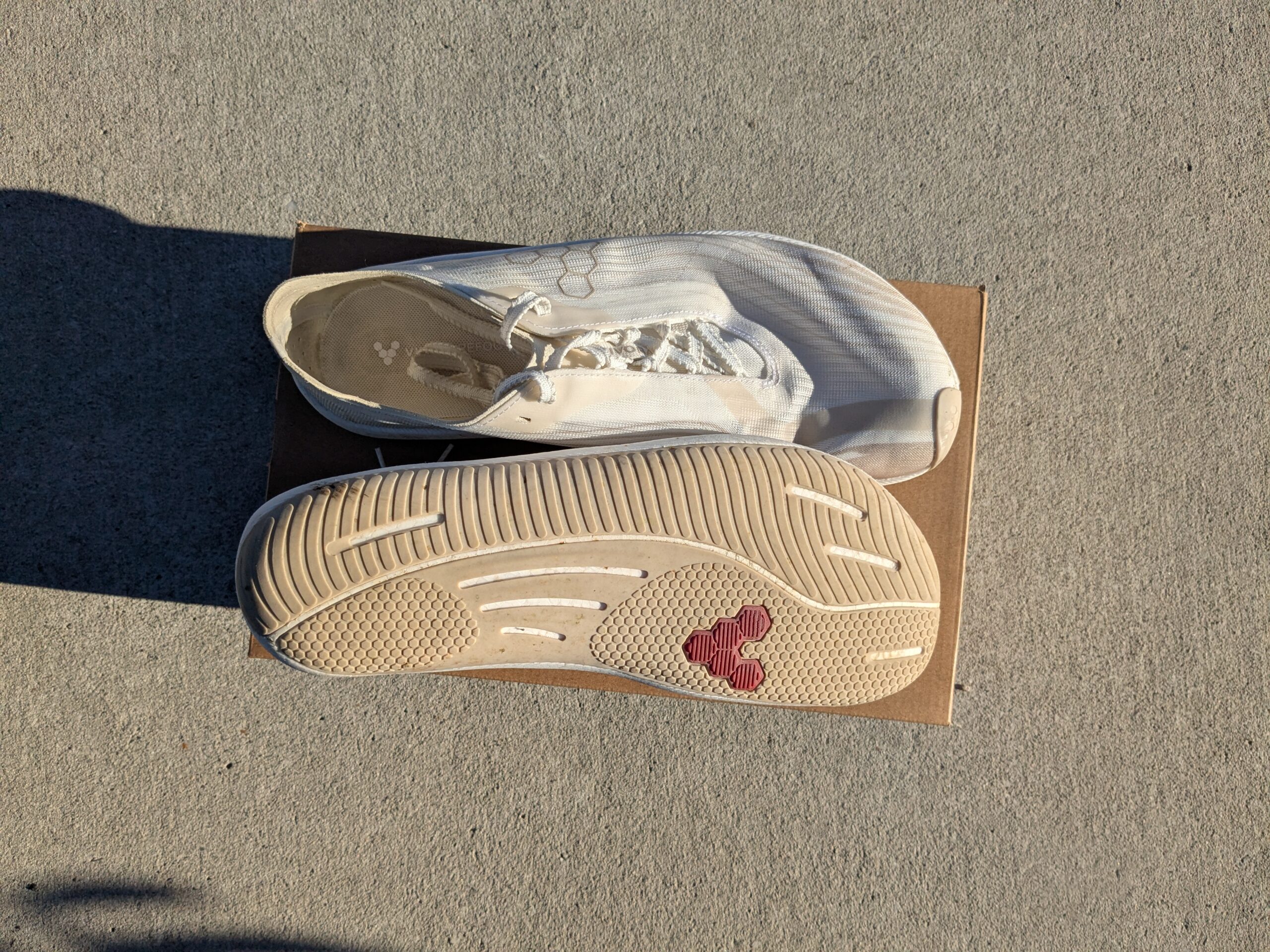
There’s a tiny bit of foam underfoot—just enough to notice, but not enough to feel like a cushion shoe. This is where things get interesting. Vivobarefoot included a thin layer of foam (almost more like a sandwich between your foot and the outsole) instead of just rubber. Walking, I noticed it made my stride feel slightly heel-heavy—almost as if I had a “drop” even though there isn’t one. It’s subtle, but present. On the run, it disappears, promoting a flat, forefoot-friendly landing. If you want pure slab-on-ground, shoes like the Xero Shoes Speed Force II deliver even less cushion, but this foam might appeal to those who want a different feel.
The upper is surprisingly stiff and structured for such a minimal shoe. Expect structure: the woven plastic mesh upper offers breathability but minimal give. There’s very little stretch—great for secure running, less so if you want casual flexibility. The result is a shoe that doesn’t let your foot slide around even at high speed, but also doesn’t mold or soften with time like softer meshes can. Personally, I love this feel for running.
Flexibility is there—but with a detectable hint of stiffness in both the sole and upper. The Primus Flow bends and twists far more than traditional shoes, but compared to, say, the Xero Speed Force 2, it’s just a shade stiffer. You can feel it if you try to roll or twist the sole with your hands. In use, this doesn’t detract from the run (and might actually offer a bit of protection for longer outings), but it’s not the sloppiest, most flexible minimal shoe on the market. If you want “sock-like” flexibility, again, look to the Speed Force or Merrell Vapor Glove.
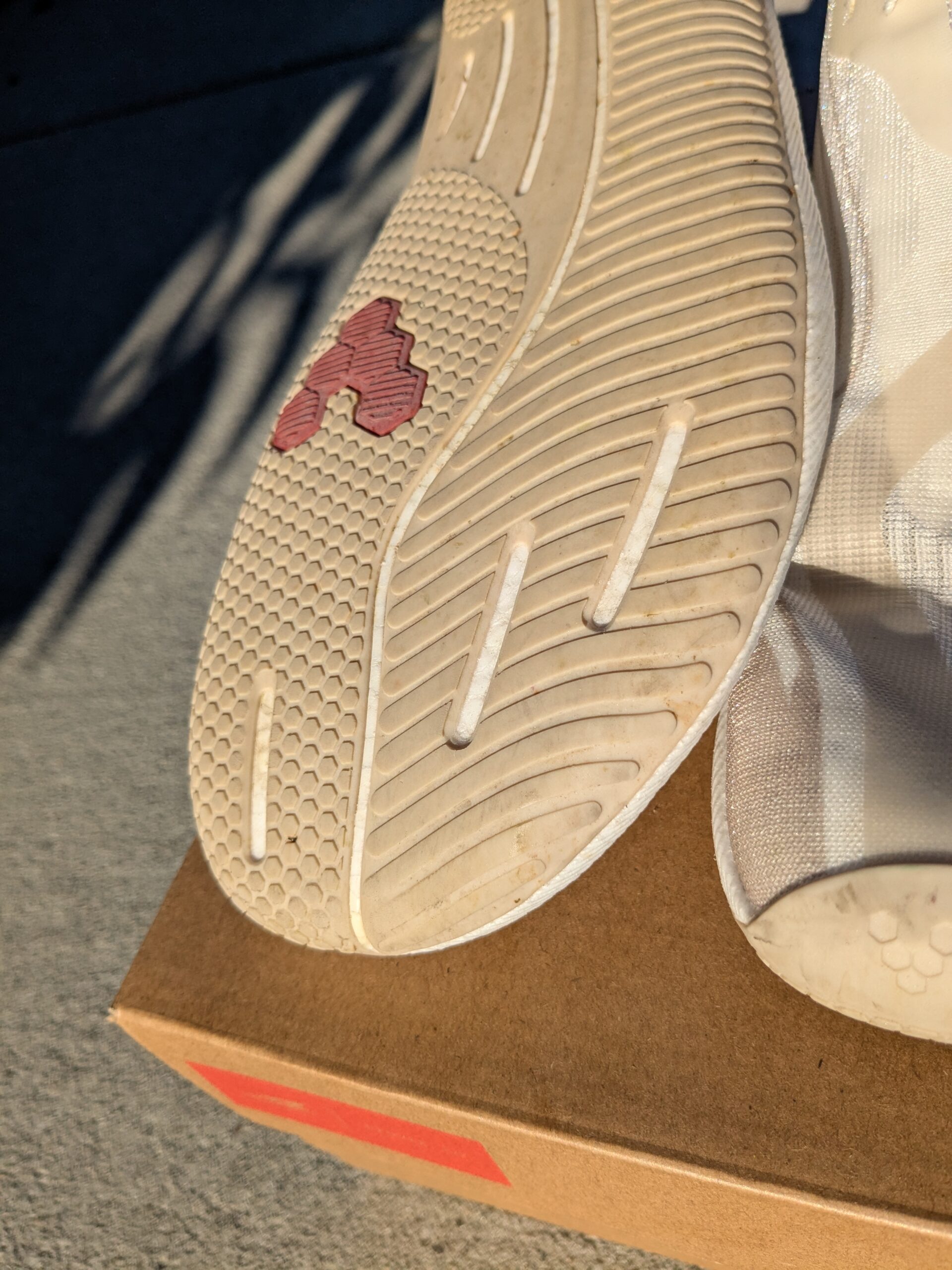
Traction is underwhelming on wet surfaces. While the outsole is a continuous, full-coverage rubber, it’s only about 2mm thick—lightweight for sure, but it doesn’t deliver much grip, especially on wet roads or grass. In dry conditions, it’s fine, but add water, and I felt the shoe getting skittish, with less secure ground feel. “Race day” traction isn’t the strong suit, but for controlled training or dry pavement, it’s ok.
Durability
The outsole will be the limiting factor for long-term durability. With such a thin rubber layer underfoot, it’s almost inevitable that you’ll see wear relatively quickly, especially if you’re using these exclusively on abrasive roads or rougher surfaces. While the compound is full rubber, it’s not thick enough for years of use.
The foam won’t pack out, and the midsole is unlikely to change feel. The thin foam layer seems more about weight savings than comfort or longevity. It won’t compress or break down like traditional EVA—it’s just not thick enough. If you drive your feet out laterally, the foam’s wrap might cause mild discomfort, but the midfoot width should mitigate issues for most.
The upper is durable and solid, with glued—not stitched—construction. That woven plastic mesh isn’t going anywhere fast. There’s enough give in its construction to prevent cracking, and I haven’t seen any early signs of glue separation along the seams. The absence of stitching means no thread to rot or snap, though I always wonder if years of use will see delamination. As of now, no issues.
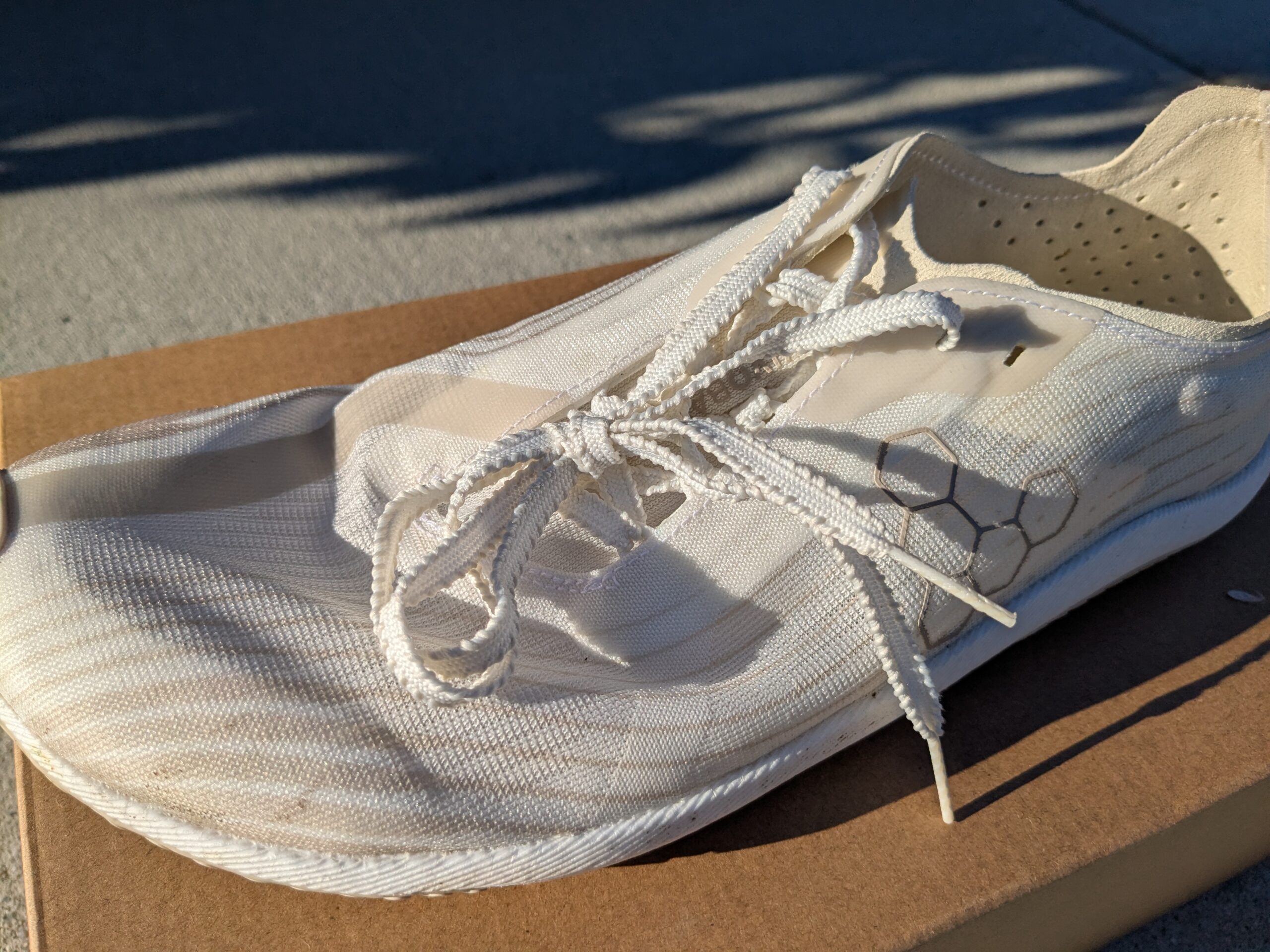
Eyelets are stitched but solid, and laces have a grippy, stay-put texture. The lacing system deserves a mention: those rip-stop style laces work, and the stitched eyelets are reinforced enough to feel trustworthy. I don’t foresee the lace holes giving out unless abused with heavy tugs every day—which isn’t the use case for a shoe like this.
The heel’s synthetic lining is tough and resists wear. No “cracking padding” or fuzzy faux suede here. The vegan leather is slick but grippy—unlikely to wear through or deteriorate even after hundreds of entries and exits.
Conclusion
A real barefoot feel with just enough structure—this shoe pushes you to run differently, and that’s the point. At first wear, I wasn’t sure about the Primus Flow’s structure—a little stiff, a little foreign in hand. But out on the road, it all comes together, pushing me into a precise, efficient barefoot strike. If you’re looking to re-train your form or want a shoe that demands proper technique, this is actually a solid platform.
Transitioning to barefoot running? Take it slow. If you’re new to true minimal shoes, you absolutely need to ease in. Ignore the marketing hype—start with just a few minutes at a time, build up slowly, and listen to your body. Trust me: progress in increments of minutes per run, not miles, for the first few weeks.
More flexible alternatives exist, but this one nails depth and lockdown. For a more sock-like, flexible feel (and slightly narrower toe box), check out the Xero Speed Force 2 or Merrell Vapor Glove. Both serve the same barefoot crowd, though the Primus Flow clearly takes the cake for those wanting added depth, structured heel lock, and a true Vivobarefoot midfoot volume.
Price is premium—expect about $180 USD—but reflects the brand’s focus and quality. No way around it: this isn’t the cheapest minimal trainer on the market. That said, Vivobarefoot fans know what they’re buying into: a unique fit, technical design, and (mostly) solid durability for such a light shoe. I lucked into a discount, but even at full price, the value is there for dedicated minimal runners.
My advice: give the Primus Flow a look if you crave that barefoot-but-protected experience and are serious about your form. If sandals aren’t your thing for daily runs, this is as close as road shoes get. I’ve had nothing but fun reacquainting myself with true minimalism in running. Just remember: a little patience, a little gradual loading, and you’re set for the journey.
Verdict
The Vivobarefoot Primus Flow offers a lightweight, secure barefoot run with excellent heel lockdown and toe splay, but a narrower little toe fit and limited wet...
Affiliate links support our reviews at no extra cost to you
Where to Buy
We earn a small commission from qualifying purchases at no extra cost to you. This helps support our independent testing.