
Best for: Shorter-distance trail runners who want one shoe that copes with any condition, with more protection than the Mesa Trail II. Skip if: You loved the soft, pliable feel of the old Mesa Trails, you chase light shoes, or you are racing 100km
Specifications
| Stack Height | 12mm total (9.5mm midsole + 3.5mm insole) / Zero drop |
| Weight | 278g / 9.8 oz for men's US9 (I measured 285-290g with a thicker insole) |
| Best For | Shorter-distance trail running in mixed conditions |
| Fit | Moderately wide toe box, forgiving midfoot, deep volume |
| Feel | Firmer than the Mesa Trail II, with a rock guard underfoot |
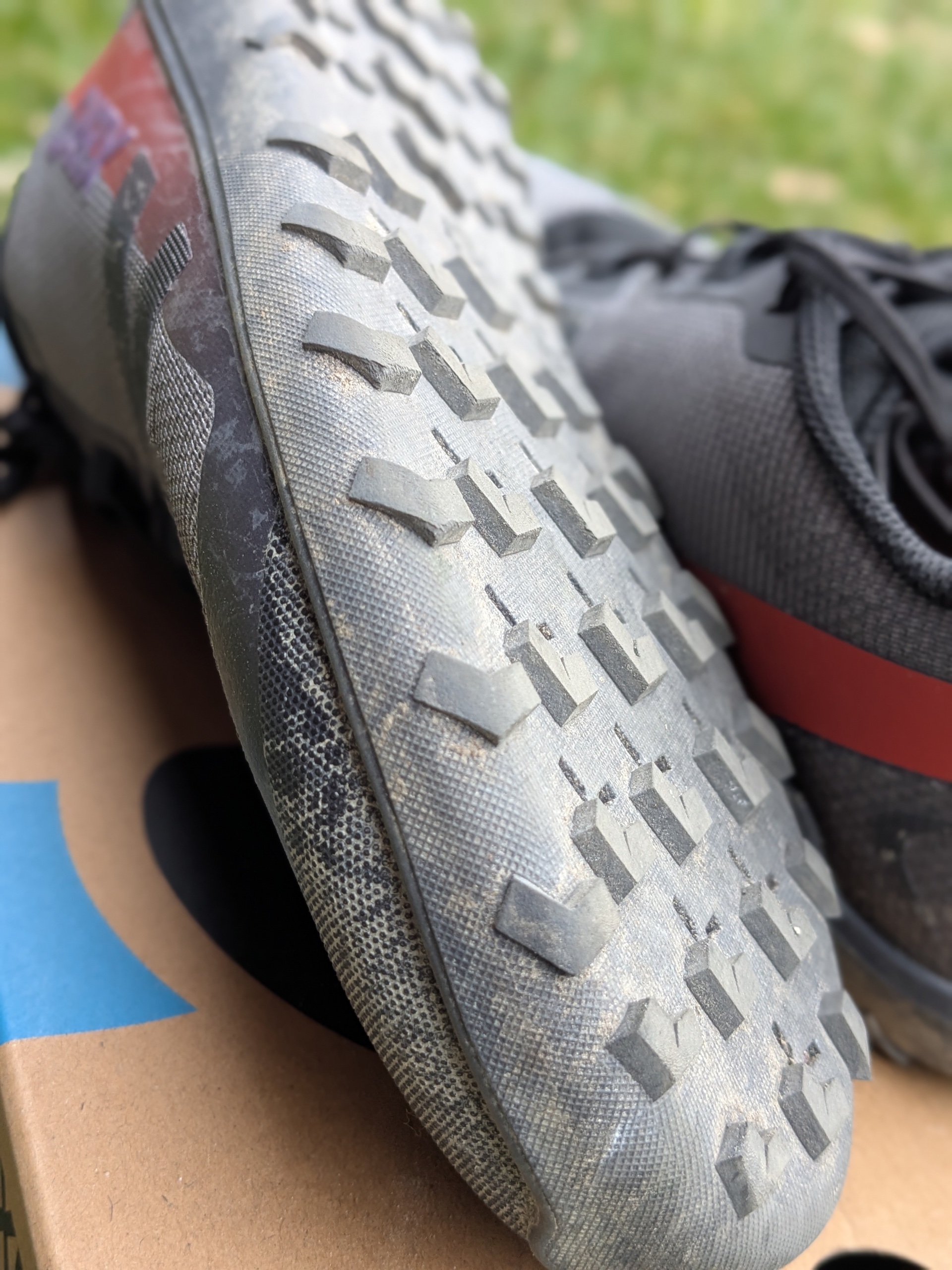
| Outsole | FeelTrue rubber with 3.5mm chevron lugs |
| Sizing | I go half a size up; true to size if your middle toe is longest |
Affiliate links support our reviews at no extra cost to you
Whenever anyone asked me about barefoot trail running shoes, I would go towards one or two different shoes. One of those was the Xero Shoes Mesa Trail II.
Well, the Mesa has now got an update. It’s the Xero Shoes Mesa Summit, and it’s interesting.
It’s different from the II, for sure. The durability looks like it has improved a lot. The protection looks like it has improved a lot. But that does have drawbacks, and that’s what I want to tell you about.
Affiliate Disclosure: By clicking through the links on this page and purchasing the products, you’ll be helping me out. This is done because I receive a kickback from the sellers at no extra cost to you! Thank you so much for supporting us!
Fit
Does the Mesa Summit fit true to size?
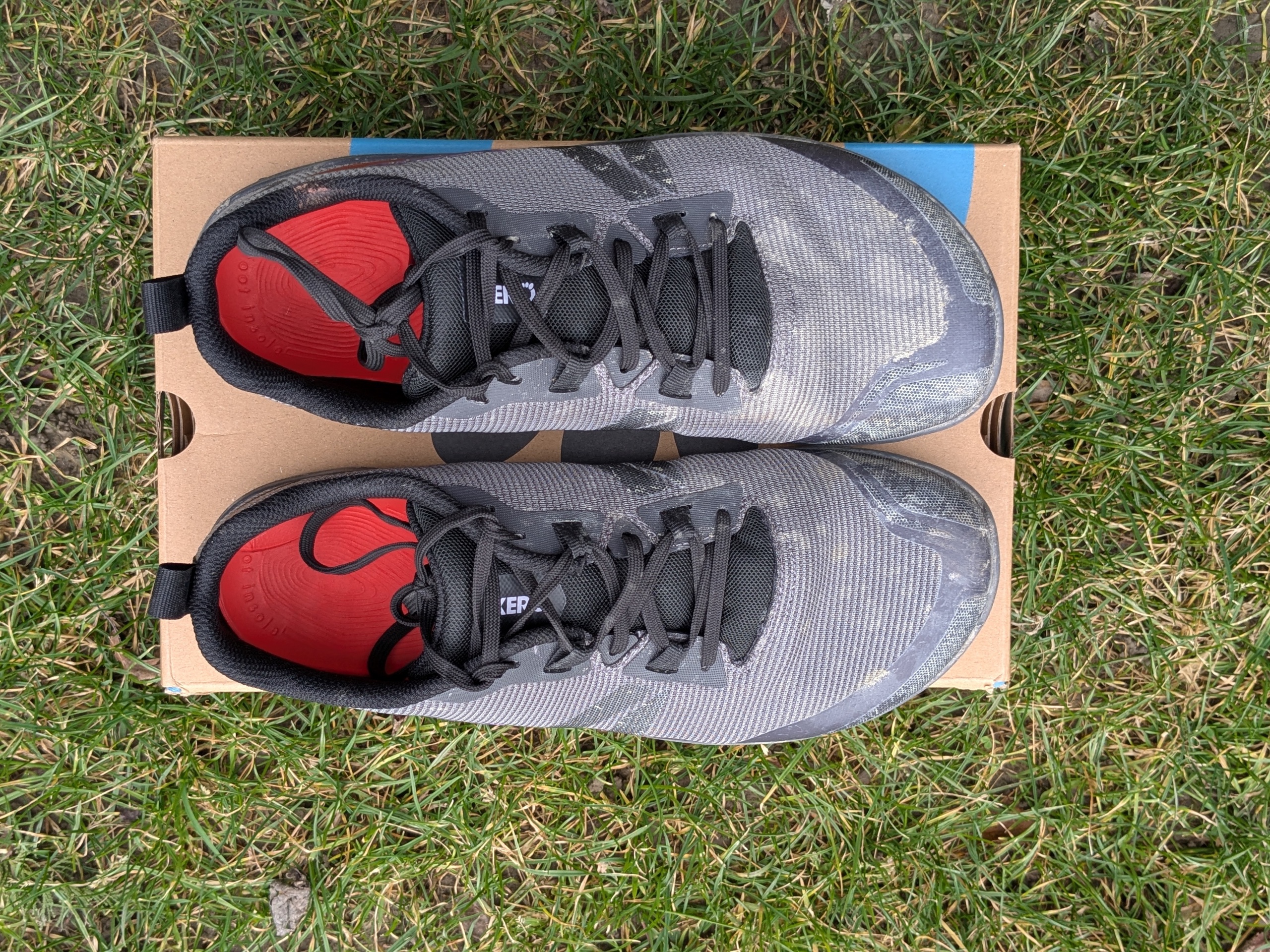
This is a traditional Xero Shoes fit. If you’ve had Xero Shoes in the past, you likely know how they fit anyway, and you can just get the normal size you normally get.
The toe box is not the widest on the barefoot market. On the big toe side, it rounds off a little too much. Too much for some people, and for me that is the case. That’s why I go half a size bigger, just to get that little extra length and a bit more space around the big toe side.
Here’s the thing though. If your middle toe is actually your longest toe, this shape fits you a lot better. If that’s you, you would likely go true to size.
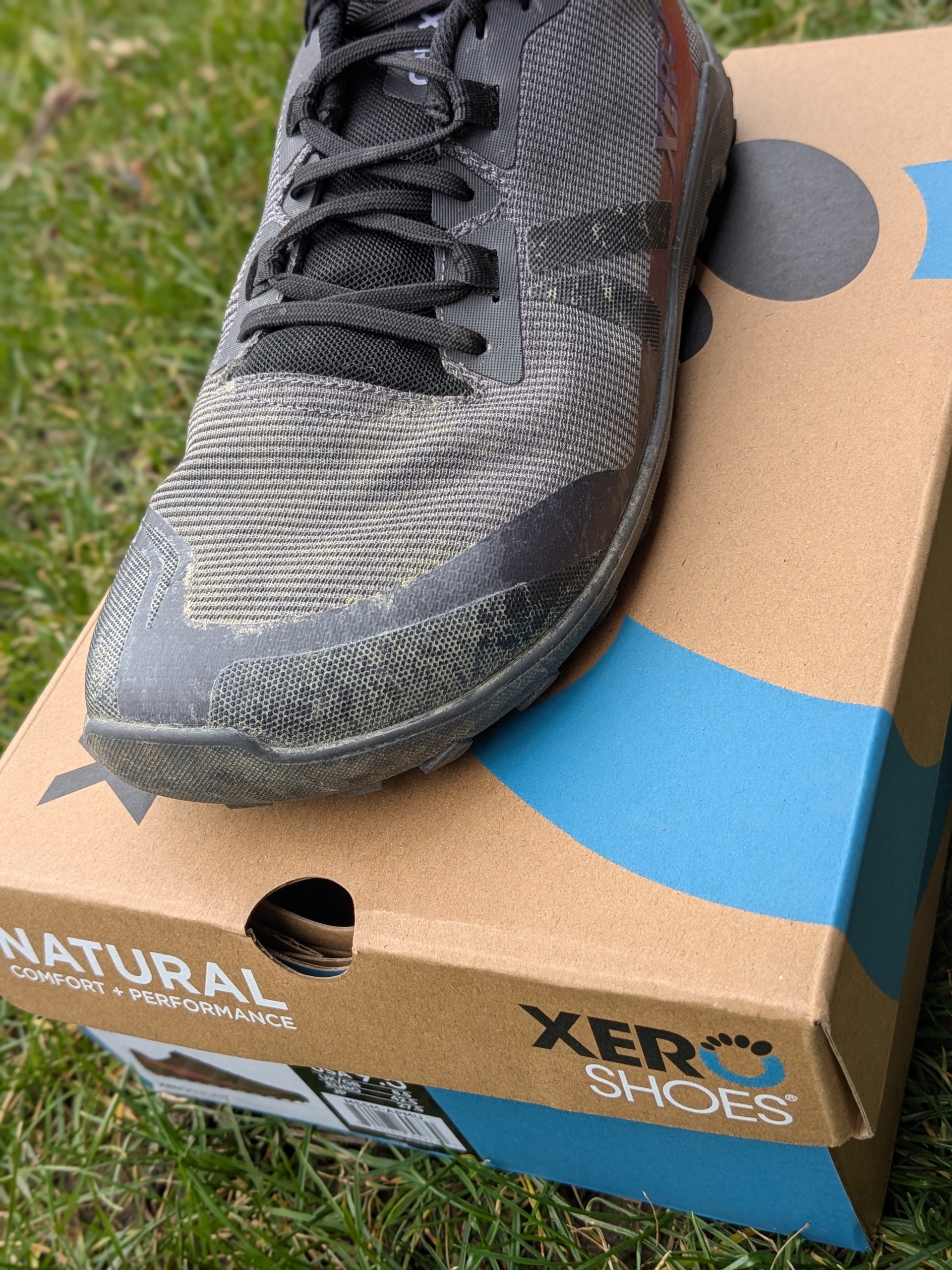
If you want proper fan-shaped toe splay, this still isn’t the shoe. That hasn’t changed from the Mesa Trail II, and it’s the same note I make on nearly every Xero Shoes model.
Is the shoe made for a high or low-volume foot?
Xero Shoes are usually a little wider in the midfoot, and quite forgiving around there. Then the big thing is how deep the shoe is.
I had to cinch these in quite a bit to get a good lockdown. I even replaced the insole with something a little thicker, just to fill out that volume a bit more.
So if you’re someone who has had tightness over the top of your foot, or you feel like you’re bursting out the top of a shoe, Xero Shoes can often be a good way forward. They do have a lot of volume.
Does the shoe have a good heel lock?
This is where the Mesa Summit gives something up. I used to love the Mesa Trail II because the heel lock is beautiful. It’s mainly down to the strap system you see in there, along with the laces, pulling that flexible heel in and around really nicely.
The Mesa Summit isn’t quite as good at that, and I think it’s the material change. Because we’re looking at a more protective shoe, the materials are that little bit stiffer, and the heel has become a little stiffer with them.
It’s by no means like a traditional running shoe. I can still flex it. But compared to some of the older styles, it is stiffer.
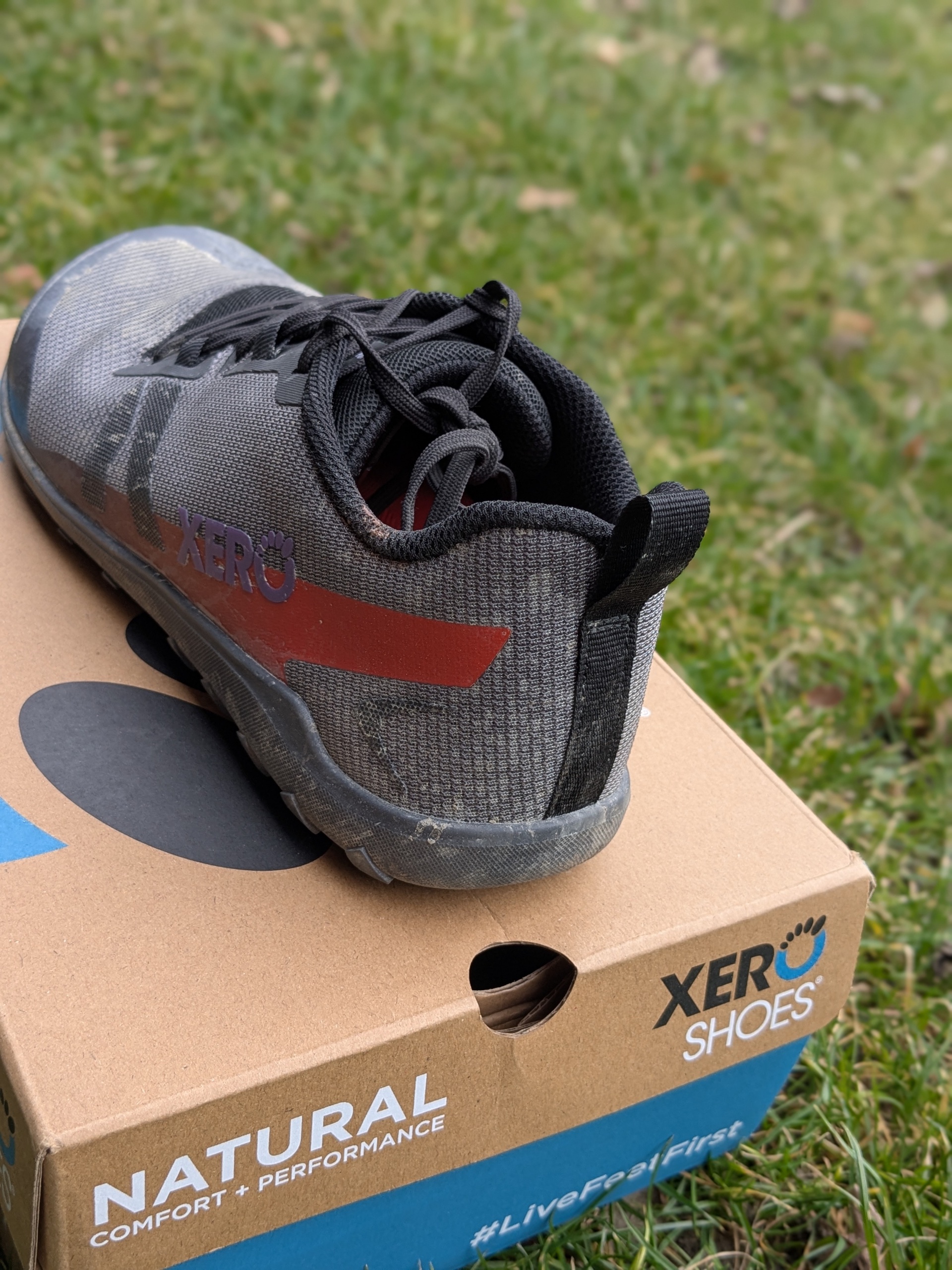
It took me maybe 15 kilometres of adjusting to really get a good lockdown. At that point it’s dialled in now. Just something to note out of the box — you may have to play with it.
One more warning: the ankle cuffs rubbed me at first. That’s because I use lower socks. Normally I get away with that, and in these I couldn’t, because it’s such a deep shoe. I had to switch out my socks, and that extra insole raised me up a little and away from the cuffs.
Because these materials are tougher, that rubbing was a bit more abrasive rather than just flexible.
Feel
Is the 12mm stack good or bad?
This is actually a really good upgrade. Underfoot it’s now around 10-11mm by my reckoning — Xero Shoes lists 12mm total, made up of a 9.5mm midsole and a 3.5mm insole.
That doesn’t sound too far off the Scrambler Low. But it is still super flexible, and it still feels more flexible than the Scrambler Low.
That’s really good considering there’s now a rock plate running through it. Xero Shoes calls it an ESS rock guard, and it’s the first one they’ve put in a shoe. Sometimes a plate like that brings stiffness. I didn’t find that, and I did feel more protection underfoot.
The Mesa Trail II is very soft underfoot, and it caught me out. I bruised my heels a couple of times when I misplaced my feet on rocks and sharp objects. So having more protection here isn’t such a bad thing.
Is the shoe flexible?
It is still flexible. I’m not going to say it’s as flexible as the Mesa Trail II, but that’s okay.
It’s a little more flexible than the Scrambler Low, but that gap has narrowed. So if you’re choosing between the Scrambler Low and this, this is still the barefoot option. It’s just not the drastic difference we used to see.
Will they work on mud, wet rock and dry trail?
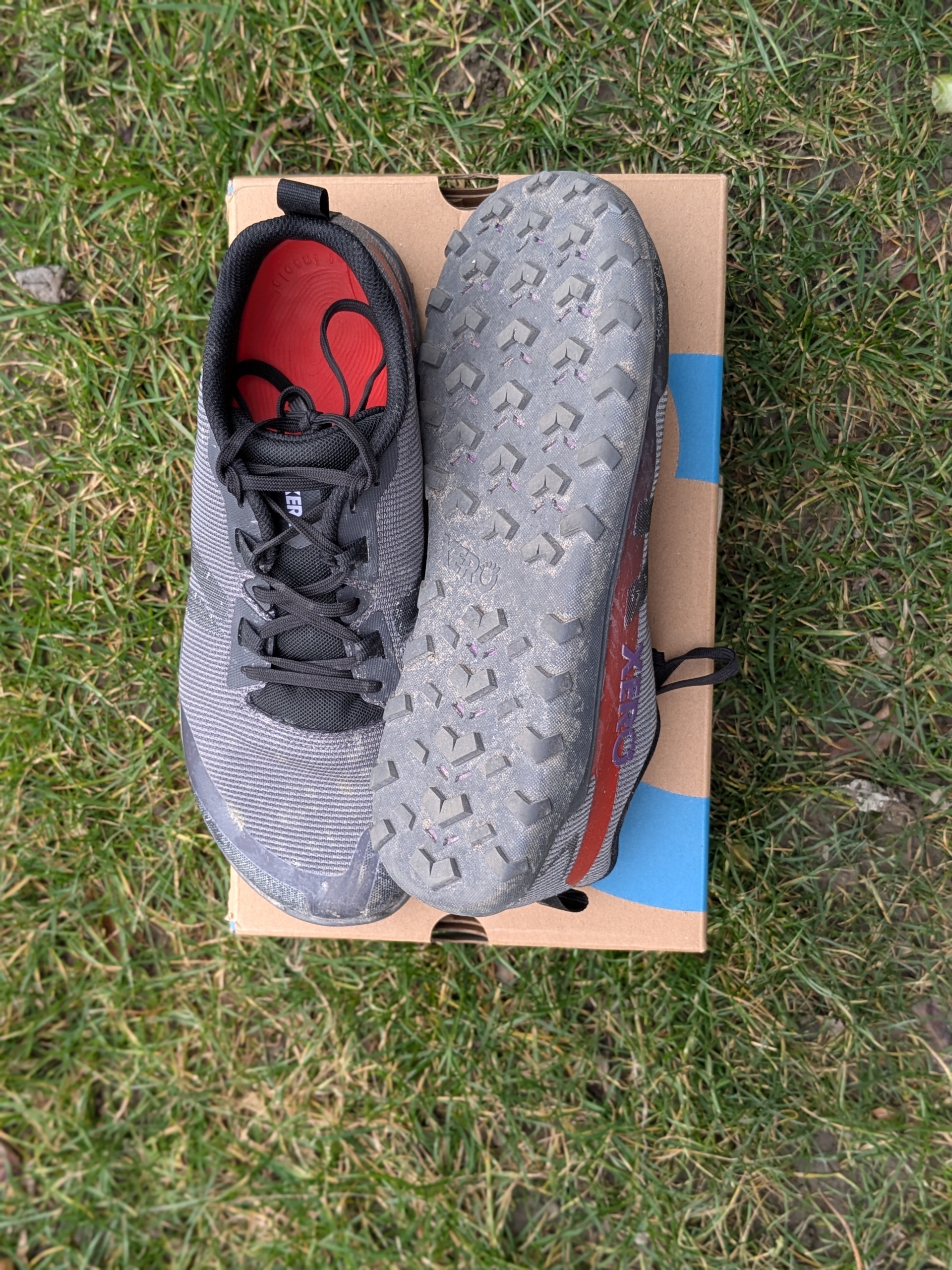
This outsole is drastically updated from the previous one. The previous one gave me a few durability issues, even though I got it to about 1000-and-something kilometres, which is still pretty decent.
The rubber feels a little softer on this one, but it’s very grippy. I’ve run it in wet conditions on rocks, I’ve run it in really sloppy mud, and it does fairly decently in all. Not perfect in any, but very decent in all.
That means I can choose it in any condition and know it’s going to be pretty good. It’s not the one I’d pick for the muddiest, rainiest day, and it’s not the one I’d pick for a bone-dry day. But I can take this one shoe anywhere and I’ll be good in it.
I like versatility in shoes. This versatile trail shoe, I like it.
The chevron pattern did really well in the mud we’ve been having here in New Zealand. We’ve had a lot of wet weather down here in the South Island, and I was feeling pretty confident in these. Massive positive there.
What about the upper?
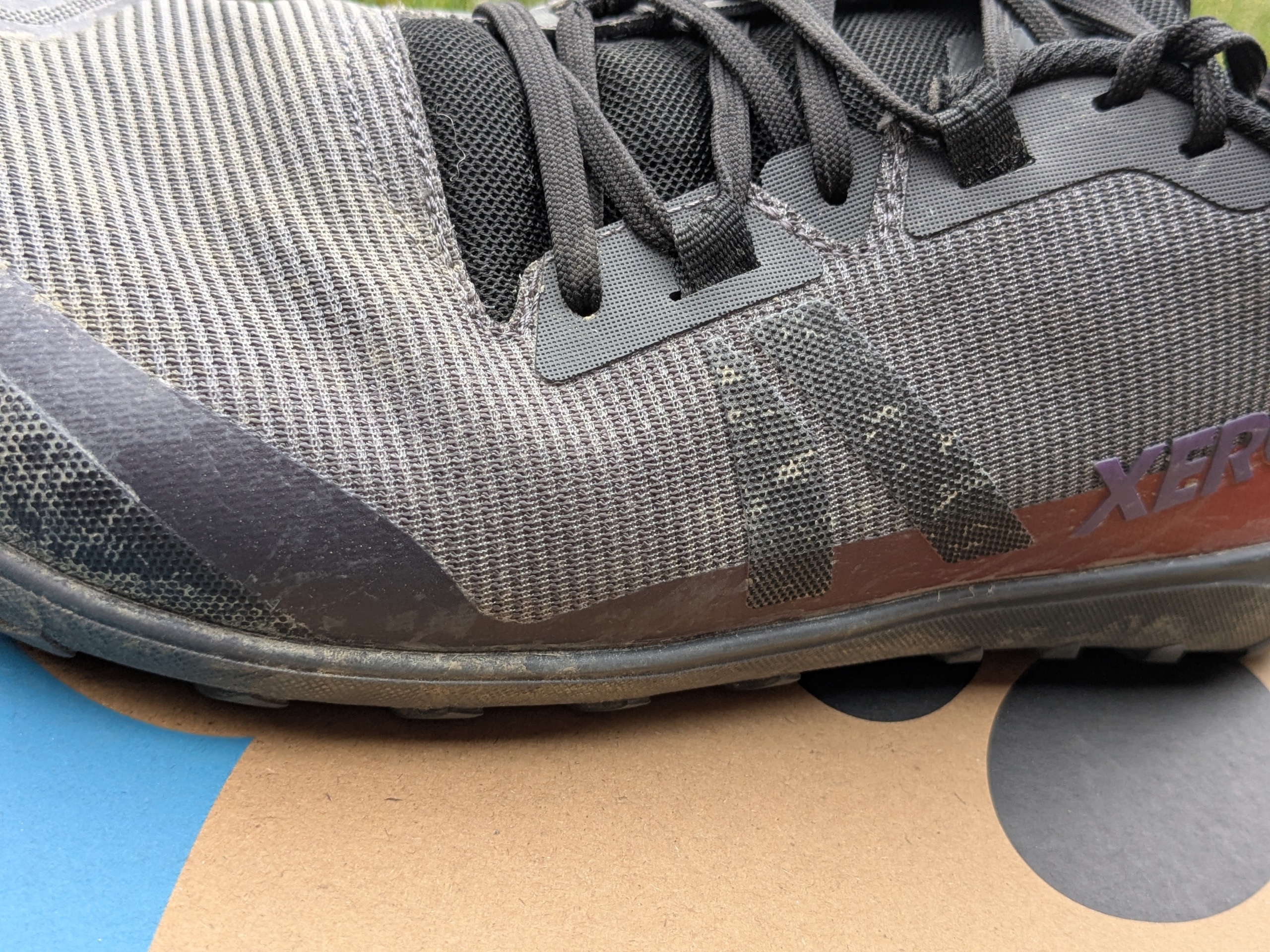
The upper is more protective now, and the material is a little stiffer. It’s more protective against abrasions, so it feels more like a trail shoe. It’s hard to put it any other way — it just feels a lot more trail ready.
Those overlays across the toes are semi-stiff and provide enough protection. I appreciate that, because I do kick rocks every now and then. The overlays now extend throughout the shoe too, protecting against any scraping along the side.
It feels like a much more professional shoe. It’s a good update for a trail option.
That does bring a potential fit issue. If you have more solid materials, they don’t wrap around your foot as comfortably. But if you know Xero Shoes, the fit is likely okay for you.
Weight
Let’s talk about the weight, and I’m a little disappointed here. Mine come in at 285-290 grams, which for me is a bit heavy. Xero Shoes quotes 278g (9.8 oz) for a men’s US9, and I’m running a thicker insole than stock.
I know this is a trail shoe. I know it’s more protective, which is good. But light shoes win out pretty much every time for me, and this is starting to feel a little heavy.
There’s not much we can do about that. I’ll still run the Mesa Trail II when it’s dry enough, because that’s pretty light and very flexible. At other times I’ll jump into something like this or the Lono Barefoot Verve, which is a pretty awesome trail shoe — interestingly, in that same weight range.
Durability
Will the upper develop holes?
This update is all about protection and durability, and I think it will do much better in those areas.
I have blown out the sides of Xero Shoes Mesa Trails before. I have in the Mesa Trail II, and I have in the Mesa Trail 1. It just happens, because that’s the flex point, and that flex point creates wear over time. That will likely happen in pretty much every shoe with any minimal aspect to it.
But this one has nice overlays there, and I expect the material to be a lot stronger. The upper won’t be the issue here.
How long before the outsole wears out?
I think the issue is actually going to be the outsole. That rubber feels a little soft, and I’d expect that means it will wear out a bit quicker.
This may be confusing, considering Xero Shoes has a 5,000 mile guarantee. I don’t think this rubber will go to that stage at all. Or if it does, you won’t have any lugs left, which makes it pointless for a trail shoe.
I’d expect a similar range to the Scrambler, which also has good lugs but is quite thin. Maybe the Lono Barefoot Verve too, because that has sparse lugs and will likely wear out in a similar range.
So I’m not going to say it’s awesome for the outsole. But that is a trade-off. You’ve got more grip, you lose a bit of durability. That’s usually a trade-off you’ll find in shoes.
The Bottom Line
This is a decent upgrade. It’s a great update in terms of protection. It’s a great update in terms of durability.
I could maybe argue that the fit and the feel have degraded a little. But that’s only if you’re comparing it to the old Mesa Trails. And the old Mesa Trails probably didn’t suit many people — they were real barefoot shoes, really soft and pliable, which most people aren’t up for, especially on the trails.
So I understand why it has gone this way.
Would I do 100k in these? I don’t think so. This is going to be my shorter distance option. This or the Lono Barefoot Verve are my shorter distance options right now.
If you want a bit more cushion or protection underfoot, jump to the Scrambler Low. I’ve run 100km races in those, I’ve done many miles in them, and I trust them again and again.
Buy the Mesa Summit if:
- You want one trail shoe that handles mud, wet rock and dry trail
- You’ve had Xero Shoes before and the fit works for you
- You want more underfoot protection than the Mesa Trail II gives
- You run shorter trail distances
- You have a deeper, higher-volume foot
Skip the Mesa Summit if:
- You loved the soft, pliable feel of the old Mesa Trails — stay on the Mesa Trail II
- You want more protection for long distances — go to the Scrambler Low
- You have a wide, fan-shaped toe splay — try Vivobarefoot instead
- You’re chasing the lightest shoe you can find
One last thing. I haven’t heard much from the community about the Mesa Summit yet, and the durability is the one point I can’t answer properly right now.
So if you’re hundreds of kilometres into a pair, how are they faring? Drop it in the comments — that’s the bit others will really benefit from.
Verdict
The Xero Shoes Mesa Summit trades some of the Mesa Trail II's softness for a rock guard, tougher overlays and grippier lugs. A great trail update, but it costs you weight and a little ground feel.
Affiliate links support our reviews at no extra cost to you
Where to Buy
We earn a small commission from qualifying purchases at no extra cost to you. This helps support our independent testing.