
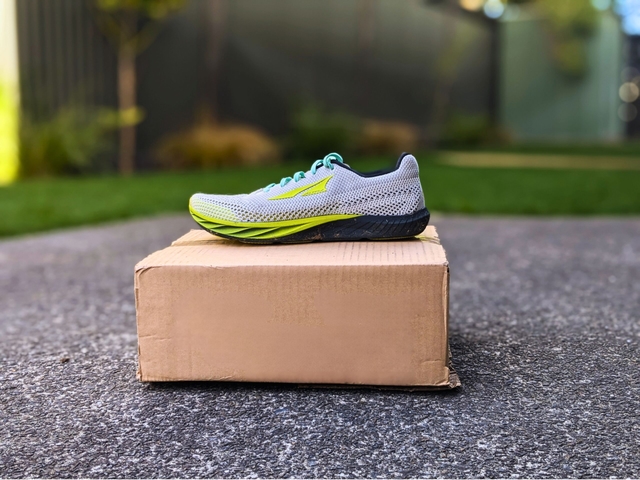
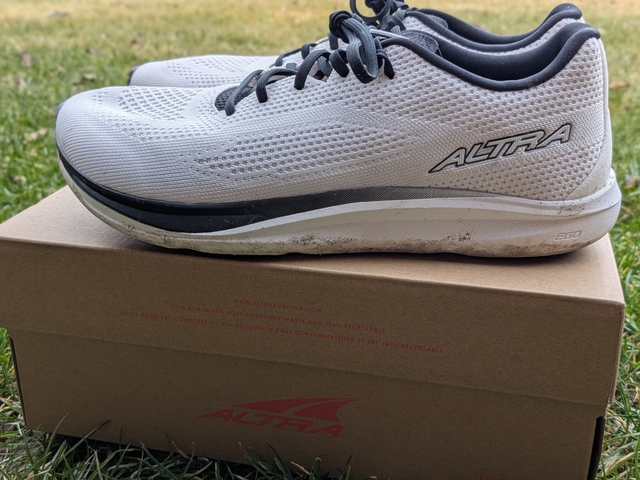
Both are $140 zero-drop Altras with a wide toe box. The Racer 2 is firmer, deeper and 55g lighter. The Escalante 5 is softer, with the tougher outsole.
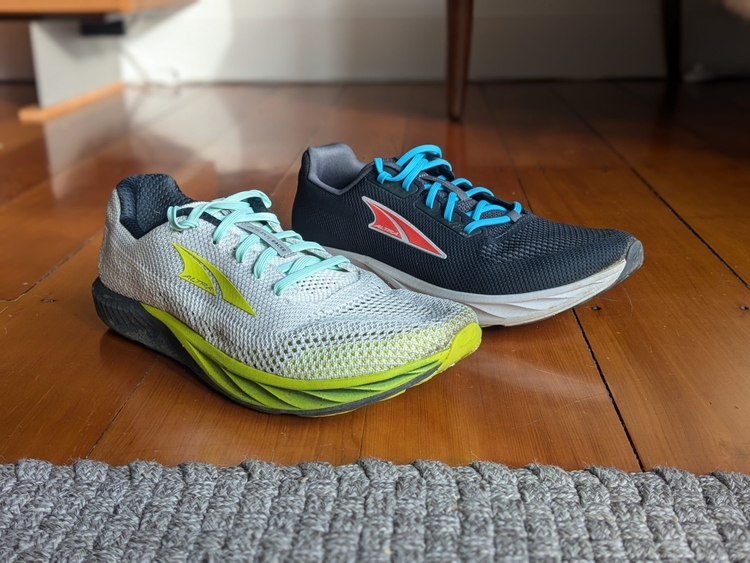
So, you’re on the hunt for your next running companion and have your eye on Altra’s Escalante line. But how do you choose between the Escalante Racer 2 and the Escalante 5?
Here’s the thing that makes this one interesting: they’re both $140. Same price, same wide toe box, same zero drop. But one is 55g lighter than the other, and they’ve moved in opposite directions on the thing Altra buyers argue about most — the outsole.
Neither shoe pigeonholes itself to a single type of runner. Whether you’re into quick sprints or long, contemplative jogs, both can fit the bill. But it depends on your feet, and it depends on what you want the shoe to survive.
So which is for you? Let’s find out. First, the numbers.
| Escalante Racer 2 | Escalante 5 | |
|---|---|---|
| Stack height | 22mm | 24mm |
| Drop | Zero | Zero |
| Weight (US M9) | 220g (7.8 oz) | 275g (9.7 oz) |
| Outsole | Partial rubber, exposed midfoot | Full-coverage rubber |
| Midsole | Altra EGO | Altra EGO |
| Feel | Firm and grounded | Soft, not squishy |
| Upper | Open weave, secure | Engineered knit, flexible |
| Price | $140 | $140 |
| My score | 8/10 | 7.5/10 |
Fit: Dialing in Precision vs. Embracing Comfort
When it comes to fit, it’s not just about size — it’s about how the shoe complements your foot’s natural shape. A wide toe box and a fitted heel are hallmarks of the Escalante design, and both shoes deliver that.
How does the Escalante Racer 2 fit?
True to Altra’s signature design, the toe box is wide. That gives your big toe room to move freely, which matters for pushing your pace. This space isn’t just about comfort; it’s about giving your foot room to operate efficiently.
The open weave upper allows a deeper fit than other Escalantes. I’d classify the Racer 2 as an average-depth shoe, and I’ve not had to change the insoles to gain depth the way I often do in other Altras. There’s enough room in the toe box to actually flex your toes, which I’ve sorely missed in a lot of Escalantes.
The upper secures your foot better. It’s snug through the midfoot and gives a decent lockdown, so there’s less movement inside the shoe when you’re cornering fast. I felt more confident with sudden changes in direction in the Racer 2.
The heel is very flexible with little to no structure. On my first run I had a little heel slippage. From that point I used a lace lock and the heel held well, but I wouldn’t call it supreme.
How does the Escalante 5 fit?
The Escalante 5 favours comfort over precision. The toe box is nicely squared off on the big toe side and tapers a little on the little toe side, which gives you a good splay — and a good splay means a really good base to push off from.
The upper is more flexible than the Escalante 4’s, and more forgiving for it. It allows room for your foot to expand into, and it wraps around the foot nicely. If you have a deeper, more voluminous foot, you can pull the insole out for more depth.
The heel is where the Escalante 5 beats the Racer 2. It’s still very nice and soft, and it lets you sit into the heel cup properly and then cinch the lacing in to get a really good lockdown. No lace lock needed here.
Both shoes narrow through the midfoot. If, like me, the widest part of your foot is the midfoot, that’s true across the whole Altra range. On the Racer 2 I solve it by loosening eyelets 1-3. On the Escalante 5 the flexible upper does more of that work for you.
Both are true to size. I’m a US9 through most of the Altra range, and that holds for both of these.
Which fits better?
The Racer 2 is the deeper, more secure fit. The Escalante 5 is the roomier, more relaxed one. The Racer 2 focuses on a race-ready fit; the Escalante 5 prioritises an adaptable fit that caters to comfort over long distances. Both can work in most situations. Personally, I like to go with a more secure fit.
Feel: Grounded Firmness vs. Cushioned Comfort
What does the Escalante Racer 2 feel like?
Firm, and that’s a good thing. The firmer midsole provides excellent ground feedback. When you want to pick up the speed, or you want more ground feedback, soft pillows under your feet are not ideal. You want a solid base so you don’t fall over the side when you corner aggressively.
It softens with use. I found the midsole started to break in after around 60km. If it feels too firm out of the box, give it time.
The familiar flexibility paired with 22mm of cushion pushed me to a new 5km PR. I’m not saying the shoes made me fast. But getting some of the minimal feeling with an added stack height helped me lengthen my stride and use my strongest running patterns.
What does the Escalante 5 feel like?
Soft, but not exactly squishy. You get some feedback from the ground, but it’s 24mm of stack height, so you’re never going to get full ground feel. For most people starting out in zero drop, that’s exactly where they want to be.
It’s stiffer through the midfoot than the Escalante 4 was. That full rubber outsole runs all the way down the shoe, and it stiffens things up. There’s also a guardrail of foam along the side that extends quite far back and sits high on the inside — I perceived that as a little bit of arch support.
The flexible upper is the limitation at speed. The one place the Escalante 5 falls down is faster-paced efforts, because that upper is flexible enough that you can slip off the top of it a little.
Which feels better?
This is the clearest split between the two shoes, and it’s the reason I’d own both. The Racer 2 offers a firm, responsive platform suited for a grounded feel and speed work. The Escalante 5 offers a softer, more cushioned experience designed for comfort over long distances.
And note what happens when you put those two facts together: the exact flaw I call out in the Escalante 5 — slipping off the top of the upper at pace — is the exact thing the Racer 2’s secure upper fixes.
Durability: the outsole has swapped sides
This is the section that has completely flipped since the Escalante 4, and it’s the biggest reason to think hard about which one you buy.
Which outsole lasts longer?
The Escalante 5, and it isn’t close. It has a full-coverage rubber outsole, which protects the EVA foam a lot more and distributes the load across different parts of the rubber. It will last a lot longer than a partial outsole.
The Racer 2 has the partial outsole. Rubber covers the forefoot and heel, leaving the midfoot exposed. That keeps the weight down, but you’ll likely see less longevity. In the past the Escalantes had a full rubber outsole — no matter your foot strike or wear pattern, there’d be rubber underfoot. Flip your old shoes over and check the wear pattern. If you see heavy wear around the midfoot, the Racer 2 may fail early for you.
So if you were ever put off the Racer 2 by that exposed midfoot, the Escalante 5 is the shoe that answers it.
Which upper lasts longer?
The Racer 2. Its upper is a tougher, semi-flexible weave, and the lacing eyelets are reinforced with an extra layer of material that extends through the tongue opening. The more secure fit also means your foot doesn’t slide side to side as much, which means less friction and less wear.
The Escalante 5’s upper should still be fine for most people. The weave is very flexible, but the flex points in the forefoot don’t actually flex that much, so it isn’t going to become a weak point — unless you have a very wide foot and your forefoot is blasting out the side of it.
What breaks down first?
On the Escalante 5, the foam. The insole is super thick, and that plush out-of-the-box feeling is mostly down to it. Run a couple of hundred kilometres and it packs down, and the whole shoe feels flatter. The midsole flattens after that. It doesn’t mean the shoe is dead — you can move it to easy runs, short distances, or casual wear.
On the Racer 2, also the foam, but sooner. The midsole started softening at 60km, so I can imagine it feeling fairly flat quite quickly. With a minimal shoe that’s not necessarily bad, because we’re not chasing a bouncy plush feeling. And watch the inner liner: it’s a little grippy, so if you have heel movement, that grip turns into friction and friction turns into holes.
Conclusion: Choosing the Right Escalante for Your Run
Choosing between the Altra Escalante Racer 2 and the Altra Escalante 5 comes down to what you need from your shoes and how you run. They’re the same price, so this isn’t a budget decision — it’s a purpose decision.
Choose the Escalante Racer 2 if:
- You want the firmer, more responsive ride, especially for speed work
- You want your foot properly locked down when you corner or sprint
- You want the deeper toe box you can actually flex your toes in
- You want the lighter shoe — 55g is a lot over a long run
- Find it on Amazon or at Altra
Choose the Escalante 5 if:
- You want the softer, more forgiving ride for long, slow miles
- You want the outsole that will actually last, especially if you wear through midfoot rubber
- You want one shoe that also does daily training and casual wear
- You want the better heel lockdown without resorting to a lace lock
- Find it on Amazon or at Altra
If you’re making me pick one, it’s the Racer 2. Same $140, 55g lighter, it scores higher for me, and it fixes the one thing that genuinely bothers me about the Escalante 5. But that’s a runner’s answer. If you’re buying a shoe to walk the dog, commute, and knock out easy miles for the next year, the Escalante 5 is the more useful shoe and the one that’ll survive longer.
Also, do you have a different experience? Share it!