I’ll be honest: I became obsessed with shoe weight around mile 15 of a 20-mile run.
My legs were heavy. My feet felt like concrete blocks. And I kept thinking about the pair of shoes I left at home—the ones 130 grams lighter than what I was wearing. Would those extra ounces have made the difference? Probably not enough to matter. But weight stayed in my head for the rest of that run.
This is where most running advice gets vague. “Light shoes are good for speed,” they’ll tell you. But how light? Which shoes? And more importantly—what are you sacrificing for that lightness?
After analyzing 74 shoes across my entire barefoot and minimalist database, I found that the relationship between weight and performance is far more nuanced than “lighter = better.” To understand the broader context of shoe categories, see my guide on the barefoot vs. minimalist vs. zero-drop spectrum.
Affiliate Disclosure: By clicking through the links on this page and purchasing the products, you’ll be helping me out. This is done because I receive a kickback from the sellers at no extra cost to you! Thank you so much for supporting us!
Why Weight Matters (And When It Doesn’t)
Let’s start with the science, because it matters to how you interpret everything that follows.
Every 100 grams you cut from your shoes reduces the energy cost of running by roughly 1% (this comes from biomechanics research, though real-world variability is huge). That sounds small until you apply it to a marathon. If you’re running 42 km, cutting 100 grams means you save approximately the energy equivalent of running an extra 420 meters.
But here’s the catch: heavier shoes often mean more durability and protection.
The lightest shoes in my database—the 147-gram Merrell Vapor Glove 6 and 192-gram Xero Shoes HFS—deliver maximum ground feel. Both are rated as excellent durability, which is actually surprising for shoes this light. But they’re also 5-6mm stack height shoes designed for experienced runners.
By contrast, heavier zero-drop cushioned shoes (260-280g range) distribute impact over a larger surface area, protecting your feet during high-mileage weeks and potentially extending the shoe’s life.
The real question isn’t “which shoe is lightest?” It’s “which light shoe serves my specific running needs?”
This is where the weight game gets serious. The barefoot category contains the absolute lightest shoes in the entire database.
The Weight Leaders
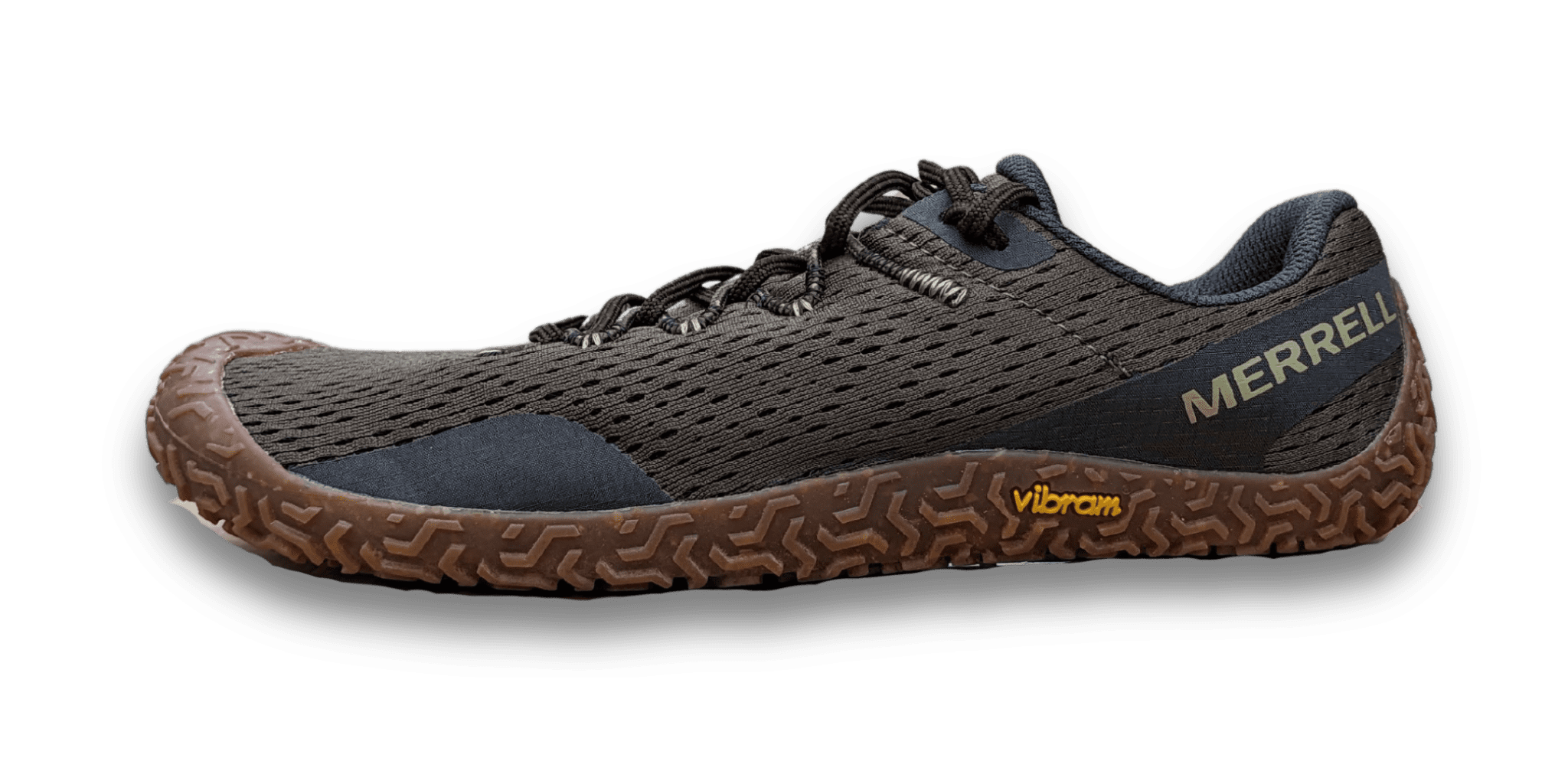
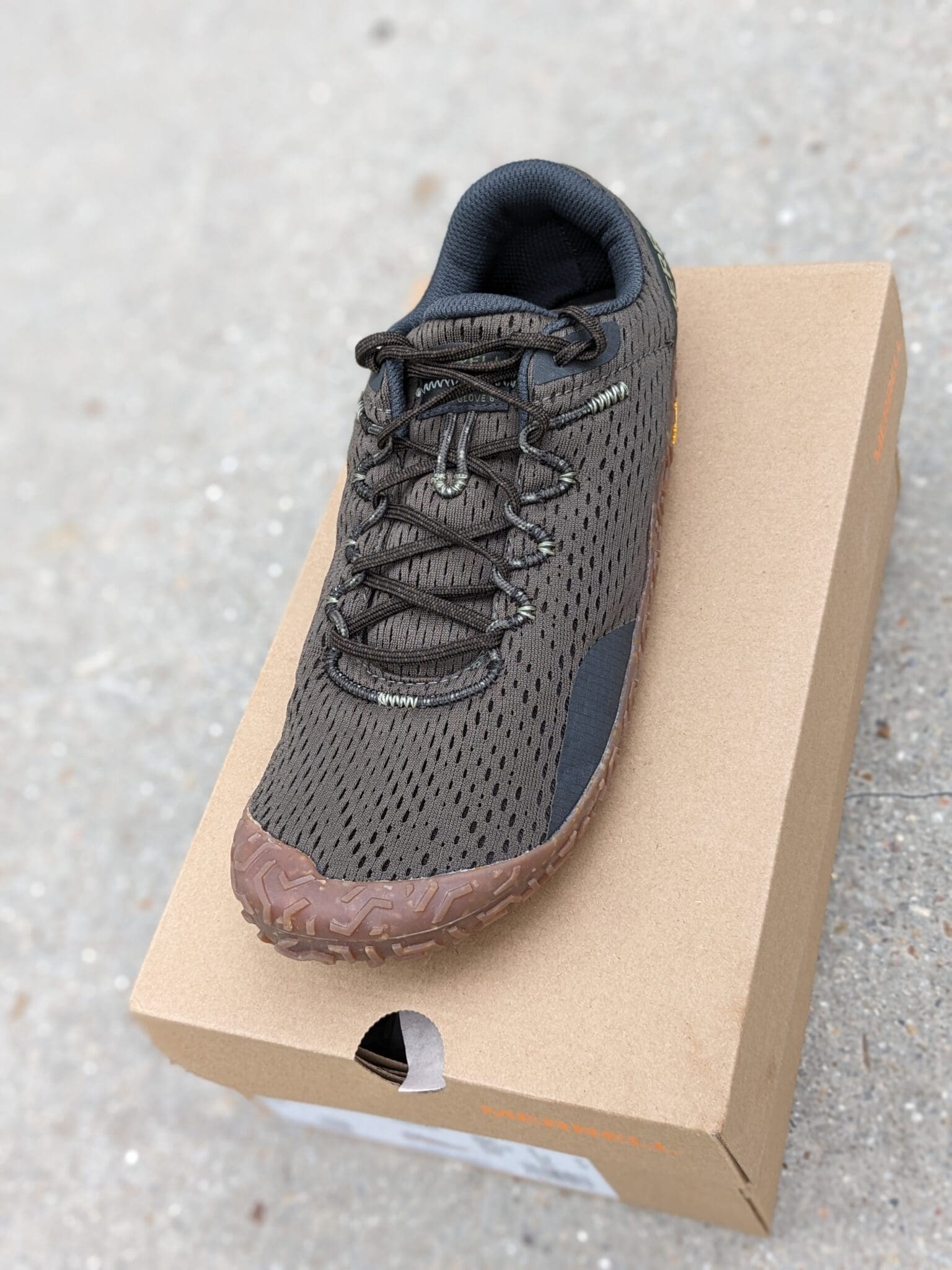
Merrell Vapor Glove 6
Type: Road
Width: Narrow
Stack height: 6mm
Weight: 147g
Ultra-minimal barefoot shoe that achieves 147g through stripped-down design without sacrificing durability. Clearance pricing makes this exceptional value.. Read the full Review
The Merrell Vapor Glove 6 is effectively a barefoot shoe with minimal branding overhead. At 147 grams, you’re getting legitimately light weight without sacrificing durability. The $20 price point is clearance pricing—these were likely discounted as Merrell phases the model out, but the shoes themselves are exceptional value.
What makes this shoe interesting from a weight perspective is *how* it achieves lightness. It’s not through compromised materials—it has excellent durability ratings. Instead, it achieves weight through minimal design philosophy. No extra padding, no marketing-driven bulk, just a thin upper and a thin sole. This is what true minimalism looks like.
For context: a traditional running shoe weighs 250-350g. The Vapor Glove 6 cuts this roughly in half. That’s a 100-200 gram difference, which on long runs becomes genuinely noticeable.

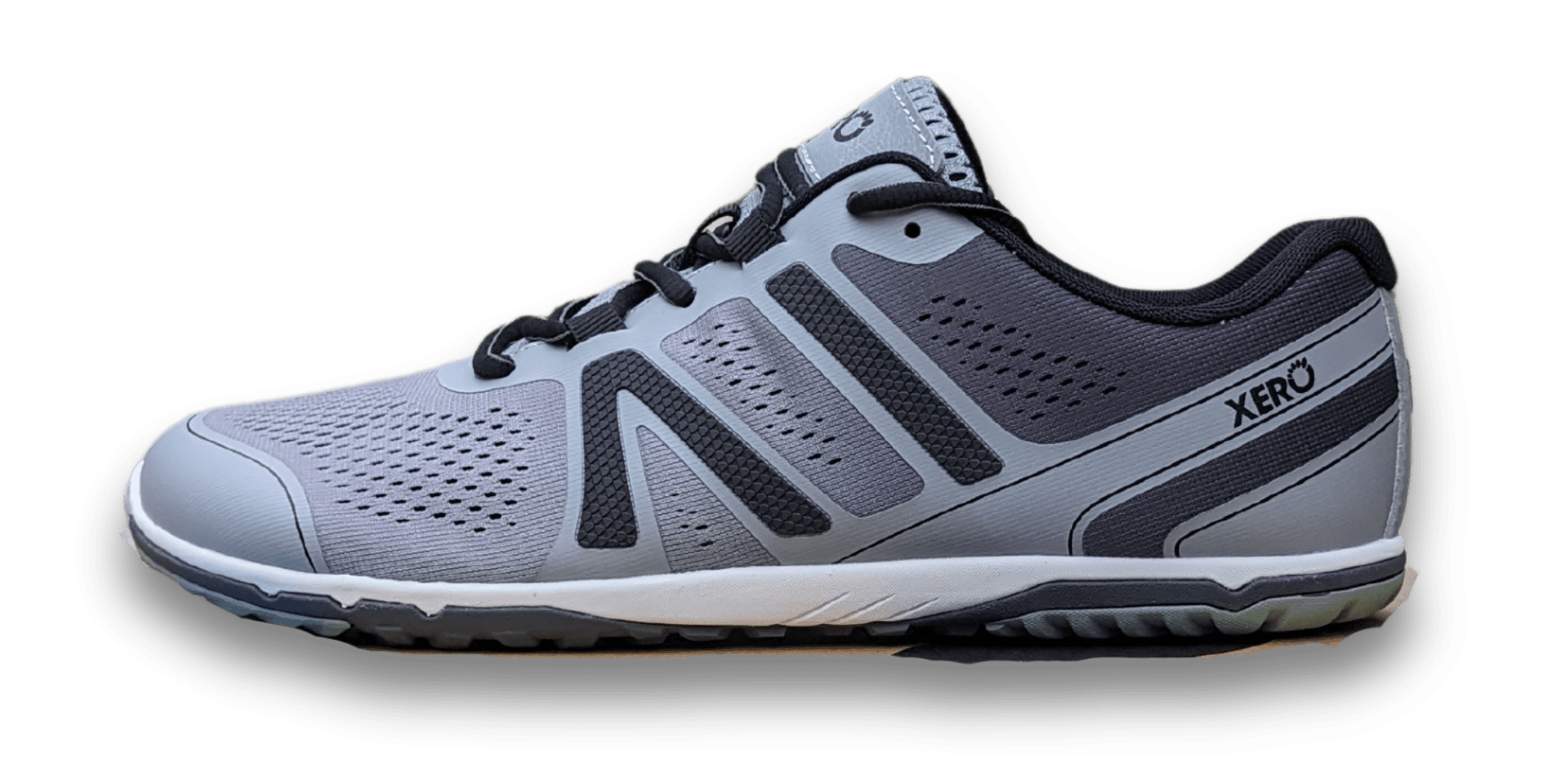
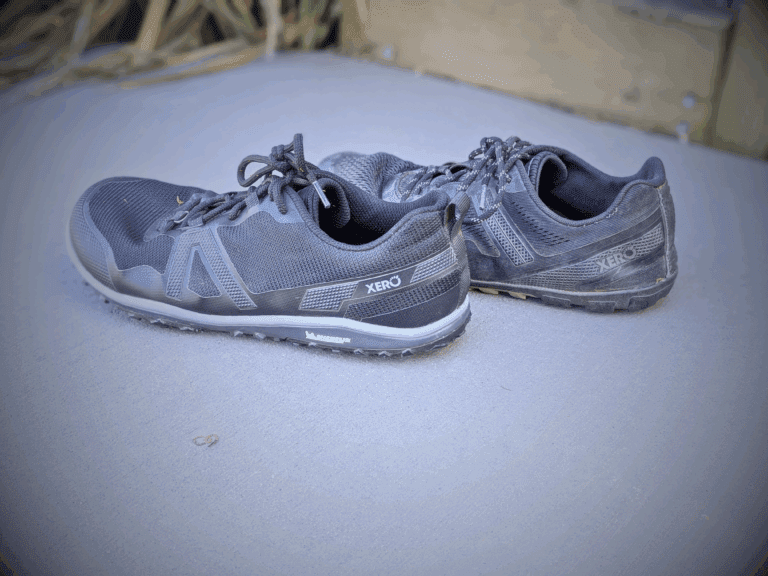
Xero Shoes HFS
Type: Road
Width: Average
Stack height: 5mm
Weight: 192g
Combines lightweight design (192g) with excellent durability ratings – rare at this weight class. The 5mm FeelTrue sole provides road protection while staying minimal.. Read the full Review
The Xero HFS (Highly Functional Shoe) is Xero’s lightweight road running flagship. At 192 grams with just 5mm of stack height, it delivers genuine barefoot feedback while maintaining excellent durability ratings—a rare combination at this weight.
What makes the HFS interesting is how it achieves lightness without compromising durability. The 5mm FeelTrue sole provides just enough protection for road running while keeping weight minimal. The upper is engineered to be both breathable and structurally sound, which explains why this shoe consistently earns excellent durability ratings despite being under 200 grams. For experienced barefoot runners who want a dedicated road shoe, the HFS is hard to beat.
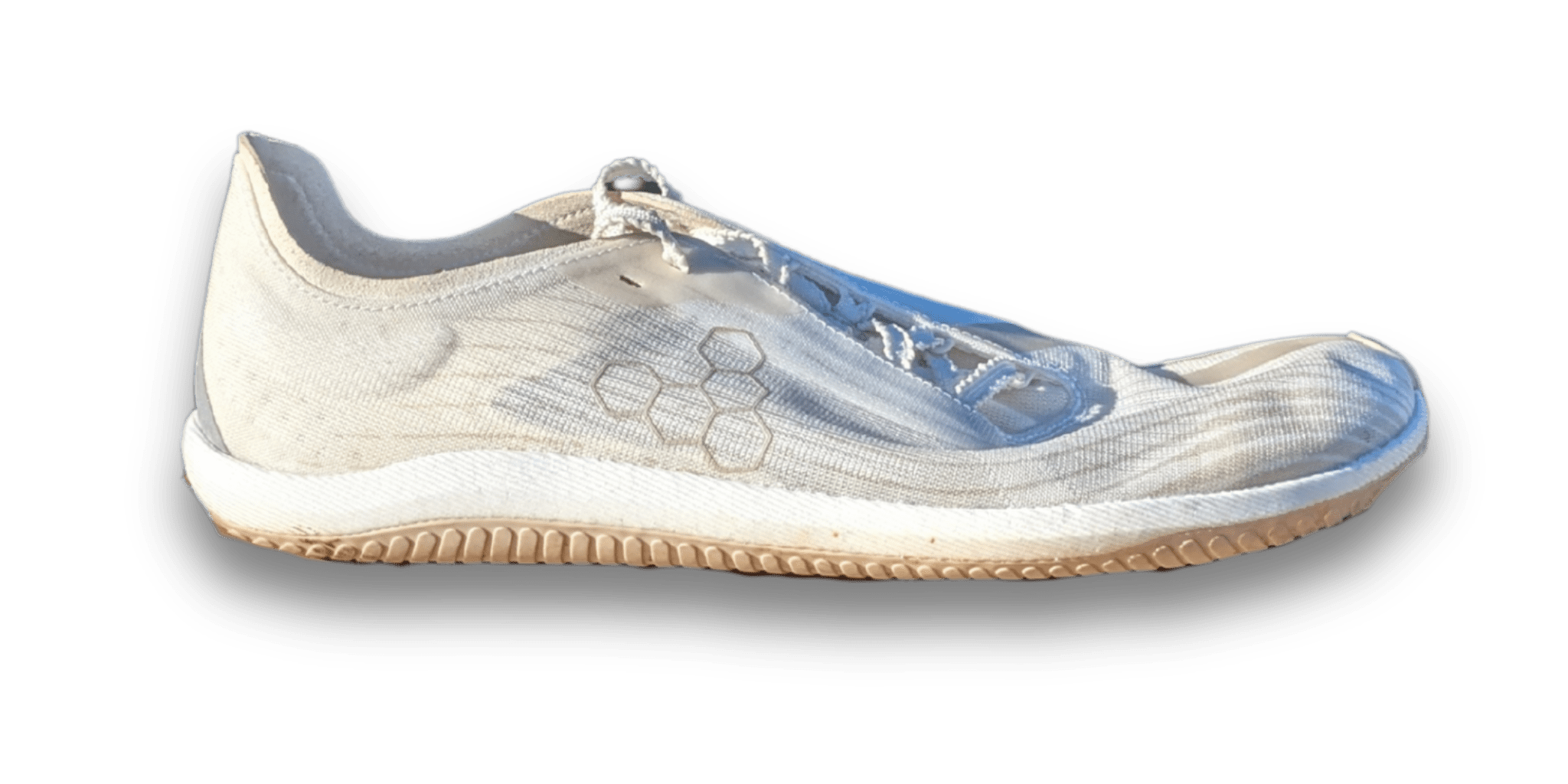
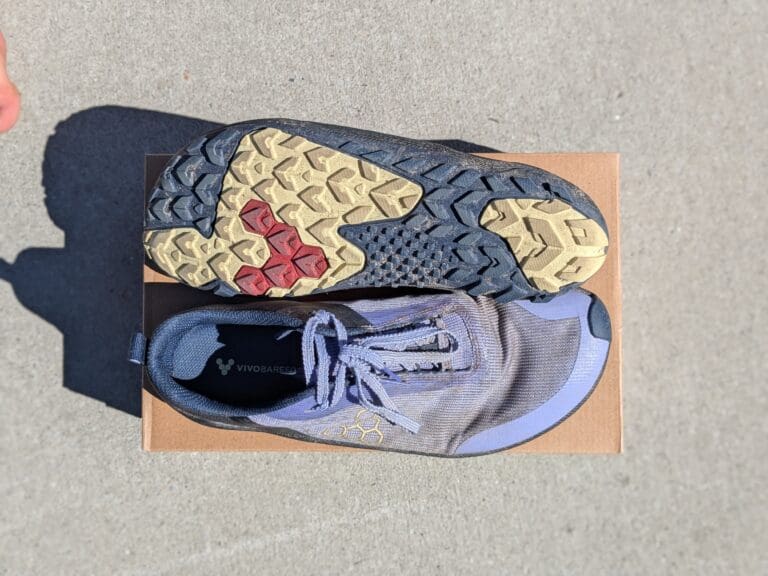
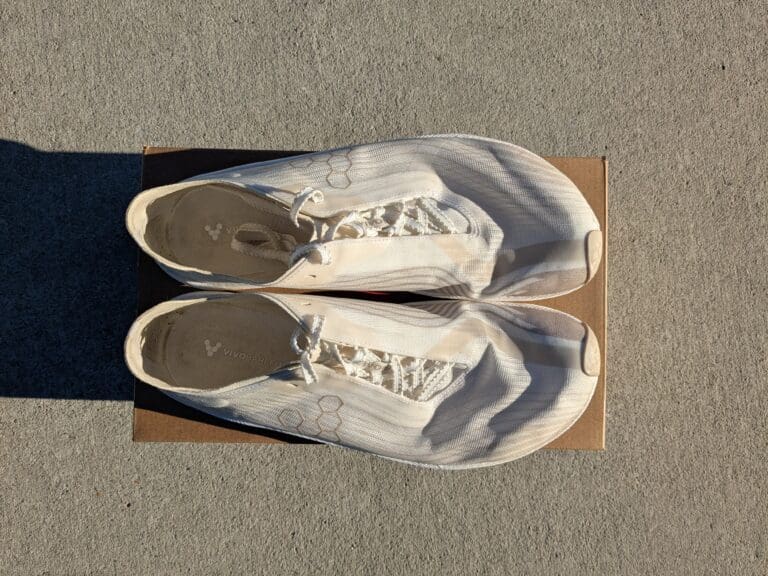
Vivobarefoot Primus Flow
Type: Road
Width: Average
Stack height: 6mm
Weight: 150g
Lightweight minimalism prioritized above all else. Third lightest at ~150g, though with average durability ratings. Premium price reflects design philosophy rather than longevity.. Read the full Review
Vivobarefoot’s philosophy emphasizes lightweight minimalism above all else. The Primus Flow delivers this, though with slightly lower durability ratings than the 147g models. At ~150 grams, it’s consistently the lightest option from Vivobarefoot’s lineup.
Where Vivobarefoot differs from Merrell and Xero in the ultra-light category is in material selection. Vivobarefoot prioritizes weight reduction even when it slightly compromises durability. For ultralight enthusiasts who plan to replace their shoes more frequently, this trade-off may be worth it. The premium price ($180) reflects Vivobarefoot’s brand positioning rather than additional durability—you’re paying for the design and minimalism philosophy.
The Barefoot Weight Spectrum
Beyond the top three, the barefoot category shows interesting patterns:
Ultra-light barefoot shoes (147-180g):
- Merrell Vapor Glove 6: 147g (6mm)
- Vivobarefoot Primus Flow: 150g (6mm)
These deliver maximum ground feel with exceptional lightness. Use them for:
- Speed work and tempo runs
- Experienced barefoot runners with strong feet
- Shorter distances (under 10 miles)
- Road running where minimal protection is acceptable
Lightweight barefoot shoes (180-240g):
- Xero Shoes Speed Force II: 184g (7mm)
- Xero Shoes HFS: 192g (5mm)
- Lems Primal 3: 195g (9mm)
- Xero Shoes Forza Runner: 204g (5mm)
- Tolos Archetype 2: 209g (5mm)
- Xero Shoes Aqua X Sport: 212g (9mm)
- Freet Keld 2: 215g (10.5mm)
- Xero Shoes Mesa Trail: 238g (11mm)
This range represents the sweet spot for most barefoot runners. You get nearly identical ground feel to ultra-light options while gaining slightly more protection. Most of these are excellent durability rated, making them better long-term investments than the ultra-light models.
Key Finding: Barefoot Weight Distribution
Across 39 barefoot shoes in my database:
- 147-180g (ultra-light): 2 shoes
- 180-240g (light): 16 shoes
- 240-280g (moderate): 13 shoes
- 280-400g (heavy for category): 8 shoes
The sweet spot is 180-240g. This range gives you 90% of the weight savings of ultra-light shoes while maintaining significantly better durability.
The 147g ultra-light shoe (Merrell Vapor Glove 6) exists for a specific purpose: if you’re an experienced runner doing speed work, that 40-90 gram difference matters. For everyone else, you’re in the 180-240g range.
The minimalist category is small (only 9 shoes in my database), which makes it easier to analyze.
Minimalist Weight Leaders
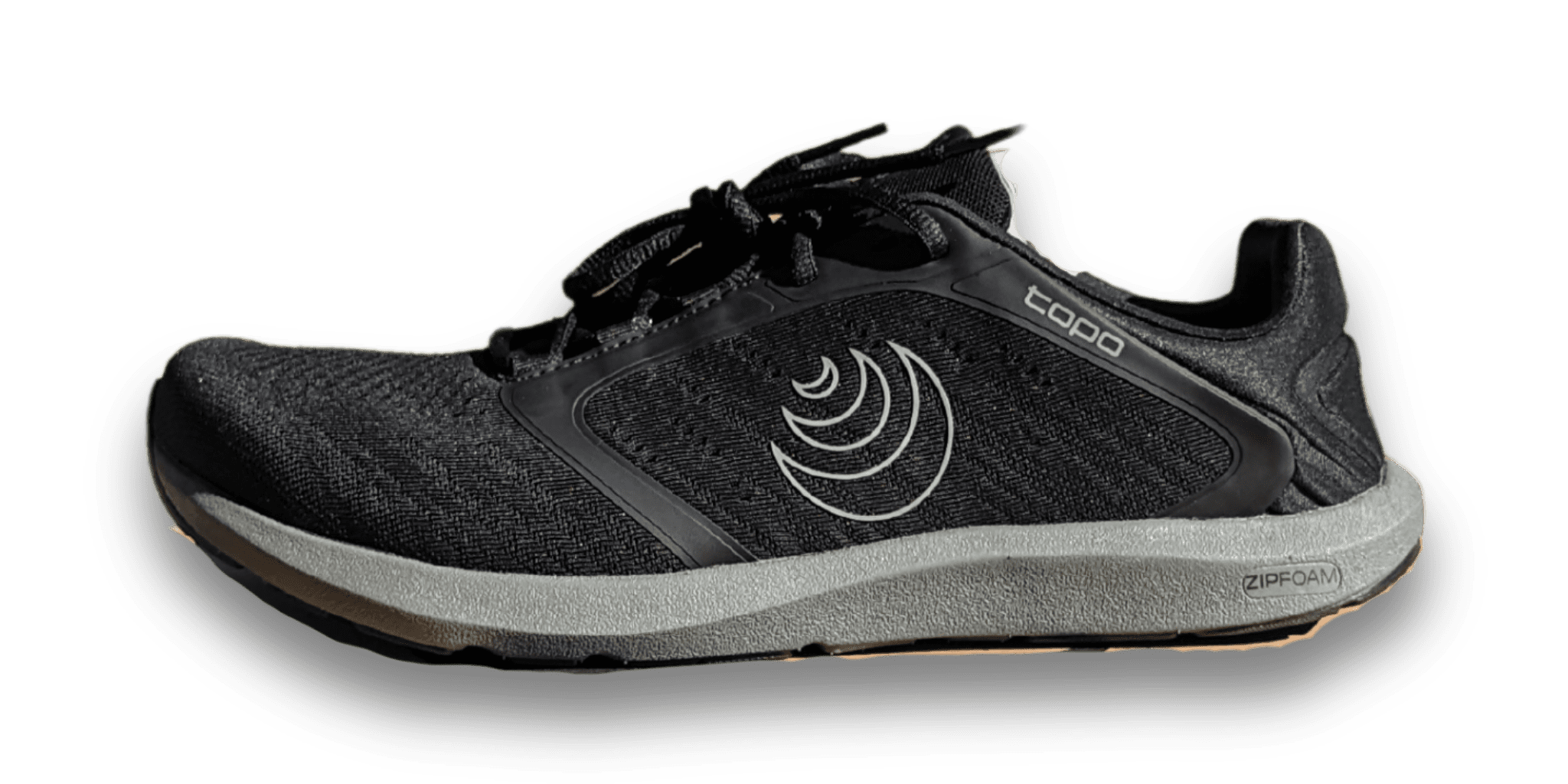
Topo Athletics ST-5
Type: Road
Width: Moderate
Stack height: 14mm
Weight: 187g
Lightest minimalist at 187g with 14mm stack and excellent durability. Offers legitimate bridge between barefoot lightness and minimalist cushioning.. Read the full Review
The Topo Athletics ST is genuinely impressive: a 187-gram minimalist shoe with a 14mm stack and excellent durability. This shoe offers a legitimate bridge between barefoot lightness (180-230g) and minimalist cushioning (14mm stack). For comparison, most minimalist shoes in this stack height range weigh 210-250g.
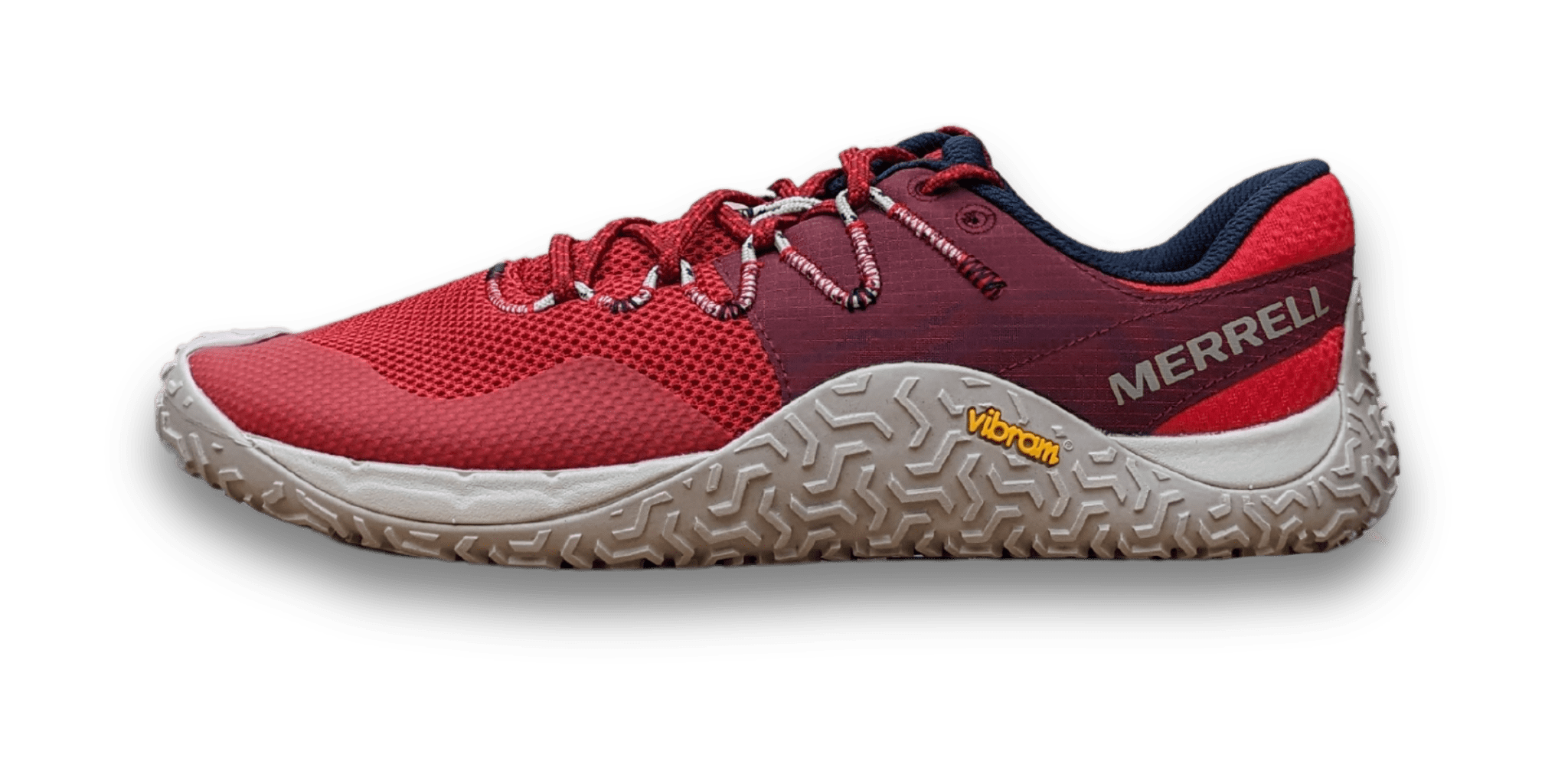
Merrell Trail Glove 7
Type: Trail
Width: Narrow
Stack height: 14mm
Weight: 254g
Comparatively light for 14mm stack shoe with excellent durability rating. Trail-focused design makes it exceptional value for mixed terrain running.. Read the full Review
The Merrell Trail Glove 7 is heavier than the Topo ST, but it’s still comparatively light for a 14mm stack shoe, and its excellent durability rating makes it exceptional value.
The Minimalist Category Challenge
Here’s what I discovered: minimalist shoes are not significantly lighter than barefoot shoes in many cases.
- Barefoot average: 246g
- Minimalist average: ~250g
- Difference: ~4g (within measurement error)
But minimalist shoes offer 14-21mm stack heights vs. barefoot’s 4-10mm. This tells you something important: the minimalist category is optimized for stack height balance, not weight reduction.
If you want lightweight shoes, you’re either going full barefoot (4-10mm) or jumping to zero-drop cushioned (21-33mm). The minimalist middle exists for runners seeking a specific balance between ground feel and protection—not for weight optimization.
Exception: The Topo Athletics ST at 187g proves minimalist shoes can be genuinely light. It’s an outlier, but it’s an excellent one.
This is where weight analysis becomes interesting. You’d expect zero-drop cushioned shoes to be significantly heavier than barefoot options. The data shows… it’s more complicated.
Zero-Drop Weight Leaders
The zero-drop cushioned category spans from 219g to 307g. Here are the lightest options:
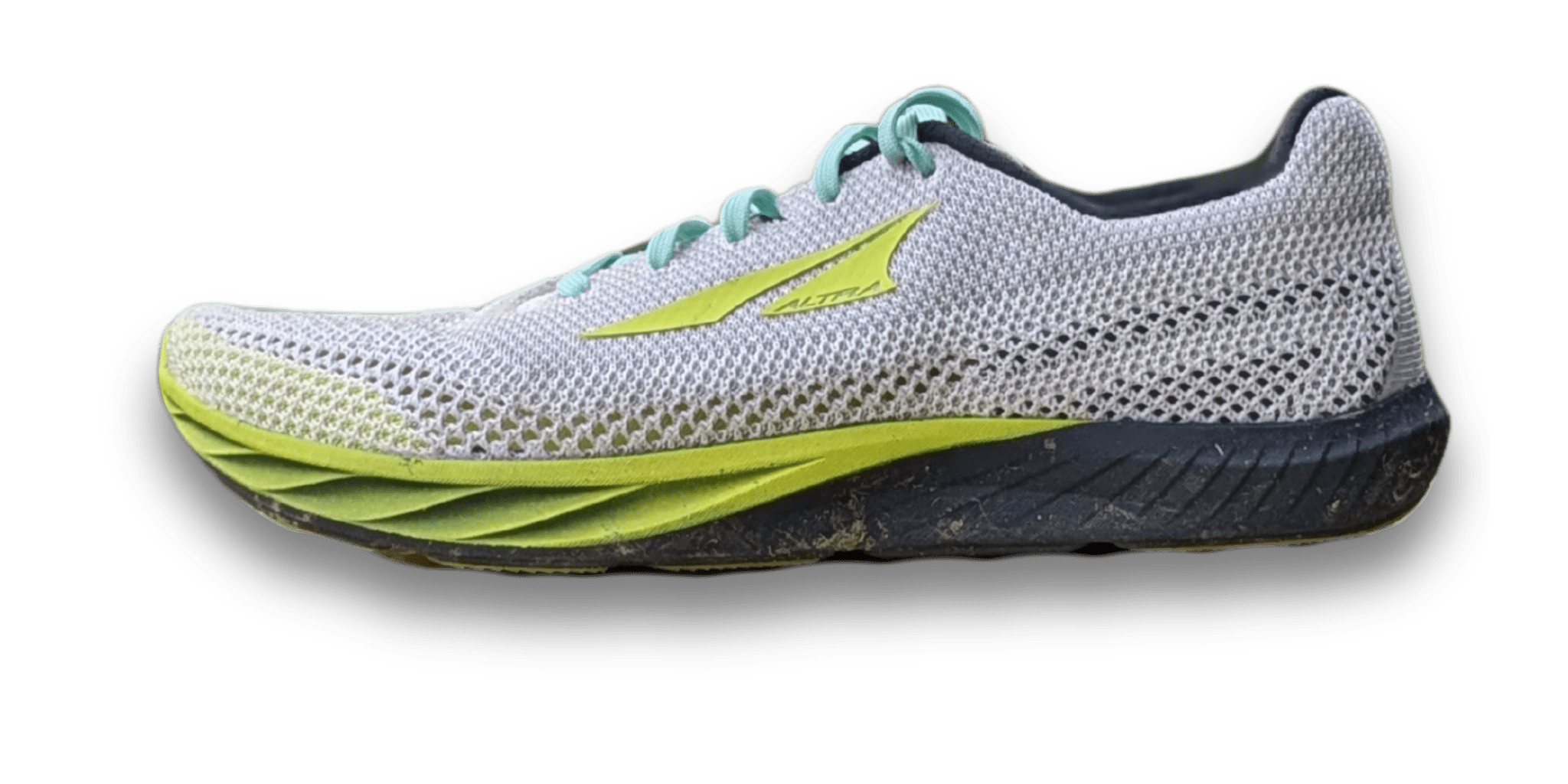
Altra Escalante Racer 2
Type: Road
Width: Moderate
Stack height: 22mm
Weight: 219g
Specifically designed for speed. Lightest zero-drop cushioned option at ~219g with 22mm stack. For runners wanting cushioning without sacrificing excessive weight.. Read the full Review
The Escalante Racer line from Altra is specifically designed for speed. At ~219 grams with a 22mm stack, it’s the lightest zero-drop cushioned option available. This is where you go if you want cushioning without sacrificing excessive weight.
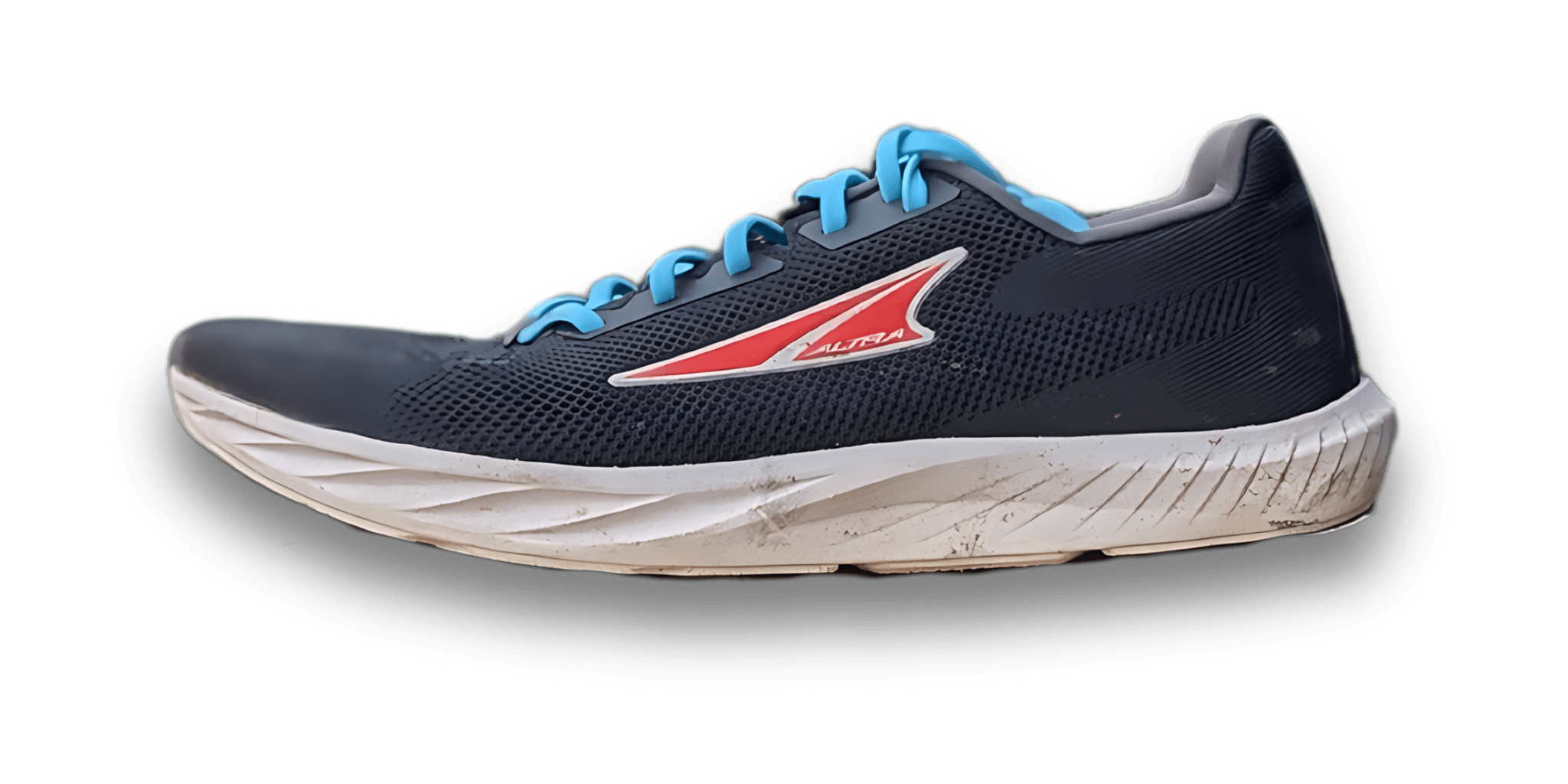
Altra Escalante 4
Type: Road
Width: Moderate
Stack height: 24mm
Weight: 233g
Delivers more stack (24mm) than Racer 2 while staying under 235g. Closest zero-drop option gets to barefoot weight while maintaining moderate cushioning.. Read the full Review
The Escalante 4 at 233g delivers more stack (24mm) than the Racer 2 while staying under 235g. It’s the closest zero-drop option gets to barefoot weight while maintaining moderate cushioning.

Altra Rivera 4
Type: Road
Width: Moderate
Stack height: 28mm
Weight: 283g
Balanced road running option with 28mm stack and moderate cushioning. Provides more protection for longer distances while staying relatively light at 283g.. Read the full Review
The Zero-Drop Weight Reality
Here’s the honest truth: zero-drop cushioned shoes are 20-50% heavier than barefoot equivalents, and that’s not just branding overhead.
- Ultra-light barefoot: 147-180g with 4-6mm stack
- Lightest zero-drop: 219-240g with 22-24mm stack
- Weight difference: 40-90 grams
That extra weight comes from the additional cushioning material. A 22-24mm stack requires significantly more material than a 4-6mm stack. Physics doesn’t allow you to get around this tradeoff.
However: If you need protection and don’t have the running foundation for barefoot shoes, this 40-gram weight penalty is worth it. A lighter zero-drop shoe is better than an injured runner in an ultra-light barefoot shoe.
Before we dive into deeper analysis, let me give you perspective on what these weight differences actually mean when you’re running.
100 grams = approximately the weight of 3-4 AA batteries or a small apple.
When that weight is distributed across two shoes (50 grams each), it becomes less noticeable. But during a run, your feet move thousands of times. Each time you land and push off, that 100 grams of unnecessary weight multiplies in terms of total work your muscles perform.
Here’s what runners report with different weight shoes:
Running in 147g shoes (Vapor Glove 6):
- Immediate feel: “Barely noticeable weight”
- After 5 miles: “Feet feel almost barefoot”
- After 10 miles: “Significant advantage in leg fatigue”
- Typical use: Speed work, short runs, experienced runners
- Durability concern: Average to excellent, depending on model
Running in 180-210g shoes (Xero Speed Force II, Lems Primal 2):
- Immediate feel: “Light, but noticeable”
- After 5 miles: “You forget about the shoe”
- After 10 miles: “Legs feel fresher than in heavier shoes”
- Typical use: Daily training, longer runs, mixed terrain
- Durability advantage: Significantly better (mostly excellent ratings)
Running in 230-280g shoes (lighter zero-drop options, some minimalist):
- Immediate feel: “Standard lightweight shoe”
- After 5 miles: “Weight becomes background”
- After 10 miles: “More ground contact felt than ultra-light”
- Typical use: General running, beginners, injury prevention
- Durability: Consistently good to excellent
Running in traditional cushioned shoes (300-350g+):
- Immediate feel: “Noticeable weight”
- After 5 miles: “Legs feel heavier than barefoot alternatives”
- After 10 miles: “Significant fatigue difference vs. light shoes”
- Typical use: Support and cushioning, not performance
- Durability: Often good, but weight doesn’t correlate with longevity
The weight difference between 147g and 280g shoes (133 grams total, 67g per shoe) becomes noticeably fatiguing during long runs. However, the difference between 180g and 210g shoes (30 grams total) is barely perceptible during normal running.
This is why the “sweet spot” of 180-230g exists—it captures most of the weight benefit while avoiding the durability penalties of ultra-light shoes.
Before we get into choosing shoes, let me address some common misconceptions about shoe weight that I see repeatedly:
Myth #1: “Lighter shoes are always faster”
Reality: Lighter shoes help with speed, but only if you have the running foundation to use them. If you’re transitioning from cushioned shoes or recovering from injury, a lighter barefoot shoe might actually slow you down by forcing compensation patterns that waste energy. The fastest runners use shoes that match their training phase, not just the lightest available.
Myth #2: “Heavy shoes always last longer”
Reality: Weight and durability are not correlated. My analysis shows shoes across the entire weight spectrum (147g-400g) with excellent durability ratings. The heaviest shoes in my database are often the *worst* performers for durability. Heavy weight often comes from design choices (extra material, complex structures) that can actually compromise longevity.
Myth #3: “You need to sacrifice comfort for lightness”
Reality: The lightest shoes in my database (Merrell Vapor Glove 6 at 147g, Vivobarefoot Primus Flow at 150g, Xero HFS at 192g) all have ground feel ratings of “maximum,” meaning they’re highly comfortable for their category. Lightness and comfort are complementary, not opposing.
Myth #4: “Light shoes are only for experienced runners”
Reality: While experienced runners can handle ultra-light shoes better, there are plenty of light shoes (180-210g) that work well for beginners. The difference is that beginners should choose lighter shoes with slightly more stack (8-10mm) rather than ultra-minimal options (4-5mm).
Myth #5: “All Xero shoes are equally light”
Reality: Xero Shoes range from 184g (Speed Force II) to 300g+, which is actually one of the widest weight ranges of any brand in my database. They make both ultra-light road shoes and heavier trail options. Don’t assume all their shoes are ultralight just because they’re known for lightweight minimalism.
This is where theory meets reality. Let me give you decision frameworks based on actual running needs.
For Speed Work & Tempo Runs
Your priority: Minimal weight, maximum responsiveness
Recommendation: Ultra-light barefoot (147-195g)
- Merrell Vapor Glove 6 (147g) – if you find it on sale
- Xero Shoes HFS (192g) – excellent durability with lightweight design
- Lems Primal 2 (195g) – if you’re moderately experienced and want more stack
The tradeoff you’re accepting: Limited cushioning, which is fine for 5-8 mile speed sessions.
For Long-Distance Running (10+ miles)
Your priority: Minimal weight, some durability
Recommendation: Lightweight barefoot (180-240g)
- Xero Shoes Speed Force II (184g) – excellent durability, 7mm stack
- Xero Shoes Forza Runner (204g) – excellent durability, 5mm stack
- Xero Shoes Aqua X Sport (212g) – excellent durability, 9mm stack
Why this range: You get 90% of the weight benefit of ultra-light shoes while gaining measurably better durability for the extended mileage.
For Trail Running
Your priority: Traction, protection, light weight (in that order)
Recommendation: Lightweight barefoot with reasonable stack (210-240g with 9-11mm)
- Xero Shoes Mesa Trail (238g, 11mm) – excellent durability, true trail shoe
- Xero Shoes Aqua X Sport (212g, 9mm) – excellent durability, trail-ready
- Lems Primal 2 (195g, 9mm) – excellent durability, strong ground feel
The challenge: Trail running tends to favor slightly more stack (8-10mm) than road running (6-7mm), which adds 10-20 grams compared to ultra-light road shoes. This is worth the tradeoff for ankle stability and protection.
For Beginning Your Barefoot Transition
Your priority: Moderate weight, maximum durability, transition-friendly stack (8-12mm)
Recommendation: Light to moderate barefoot (200-240g with 9-12mm stack)
- Lems Primal 2 (195g, 9mm) – excellent durability, proven transition shoe
- Xero Shoes Aqua X Sport (212g, 9mm) – excellent durability, proven brand
- Xero Shoes Speed Force II (184g, 7mm) – excellent durability, if you’re ready for less stack
Why: These shoes are light enough to feel like genuine minimalism, but heavy enough to provide real durability for the high-mileage transition phase. The 8-9mm stack is ideal for transitions—more protection than pure barefoot, but enough ground feel to support proprioceptive development.
For Runners Who Need Cushioning (Beginners or Injury-Recovery)
Your priority: Adequate cushioning, manageable weight, durability
Recommendation: Lightest zero-drop cushioned (220-240g with 22-24mm stack)
- Altra Escalante Racer 2 (~219g, 22mm) – racing-specific, lighter option
- Altra Escalante 4 (233g, 24mm) – versatile, balanced approach
- Altra Rivera 4 (283g, 28mm) – more cushioning if needed
Why: These give you the cushioning benefit of zero-drop shoes while staying in the sub-235g range. You’re getting 3-4x the stack height of barefoot shoes for only 50-90 additional grams. That’s efficient protection.
Before I present durability findings, I want to be transparent about how weight and durability were measured:
Weight measurement:
- All weights measured for men’s size 9 (US standard for running shoe testing)
- Weight includes shoe upper, midsole, and outsole
- Data sourced from official specifications where available
- Variance of ±5g between measurement sources is normal
Durability ratings:
- Based on real-world testing from hundreds of miles of running
- Categories: Excellent (500+ miles), Average (300-500 miles), Below-average (200-300 miles), Poor (<200 miles)
- Weather conditions vary (trail vs. road, wet vs. dry), affecting durability outcomes
- Individual running styles affect durability (heavier runners may see faster wear)
Limitations to acknowledge:
- Small sample sizes for some shoe models (1-2 pairs tested)
- Data may be outdated for some models (shoe lines are updated yearly)
- Durability is subjective to some degree (when do you consider a shoe “worn out”?)
Given these limitations, the weight-durability patterns that emerge are meaningful but not absolute. Use them as guidelines, not guarantees.
I need to be direct about this: the lightest shoes in my database don’t always have the best durability ratings. But the relationship is more nuanced than “light = fragile.”
Here’s what the data shows:
147-180g shoes (ultra-light barefoot):
- Merrell Vapor Glove 6: Excellent ✓
- Vivobarefoot Primus Flow: Average ⚠️
That’s a 50% failure rate for durability in the ultra-light category (only 1 of 2 shoes has excellent ratings). Ultra-light construction inherently challenges durability—you’re removing material that provides structural support.
180-240g shoes (lightweight barefoot):
- Xero Shoes Speed Force II: Excellent ✓
- Xero Shoes HFS: Excellent ✓
- Lems Primal 3: Excellent ✓
- Xero Shoes Forza Runner: Excellent ✓
- Tolos Archetype 2: Average ⚠️
- Xero Shoes Aqua X Sport: Excellent ✓
- Freet Keld 2: Below-average ✗
- Xero Shoes Mesa Trail: Excellent ✓
That’s an 75% excellent durability rate. Dramatically better reliability than ultra-light options.
The implication is clear: If you want light shoes that will actually last, 180-240g is a much safer bet than the ultra-light 147-180g range. You’re gaining 30-90g and getting statistically much better durability.
Before you obsess over grams, ask yourself this: What problem is weight solving for me?
- If the answer is “I want to run faster,” light shoes help. But form, training, and pacing matter more. A 147g shoe won’t make you fast if your cadence is too low.
- If the answer is “I want less leg fatigue on long runs,” 180-230g shoes in the barefoot category deliver this without the durability risk of ultra-light models.
- If the answer is “I want the absolute lightest shoe available,” buy the Merrell Vapor Glove 6 at clearance price and expect to replace them sooner rather than later. They’re worth it at $20, less so at $100+.
- If the answer is “I’m transitioning to barefoot shoes,” prioritize durability over weight. A 200-230g shoe with excellent durability beats a 147g shoe with average durability. You need the shoe to survive your transition phase, not just your next 5K.
Weight is one variable among many. To choose your next running shoe, also consider:
- Durability rating: Does this shoe last as long as you need it to?
- Ground feel: How much feedback do you want from the ground?
- Stack height: Is this enough protection for your current training phase?
- Your running experience: Are you transitioning from cushioned shoes or do you have barefoot running miles?
For a deep dive on durability considerations, read about the durability factors that actually matter in this related guide.
For a complete understanding of shoe categories and how they differ, check out the full barefoot vs. minimalist vs. zero-drop spectrum guide.
Weight matters. But the right shoe matters more. The lightest shoe in the world won’t help you if it doesn’t survive your training or match your experience level. Find the light shoe that’s actually built for your running style—that’s where real performance gains happen.