
Are you confused with all the barefoot options in the market? Fear not! I’ve conducted practical tests on numerous barefoot trail running shoes, evaluated...
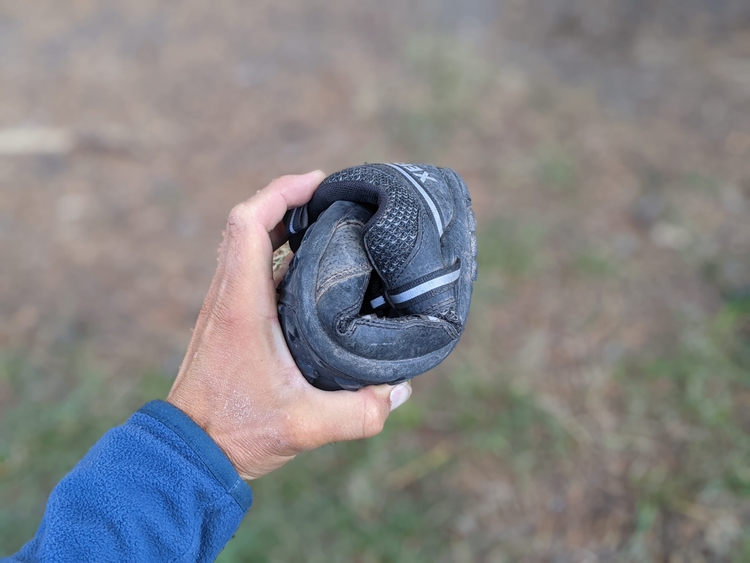
Ever stood in front of your shoe rack, trying to decide which trail shoe to grab, only to realize they all feel… wrong? Too narrow here, too shallow there, too much shoe everywhere else?
Here’s the thing: the biggest factor in choosing a trail shoe isn’t stack height, lug depth, or even brand—it’s fit. A shoe can have the perfect amount of cushion and grip for days, but if it doesn’t match your foot shape, you’re not going to have a good time on the trails.
I’ve spent the past two years testing barefoot and minimalist trail shoes across different terrain, distances, and conditions. I’ve raced in some of them. I’ve logged long miles in sloppy mud in others. And I’ve reached for each of them for different reasons depending on the trail, the weather, and what my feet needed that day.
What makes this guide different is that I’m organizing these shoes by fit profile and intended use, not by stack height or price. Because that’s what actually matters when you’re standing in your living room trying to decide which shoe works for your foot.
What You’ll Find in This Guide
I’m breaking down 12 barefoot and minimalist trail shoes into categories based on:
- Fit profile (narrow, wide, shallow, deep)
- Ground feel (truly minimal vs. protective cushion)
- Terrain specialization (dry trails, mud, technical rock)
- Experience level (beginners vs. conditioned barefoot runners)
All of these shoes are zero-drop. All offer excellent ground connection. And all have proven themselves on the trail throughout the year. But each one fits a very different foot and excels in different conditions—and that’s exactly what makes them worth talking about.
Let’s find the right shoe for your feet.
For Truly Minimal Ground Feel
These shoes are for runners who want maximum ground connection and have well-conditioned feet.
Vivobarefoot Primus Trail Flow – The Narrow-Footed Racer’s Choice
If you’ve got narrower feet and you’re already well-conditioned to barefoot running, the Primus Trail Flow is one of the most agile, responsive trail shoes you can put on your feet. At 230g for a men’s EU 42, this is a performance-focused option that trades durability for lightweight speed.
Fit: Narrow, Long, and Deep
The Primus Trail Flow runs relatively narrow for a barefoot shoe, especially around the little toe area. The taper comes in pretty quickly on that side, creating a more restrictive toe box than most barefoot runners expect. The big toe side is nicely squared off, but if you have a wide forefoot, this shoe likely won’t work for you.
The shoe fits quite long, which is typical for Vivobarefoot. But here’s the thing: because of the narrow nature of this shoe, even though it runs long, you’ll likely still need that extra length to get adequate width through the midfoot and forefoot. Don’t be tempted to size down.
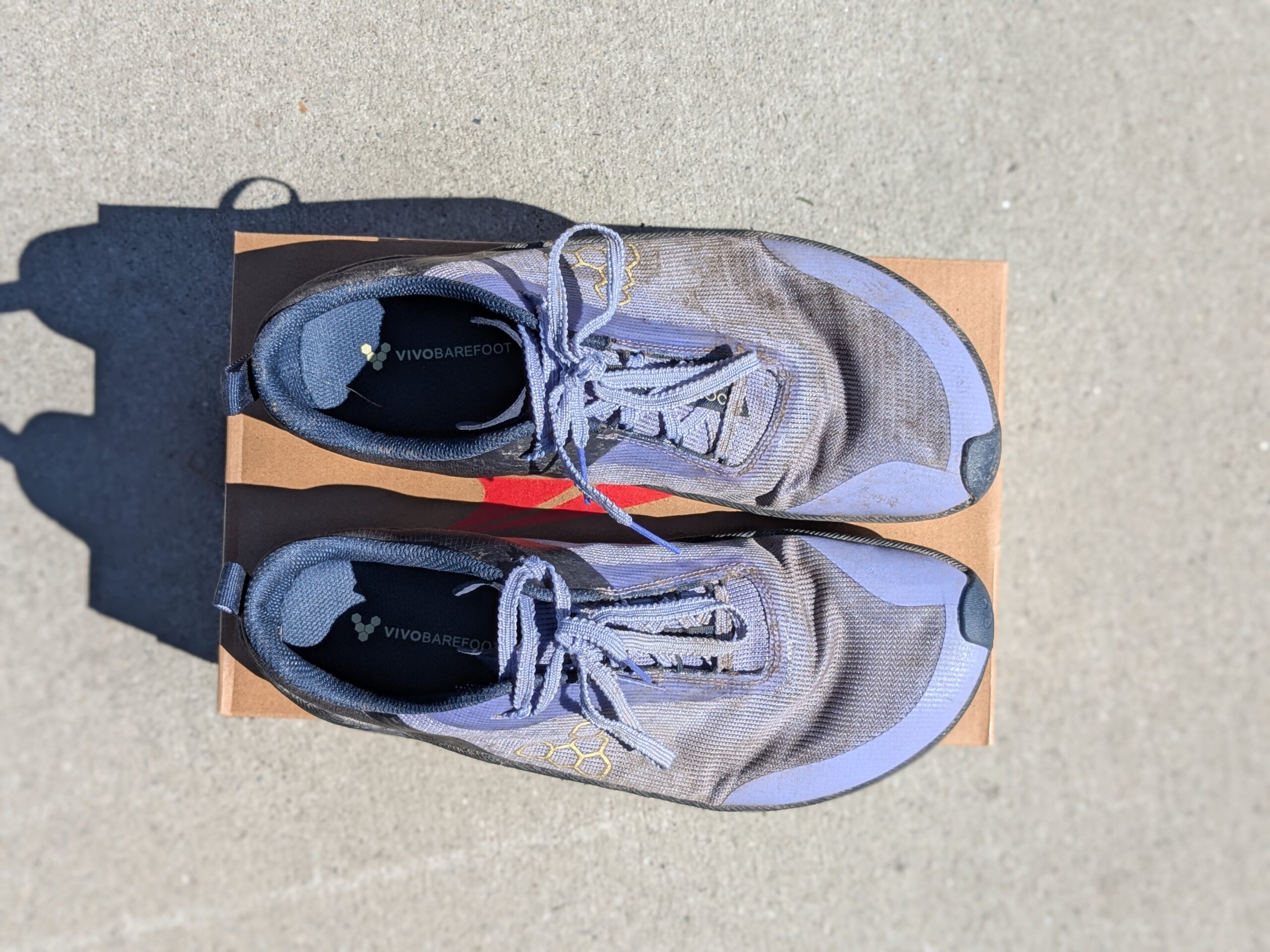
The shoe fits a little deeper than some other Vivobarefoot models, mainly because it ships without an insole. You’re sitting right on top of the footbed, which gives you immediate ground connection from the start.
The tongue is made from a thin, vegan suede-like material that’s quite grippy, which makes getting your foot in and out of the shoe somewhat challenging. You’ll need to reposition the tongue pretty much every time you put the shoe on. On the plus side, this grippy nature means the fit over the midfoot is very secure—there’s no slipping around at all.
Feel: Truly Minimal Protection
This is a very stripped-down trail shoe. We’re talking minimal materials, minimal protection, and maximum ground feel. And you know what? That’s fun.
The underfoot cushioning is minimal—we’re talking 8-10mm total stack height. About 3mm of that is the lug depth itself, leaving just a thin layer of foam and rubber between your foot and the trail. There’s no insole, so you’re getting pure, unfiltered ground feedback. You feel quite a lot underfoot, though not to the point where it becomes painful. But make no mistake: you need to be very well-conditioned to barefoot running to use this shoe comfortably on technical trails.
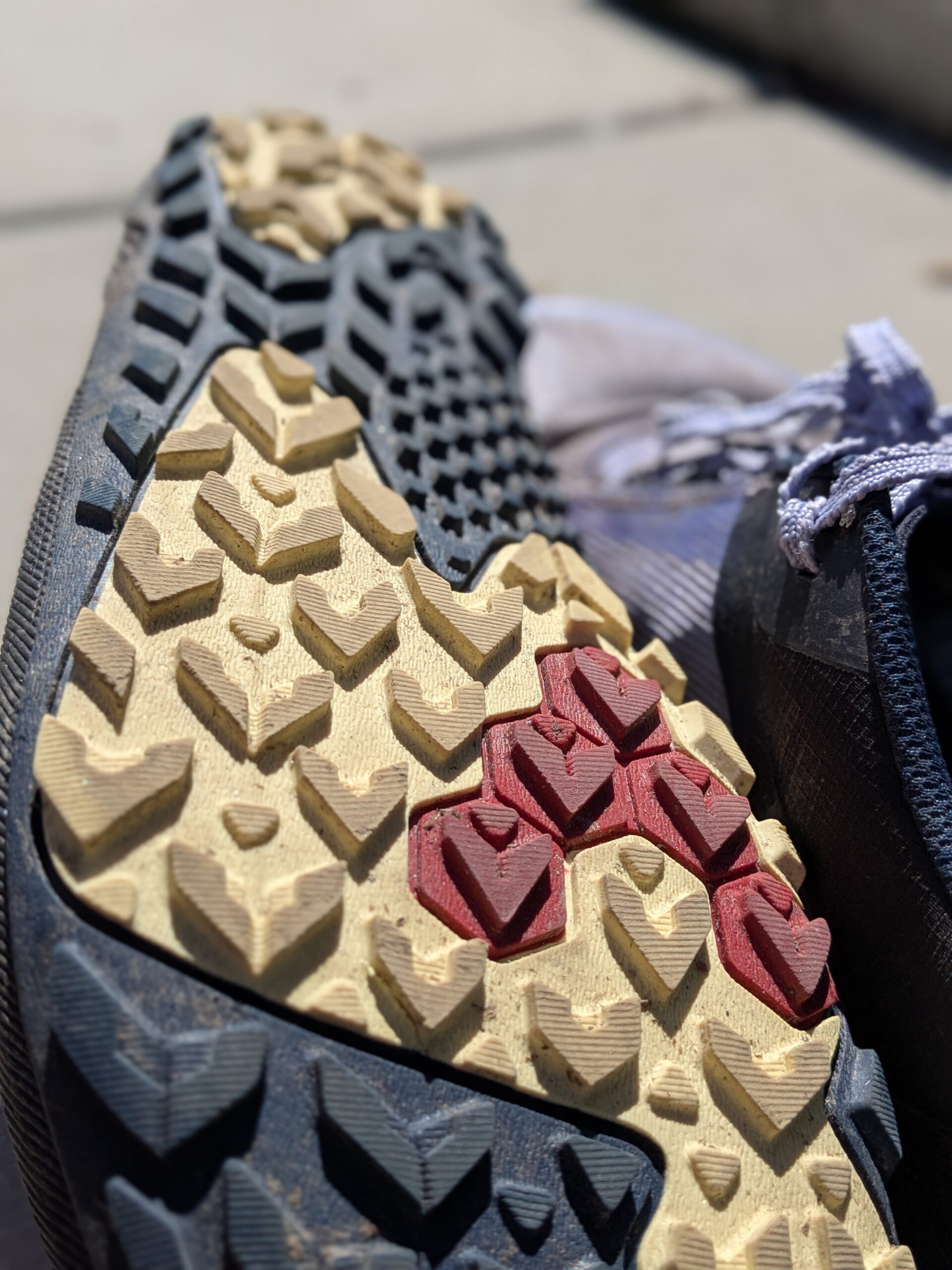
The outsole is a major improvement over older Primus Trail options. Instead of the cross or X-shaped lug pattern from previous versions, this uses a more traditional chevron design, especially toward the forefoot. In light mud conditions, I found this worked really well. The lugs are only about 3mm deep, so this isn’t a deep mud shoe by any means. But for dry to moderately wet conditions, it performs admirably.
At 230g, this is one of the lightest trail options out there. That low weight definitely improves agility on the trail. You can move quickly and change direction easily.
Performance: Race-Ready When Conditions Align
I’ve raced in this shoe, and it delivers when the conditions are right. The lightweight design makes you feel fast on technical terrain. You can pick your way through rocky sections with precision, feeling exactly where your foot is landing. That ground connection is invaluable when you’re moving quickly and need immediate feedback.
The improved outsole design means I’m more confident in slightly sloppy conditions than I was with older Vivobarefoot trail models. It’s still not a massive mud shoe, but I don’t worry as much on wet rocks or light trail slop. For dry trails, the traction is excellent.
Durability: The Compromise You’re Making
Here’s where things get concerning, especially given the $190 USD price tag.
The mesh upper has overlays on much of the shoe, but the toe box area is exposed. This means the mesh over your toes will likely be the first thing to rip or wear through. At the crease points—a common weak spot on Vivobarefoot shoes—there’s minimal reinforcement.
The outsole is relatively sticky from the start, but I’m already seeing wear after just 50 km. I don’t expect this outsole to last a huge amount of distance. The rubber compound seems to prioritize grip over longevity, which is a choice Vivobarefoot made, but it’s one you need to be aware of.
Bottom line: for $190, this is not a durable option. If you’re putting in serious mileage on technical trails, you’ll be replacing these sooner than you’d like. This is clearly a performance-focused shoe where weight and feel were prioritized over longevity.
Get the Primus Trail Flow if:
- You have narrower feet, especially through the little toe area
- You’re already well-conditioned to barefoot running
- You prioritize lightweight agility over long-term durability
- You primarily run dry to moderately wet trails
- You want a race-day option with exceptional ground feel
Skip this shoe if:
- You have wider feet or need volume through the midfoot
- You’re new to barefoot running and need more protection
- You put in high mileage and need shoes that last
- You frequently encounter deep mud or very aggressive terrain
Find them on Amazon or direct from Vivobarefoot.
Xero Shoes Mesa Trail II – Best All-Around Barefoot Feel
If there was one barefoot trail shoe I had to use for the rest of time, it’d be the Mesa Trail II.
They are lightweight; they have a ton of ground feel, but still, just enough protection to take the edge off any missteps you may make.
Why It’s Special
The outsole bends in all different directions. When you run barefoot, your foot doesn’t just bend at the toes. It moves in various directions, including front-to-back, side-to-side, and torsionally like a screw. Some manufacturers of minimal shoes overlook this fact and only add flexibility to the ball of the foot. Instead, the Mesa Trail shoe incorporates flexibility throughout the entire shoe.
The upper overlays are strong enough to lock the foot in place and flexible enough to allow proper foot function. When jumping from side to side, or rock to rock in this case, some structure is good to stop your foot from sliding off the side of the shoe. But it’s all a balance; the Mesa Trail II has found that perfect balance. You’re locked onto the sole but still have great flexibility for your foot to function.
The flexibility of the ankle cuff adapts to all types of shapes and sizes. When it comes to minimal shoes, the saying “less is more” truly applies. This means the shoes have less structure and fewer materials, allowing them to mold perfectly to your foot. The Mesa Trail II is an excellent example, particularly in the ankle and heel cup area. The overlays provide just enough structure to prevent the materials from collapsing, allowing for a snug and secure fit, regardless of your ankle shape.
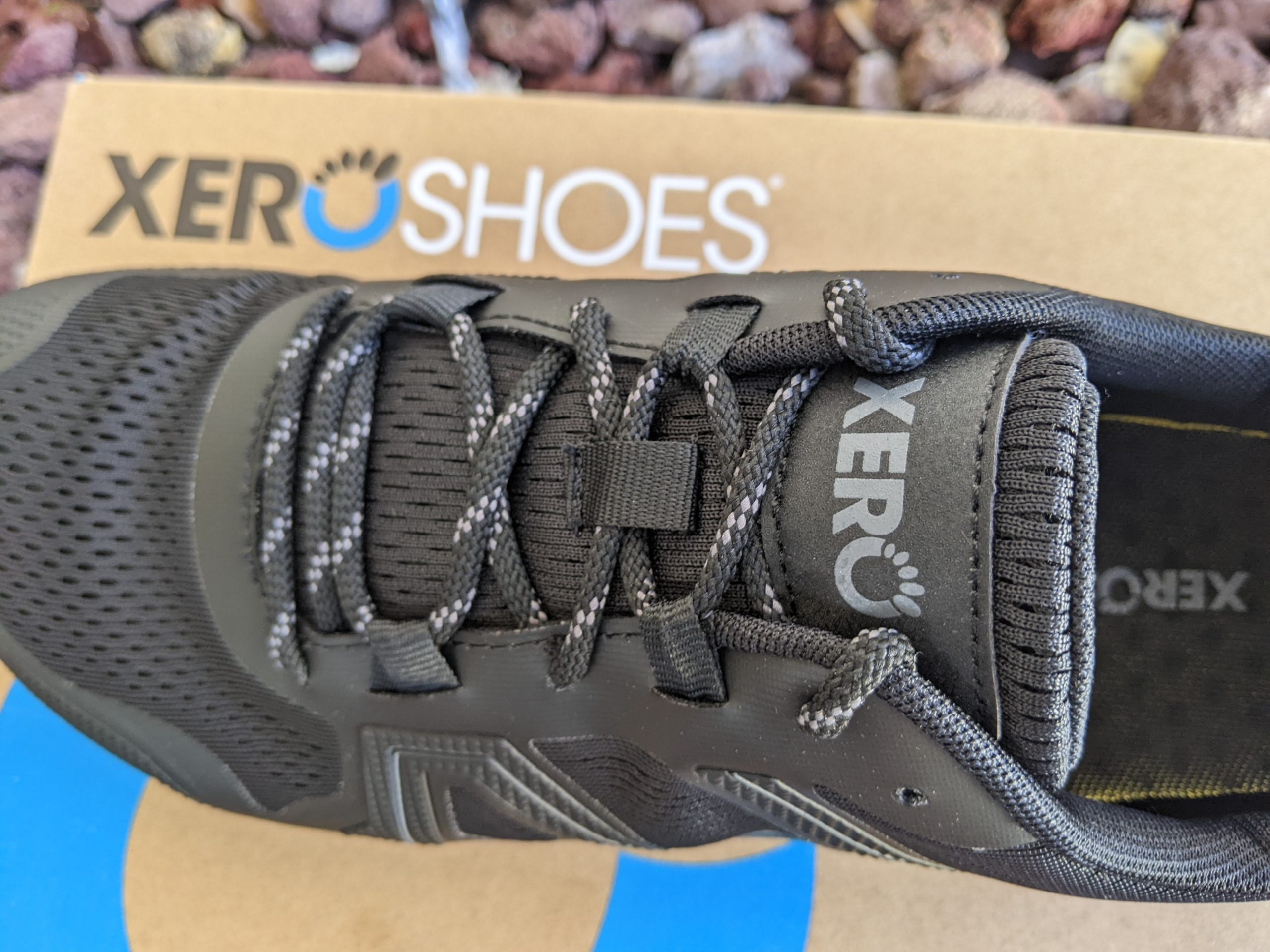
The toe box is wider than conventional brands but could be better for mega-toe spreaders! Xero Shoes are known for their unique shape that is perfect for most people but may not be the best fit for those with mega-toe spreaders or fan-shaped feet with wide-toe splay. If you fall under the latter category, consider Vivobarefoot instead. However, it is worth noting that 70-80% of people will find a perfect fit with Xero Shoes. In an ideal world, Xero Shoes could consider making their toe box more squared to accommodate a wider range of foot shapes.
I ran most of the Colorado Trail in the original Mesa Trail and a brutal 50km race in the Mesa Trail II. I’m confident in saying these are fantastic shoes. Having the freedom to flex my feet naturally allowed me to avoid nasty foot injuries and keep me moving day in and day out.
Get the Mesa Trail II if:
- You want the best balance of ground feel and protection
- You have average-width feet
- You need a versatile shoe for varied trail conditions
- You’re looking for exceptional value under $120
- You want a shoe that bends and flexes naturally in all directions
Skip this shoe if:
- You have very wide feet with significant toe splay (consider Freet Feldom 2 instead)
- You need aggressive deep-mud traction
- You want maximum cushion for ultra-distance events
Find them on Amazon or direct from Xero Shoes.
—
Lono Barefoot Verve – Rocky Terrain Specialist
If you spend time on high-alpine or technical rocky trails and want genuine barefoot feel with real underfoot protection, the Lono Barefoot Verve is unlike anything else in this guide. It’s a purpose-built rocky terrain shoe from a new brand with a thoughtful design — wide square toe box, aggressive 3mm lugs, and a 1mm carbon skeleton plate for structural stability (not propulsion).
Fit: Wide, Accommodating, and Well Locked Down
The Verve fits wider than Vivobarefoot across the midfoot — there’s no aggressive arch cut here — and the toe box is nicely squared off with good little toe room. The forefoot stays wide high up the foot, so this works well for runners who find Vivobarefoot cuts in too hard on the arch side.
Volume sits right in the middle: deeper than Vivobarefoot, shallower than Freet. The shoe ships with two EVA moulded insoles (2.5mm and 4mm) so you can adjust volume and ground feel. One caveat: the thicker insole raises the toes toward the toe cap, which can be problematic for wider feet.
Length runs long — similar to Vivobarefoot and EU brands, longer than Xero or Altra. EU42 is Nick’s size.
The heel lockdown is exceptional. The cushioned ankle cuff, lace locks, and lacing system work together to create a really secure hold — better than most barefoot trail shoes. If it fits you, it fits almost perfectly.
Feel: Minimal With Rocky-Terrain Protection
This is where the Verve earns its place. It’s not floppy or sloppy — the carbon plate adds structure — but you can absolutely still feel your feet working. On sharp rocky terrain where purely minimal shoes cause bruising, the Verve stays comfortable without disconnecting you from the trail.
The 1mm carbon skeleton plate is there for structural integrity, not propulsion. Whether that’s the right call is debatable (it does reduce proprioception slightly), but for high alpine rocky running it adds meaningful protection you won’t find in most barefoot options at this stack height.
Grip and Durability
The Wild-Grip rubber and 3mm aggressive lugs perform well on dry surfaces, grass, gravel, and rocky trails. The weak spot is wet rocks — minimal lug surface area means poor contact on smooth wet rock. Not a deep mud shoe either.
Durability is a watch item: at 50km, lugs were already showing wear. This is a trail-only shoe — don’t run it on road unless you want to burn through the lugs fast. The upper, on the other hand, looks robust with smart minimal overlays at wear points.
Get the Lono Barefoot Verve if:
- You run rocky, technical, or high-alpine terrain and want barefoot feel with real protection
- You have a wider midfoot and find Vivobarefoot cuts in too aggressively on the arch side
- You want excellent heel lockdown — the best in this roundup
- You’re a conditioned barefoot runner who doesn’t want to sacrifice ground feel for protection
Skip this shoe if:
- You have Achilles sensitivity (the heel tag sits high — Lono Barefoot are adjusting this pre-production)
- You run frequently on wet rocks or in muddy conditions
- You need a road shoe or mixed-surface option
- You’re earlier in your barefoot transition and want a more forgiving, flexible feel
Find them direct from Lono Barefoot — use code BRR10 for a discount.
—
Vivobarefoot Primus Trail FG – For Low-Volume Feet
I love Vivobarefoot because it serves foot shapes Xero Shoes can’t cater to.
If you have a shallow foot, Vivobarefoot will do you well. If you have a wide toe splay and a narrow heel, Vivobarefoot will do you well.
Fit: European Precision
The midfoot and heel are narrower than Xero Shoes, suiting the traditional European market. Most European brands make narrower shoes than US ones. Vivobarefoot shoes fit snugly and have a shallower midfoot depth than other barefoot options, making them a great choice if you want a more fitted heel and midfoot.
The toe box itself is wide and accommodating for toe splay, but the overall volume of the shoe is lower. If you have high-volume feet or thick feet, this shoe will feel constrictive. But for runners with slender, low-volume feet, this creates a precise, connected fit that doesn’t require thick socks to fill out the shoe.
Feel and Performance
The Primus Trail FG (Firm Ground) uses a 4mm lug pattern that works well on most trail conditions except deep mud. The outsole is flexible enough to let your foot move naturally, but the lugs provide enough bite on rocks, roots, and packed dirt.
At just 2.5mm of midsole plus the 4mm lugs, this is one of the thinnest trail shoes you can buy. You feel everything underfoot, which is exactly what some runners want. The ground feedback helps with proprioception and foot placement on technical terrain.
Get the Primus Trail FG if:
- You have shallow, low-volume feet
- You want a wide toe box with a narrow heel
- You prioritize maximum ground feel
- You’re already conditioned to minimal footwear
- You prefer a European fit aesthetic
Skip this shoe if:
- You have high-volume or thick feet
- You’re new to barefoot running
- You need deep-mud traction
- You want durability for high-mileage training
Find them on Amazon or direct from Vivobarefoot.
—
For Minimal Feel With Protective Cushion
These shoes offer barefoot benefits with enough cushion to protect your feet on longer or more technical runs.
Altra Superior 7 – The Shallow-Footed Minimalist’s Dream
The Superior 7 is what happens when you take the minimal trail shoe concept and add just enough cushion to protect your feet without losing that barefoot connection. At 21mm stack height, it’s technically not the lowest in Altra’s lineup, but due to the shoe’s design and softness, it certainly feels like the most minimal Altra trail shoe.
This is my Lone Peak. If you understand the following behind the Lone Peak, you know what I mean. It’s the shoe I reach for when I want that perfect balance of feel and protection on dry trails.
Fit: Shallow but More Forgiving
The Superior 7 has a more shallow fit compared to other Altra trail shoes, leaning towards a more precise, sock-like fit. The toe box isn’t the widest in the trail lineup—it tapers a bit along the little toe side, similar to the Superior 6—yet it still offers enough room, especially around the big toe.
Here’s something interesting I noticed after 50km: the foam began to pack out a bit, and the shoe actually felt deeper than the Superior 6 over time. I originally removed the insoles due to the shallow fit, but eventually put the original Altra insoles back in to fill out the extra room. So while the initial fit might feel snug, the shoe does break in—and quite a bit at that. This should occur after 10-15km.
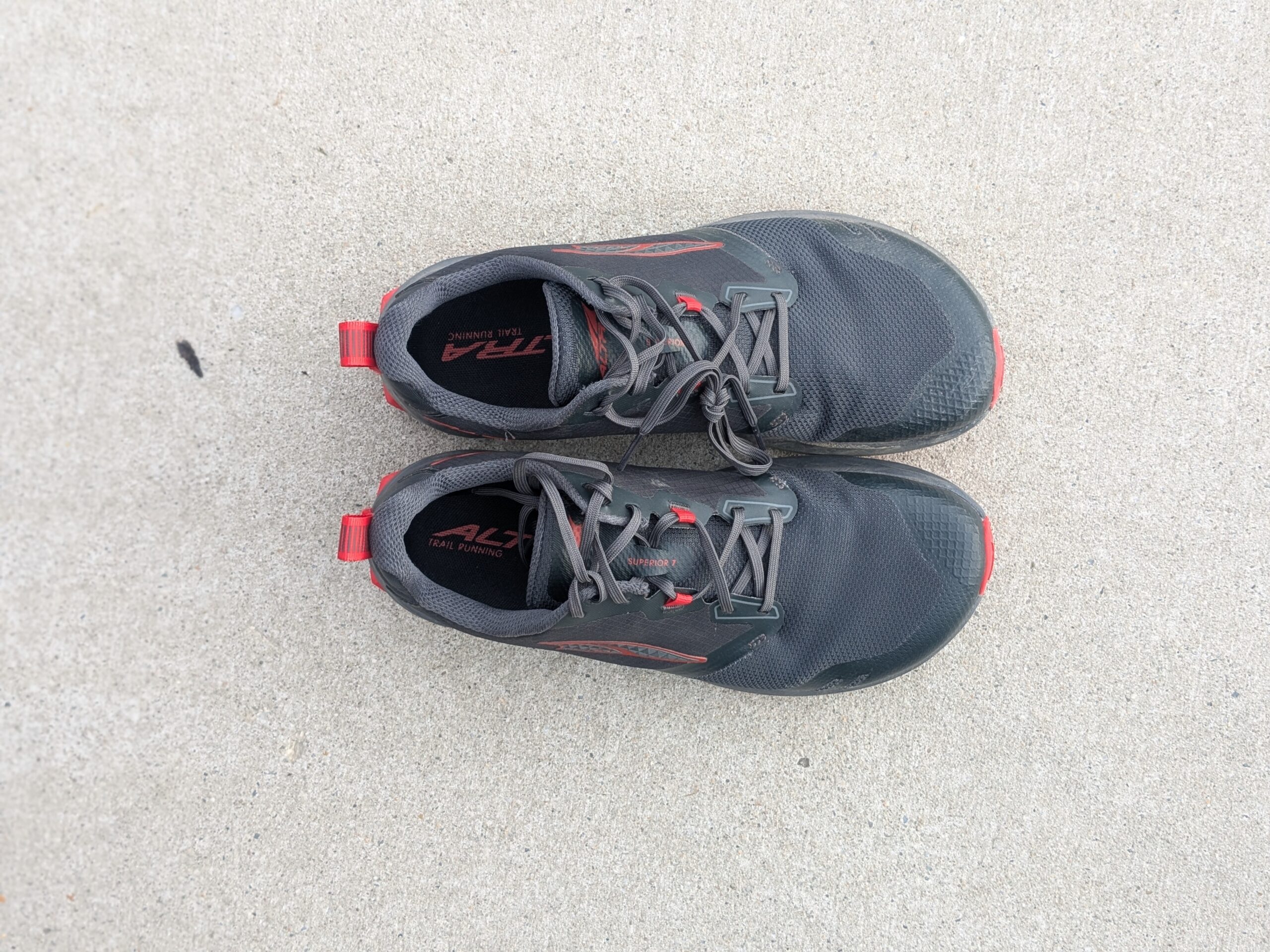
The main change in design is the tongue. Moving away from the burrito tongue, it’s now a semi-gusseted, traditional tongue that allows for more volume expansion in the upper, making the shoe and fit more accessible for everyone. This is a huge improvement over previous versions where fit was always an issue for me.
Size-wise, the length is true-to-size. But do beware of the shallow fit of the Superior. My top tip is to swap the Altra insole out for something thinner if you find the shoe is too shallow initially, as they tend to run very thick. That makes it feel like a completely different shoe.
Midfoot fit is narrow (in barefoot terms), but the upper is flexible enough to accommodate some expansion. It’s not a tight clamp, which is nice. The Superior is no different from other Altras, which I consider to have narrow midfoots.
Feel: Light, Flexible, Barefoot to the Core
This shoe is designed for optimal ground feel and flexibility. It’s genuinely among the most flexible of all Altra trail shoes I’ve tested. The midsole feels softer and more compliant, almost like standing on a thin layer of foam rather than a hard platform. It’s great to feel the rocks underfoot, but not damage your feet at the same time.
There’s no rock plate or anything to block sensation. That’s a game-changer for those who want a true barefoot feel and are willing to accept the tradeoff of less protection.
The outsole, with its MaxTrack rubber, has been revised and is the standout feature of the Superior 7. It feels more tacky—definitely an improvement in grip—and the lug pattern is more trail-oriented than older versions. It’s not designed for deep mud, but it handles dry rocks, shale rubble, and loose dirt with confidence.
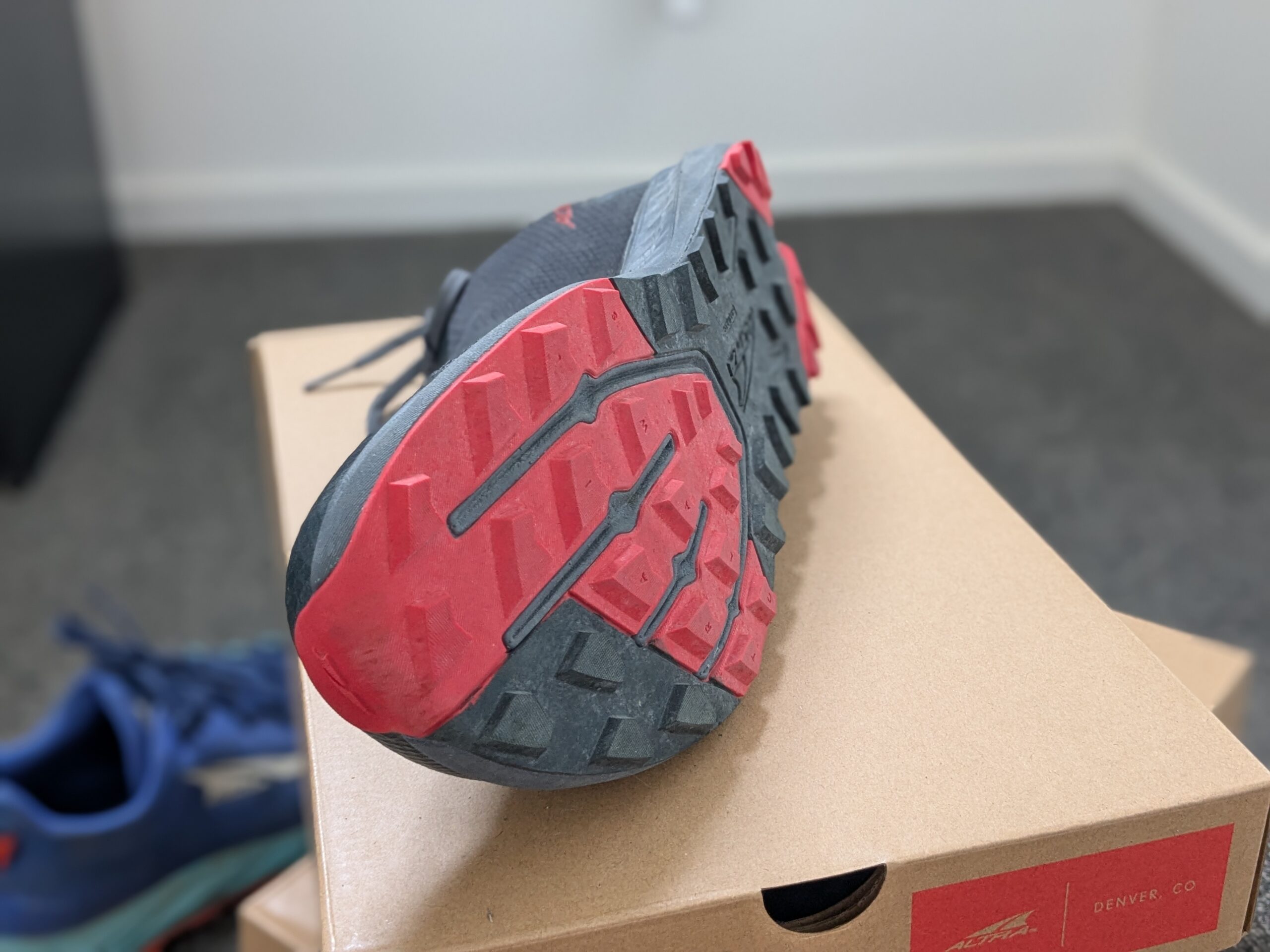
On dry terrain, the grip was excellent. I could run confidently over uneven surfaces and even dry grass, with a sense that I barely had a shoe on my foot. I’ve tested it in wet conditions now, and the improved tread pattern provides decent grip in damp scenarios—something previous Superiors really struggled with.
Performance: Race Day Ready
I’ve raced in the Superior 7, and it delivers. The lightweight design (230g) combined with the flexible midsole makes for a responsive, agile trail shoe that feels fast. You get enough cushion to protect your feet on longer efforts, but enough ground feel to make precise foot placements on technical terrain.
One tradeoff compared to the secure fit of the Superior 6 I’ve noticed is on technical descents. The updated upper—while more comfortable and flexible—just isn’t as secure as the Superior 6. The more forgiving material makes the fit more accessible to a range of foot shapes, but it also sacrifices some of that locked-in feeling during fast, steep descents. Not a deal-breaker, but something to be aware of if you’re planning to use this shoe for more aggressive terrain.
Durability: A Mixed Bag
Durability could be a problem with the Superior 7, a common issue with Altra. The toe cap is now made from a more flexible material, less reinforced and rigid than old versions, which may make it more prone to wear over time. The midfoot upper is also a thinner, more flexible fabric—sure, it’s lighter, but it probably won’t last as long if you’re pounding on tougher terrain repeatedly.
That said, the outsole remains pretty solid. It’s a full rubber unit, with a large surface area that should give decent longevity on gravel and hard-packed trails. I wouldn’t expect it to last forever, but it’s suitable for the kind of minimal, gravel-friendly trail running the shoe is aimed at.
The midsole, made of EVA foam, is likely to flatten faster than those from other manufacturers. That’s typical of Altra shoes, but it’s not a big deal in this case because the stack height is so low. It remains adequately protective for quick, responsive trail runs, and hey… it just gets more minimal over time.
Get the Superior 7 if:
- You have shallow feet or lower volume foot shape
- You want minimal feel with some protective cushioning
- You primarily run dry trails and gravel
- You’re looking for a race-day option under $120
- You love that classic Altra fit with improved flexibility
Skip this shoe if:
- You have very deep or high-volume feet
- You need aggressive traction for muddy, technical terrain
- You want maximum durability for high-mileage training
- You prefer a more locked-down, secure fit on descents
Find it on Amazon or direct from Altra Running.
Bahé Revive Adapt – Road-to-Trail Versatility
The Bahé Revive Adapt is a newer entry to the barefoot trail scene that bridges the gap between road and trail running.
Fit: Average for Most Feet
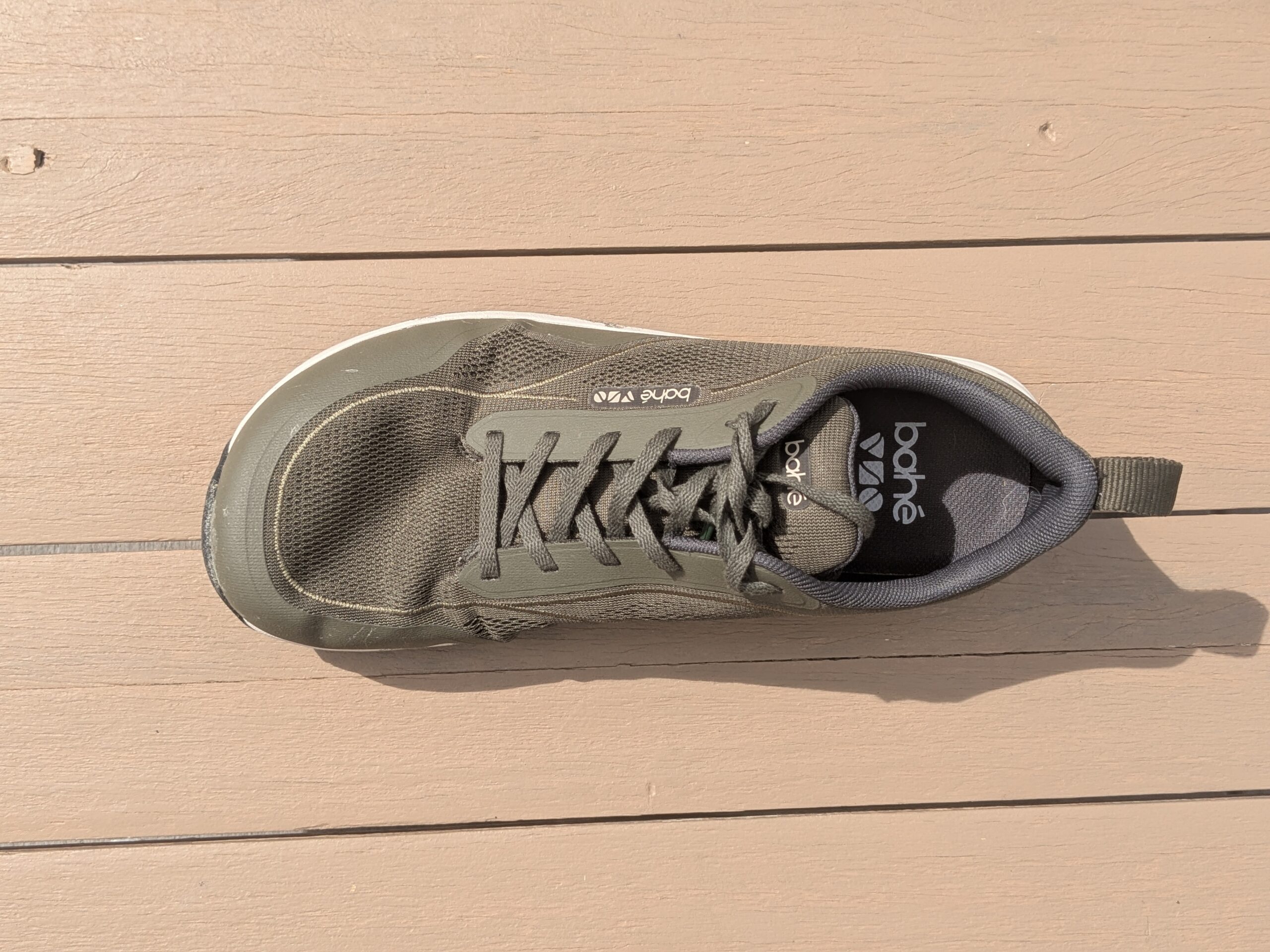
The Revive Adapt fits more like a traditional running shoe in terms of width and volume—not as wide as Freet or as narrow as Vivobarefoot. This makes it accessible to runners transitioning from conventional shoes.
The fit is secure without being constrictive, and the upper materials are breathable enough for warmer conditions while still providing some protection from trail debris.
Feel: Versatile Ground Connection
With a moderate stack height around 15mm, the Revive Adapt offers more cushion than the truly minimal options but significantly less than traditional trail shoes. You still get good ground feel, but with enough protection for varied terrain.
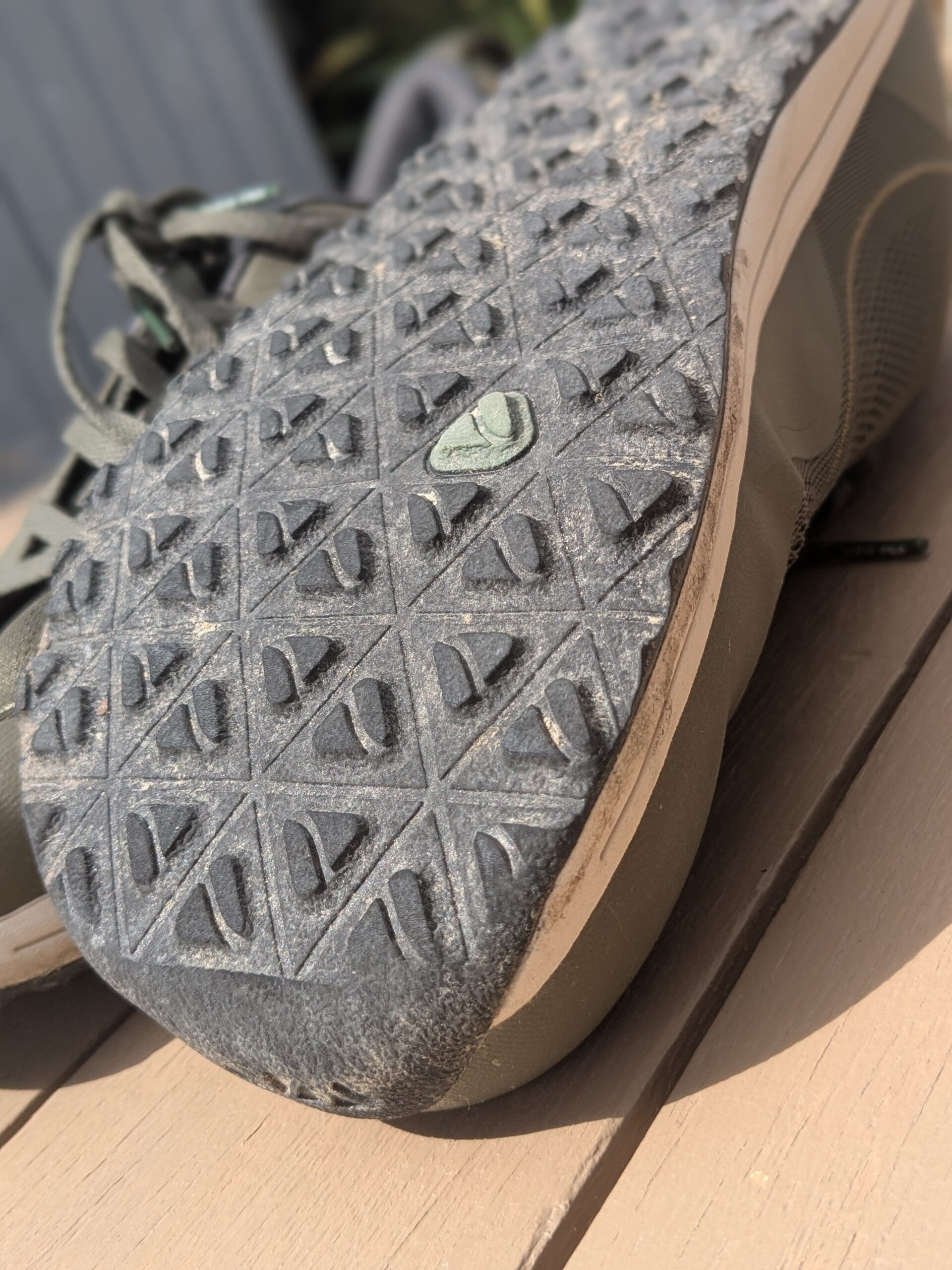
The outsole works well on both pavement and moderate trails, making this a great option if you do mixed-surface runs or need one shoe for both road and trail.
Get the Bahé Revive Adapt if:
- You want one shoe for both road and trail
- You have average-width feet
- You’re transitioning from traditional shoes
- You want moderate cushion with barefoot principles
- You run mixed-surface routes regularly
Skip this shoe if:
- You want maximum ground feel
- You need aggressive traction for technical terrain
- You have very wide or very narrow feet
- You’re looking for a pure trail specialist
Get them direct from Bahé — use code BRR10 for 10% off.
For Wide and High-Volume Feet
These shoes provide generous room for toe splay and thick or high-volume feet.
Freet Feldom 2 – The Wide-Footed Trail Runner’s Best Friend
If you have wide feet with significant toe splay, the Freet Feldom 2 might be the answer to your prayers. This is the widest barefoot trail shoe I’ve tested, and it’s built for runners who need real volume.
Fit: Wide, Deep, and Accommodating
The Feldom 2 is genuinely wide—not just “wide for a barefoot shoe” but actually wide. The toe box doesn’t taper at all along the little toe side, giving your toes complete freedom to spread naturally.
The depth is also generous, making this a great option for runners with high-volume feet or those who need thicker socks in cold conditions.
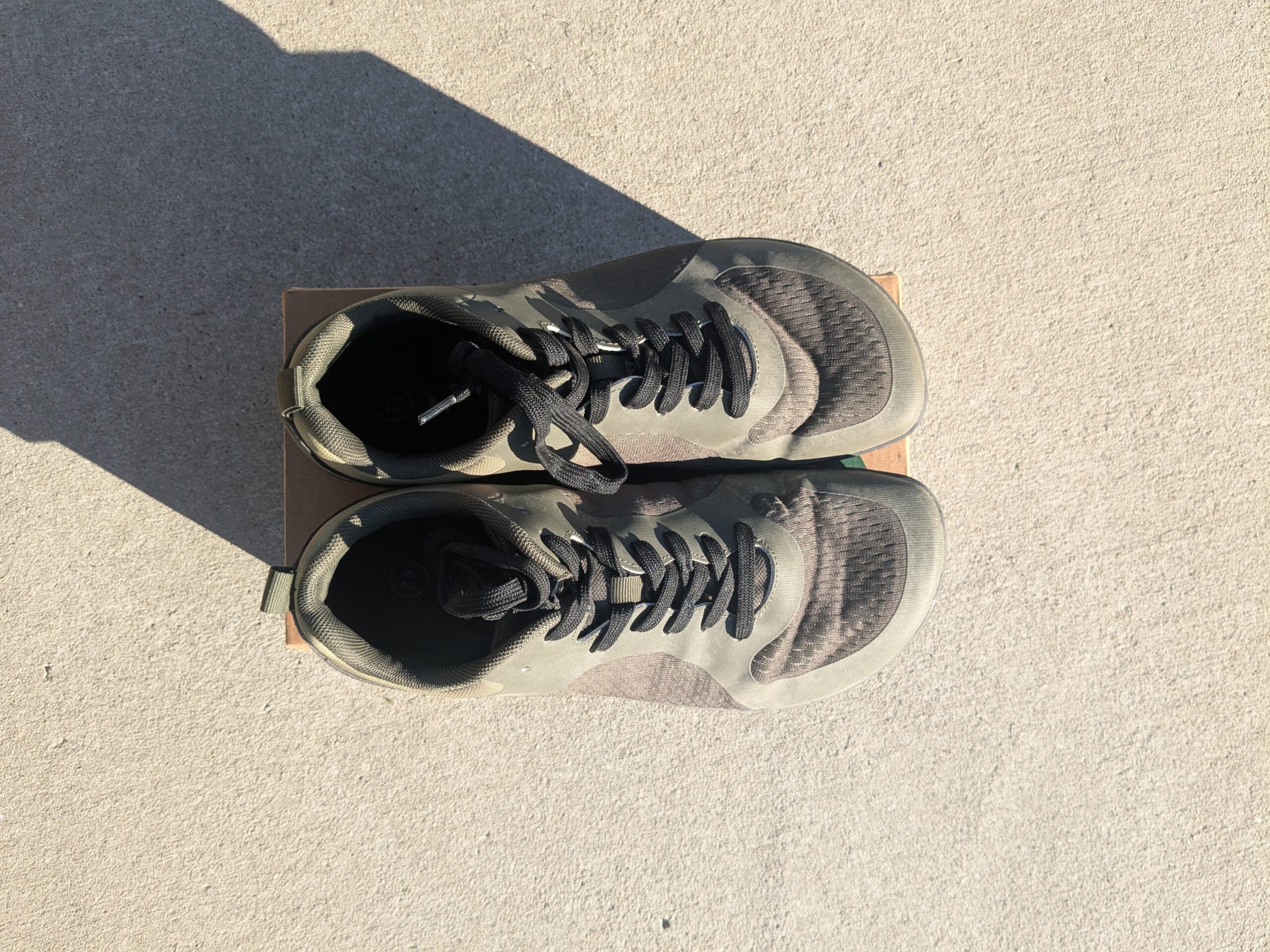
The midfoot is more accommodating than narrow European brands, and the heel cup is secure without being tight. This is a shoe that works for thick, robust feet that don’t fit well in sleeker designs.
Feel: Protected Ground Connection
At 10.5mm stack height, the Feldom 2 sits in the middle ground between truly minimal and cushioned. You get decent ground feel, but with enough protection for longer trail runs and rocky terrain.
The midsole is firm enough to provide some rock protection without completely blocking sensation. You’ll feel the trail, but it won’t beat up your feet on technical sections.
Traction: Mud Monster
The standout feature of the Feldom 2 is its aggressive traction. The lug pattern and rubber compound provide exceptional grip in muddy, slippery conditions. If you run wet trails or encounter a lot of mud, this shoe performs better than most of the competition.
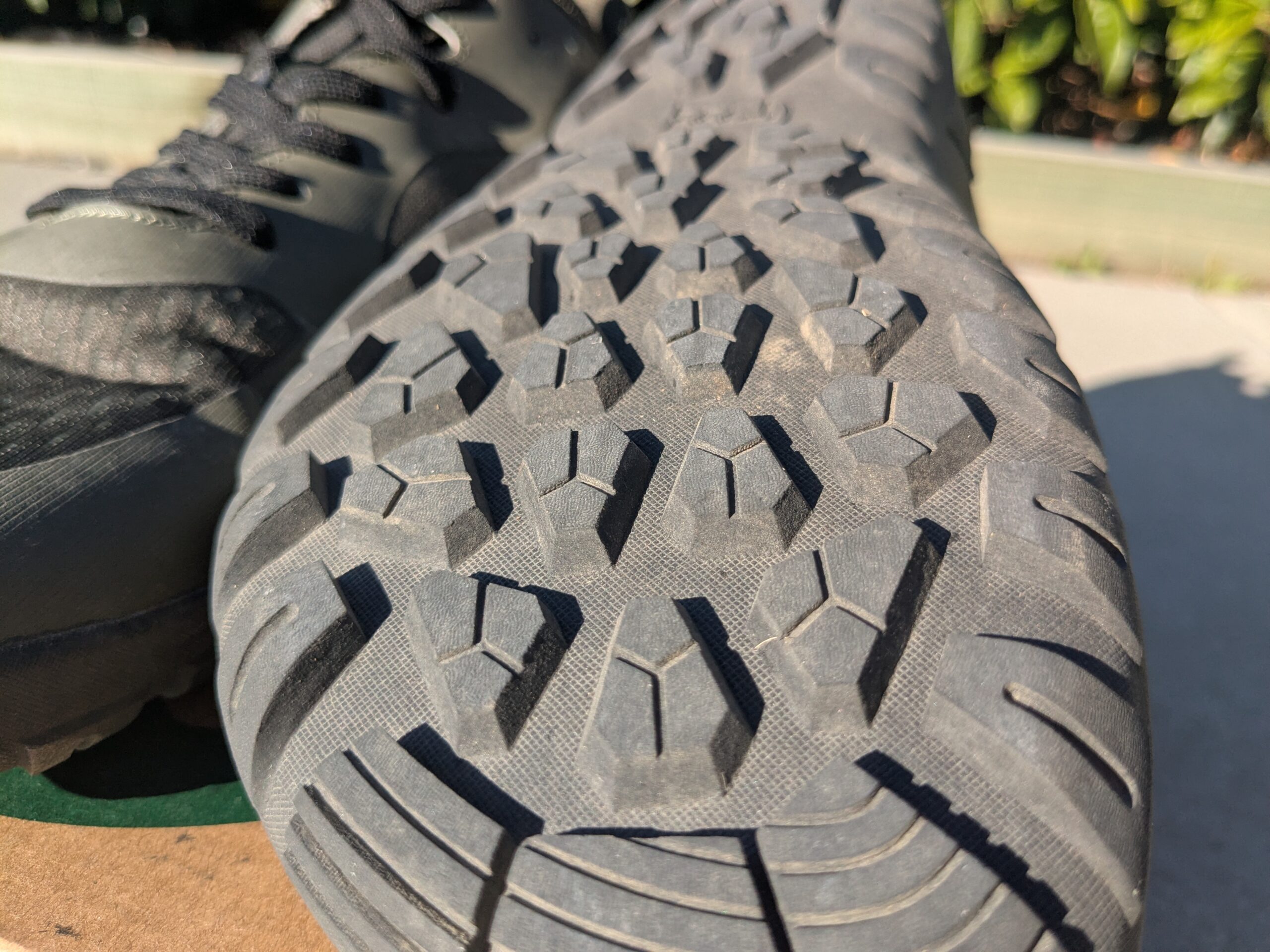
The 4.5mm lugs are deep enough to bite into soft ground and shed mud reasonably well. On dry trails, the traction is perhaps more aggressive than necessary, but it certainly doesn’t hurt.
Durability: Built to Last
Freet shoes are known for durability, and the Feldom 2 lives up to that reputation. The upper materials are robust, the toe cap is well-reinforced, and the outsole rubber is long-lasting.
At $110 (or $99 with the BRR10 code), this represents excellent value for a shoe that will go the distance.
Get the Freet Feldom 2 if:
- You have wide feet with significant toe splay
- You need high volume for thick or high-instep feet
- You frequently run muddy trails
- You want durable construction
- You’re looking for great value under $110
Skip this shoe if:
- You have narrow or low-volume feet
- You want the lightest possible shoe
- You prioritize maximum ground feel
- You only run dry, groomed trails
Get them direct from Freet — use code BRR10 for 10% off.
For Specific Conditions and Use Cases
Xero Shoes Scrambler Low – Best for Muddy Conditions
The Scrambler Low is Xero’s answer to technical, muddy trail conditions. It sits somewhere between a traditional trail shoe and a barefoot option.
Why It Excels in Mud
The Scrambler Low features deeper, more aggressive lugs than the Mesa Trail II, with a lug pattern specifically designed to shed mud and provide grip on slippery surfaces.
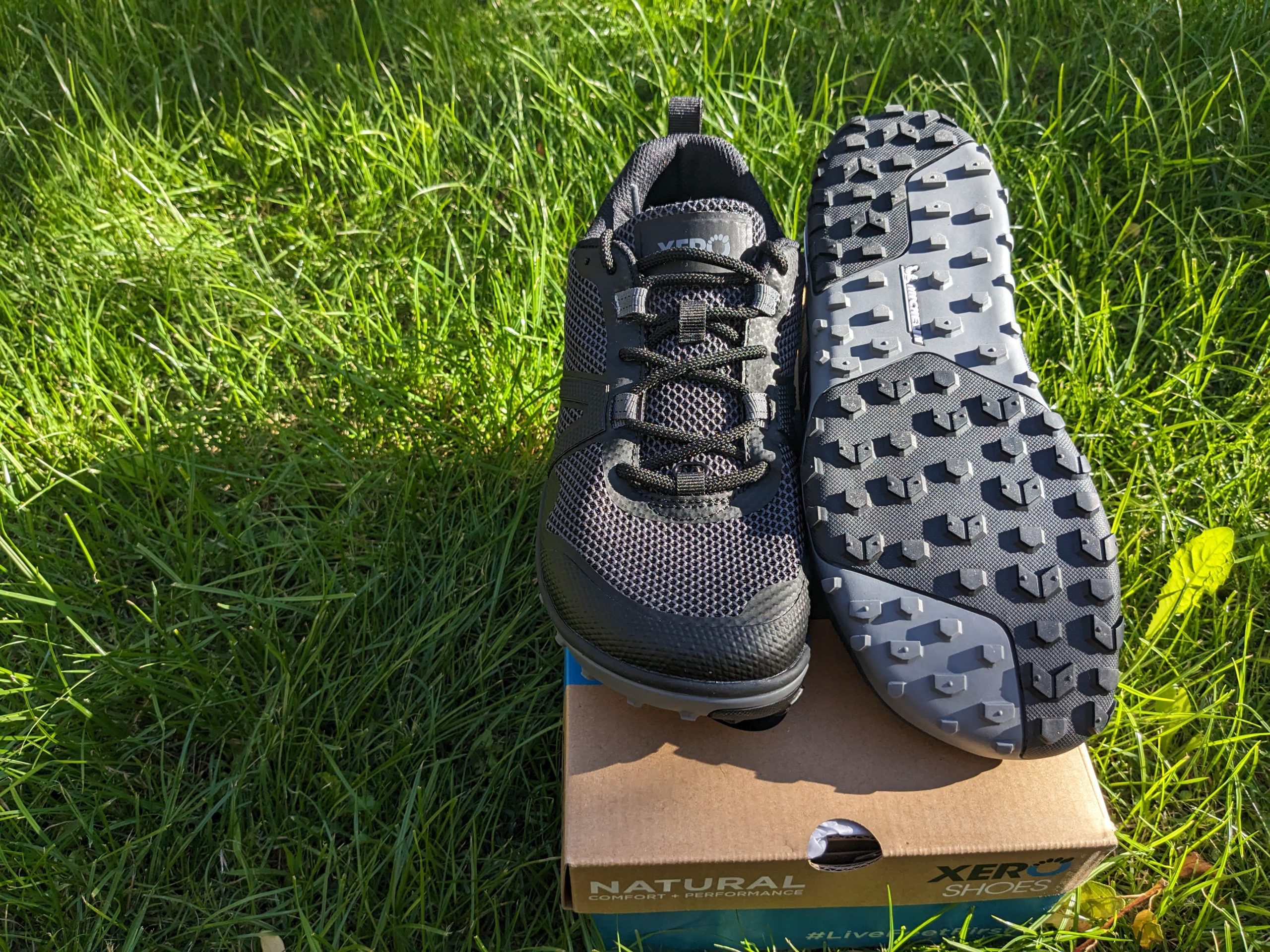
The upper is more protective than the Mesa Trail, with additional reinforcement around the toe and midfoot. This makes it better suited for overgrown trails, rocky scrambles, and conditions where you need more protection.
Fit: Comfortable and Protective
The fit is more accommodating than the Mesa Trail II, with a slightly roomier toe box and more generous midfoot volume. The upper materials are thicker and more protective, which adds a bit of weight but provides better protection from trail hazards.
The ankle collar is well-padded and secure, keeping debris out better than lower-cut options.
Get the Scrambler Low if:
- You frequently run muddy, slippery trails
- You need more protection than the Mesa Trail II
- You tackle overgrown or rocky scrambling terrain
- You want the Xero fit with more aggressive features
Skip this shoe if:
- You prioritize lightweight minimalism
- You mainly run dry, groomed trails
- You want maximum ground feel
- You’re on a tight budget (the Mesa Trail II offers better value for most runners)
Find them on Amazon or direct from Xero Shoes.
—
For Maximum Freedom
Earth Runners Circadian – When Sandals Make Sense
Sometimes the best trail shoe is no shoe at all—or at least, as close as you can get while still protecting your feet from sharp objects.
Why Sandals on Trails?
The Earth Runners Circadian represents the ultimate in barefoot freedom. With just a Vibram sole and a well-designed strap system, you get:
- Complete freedom of movement
- Natural toe splay without any upper restrictions
- Excellent breathability and drainage
- Improved gait and biomechanics
- Grounding connection (conductive laces optional)
When Sandals Work
Trail sandals are not for everyone or every condition, but they excel in:
- Warm, dry climates
- Water crossings and stream running
- Training runs where you want maximum foot freedom
- Recovery runs between harder efforts
- Building foot strength and improving gait
The Learning Curve
Running in sandals requires adaptation. Your feet need to be conditioned, your strap adjustment dialed in, and your expectations realistic. Start with short runs on familiar terrain before tackling technical trails.
Get Earth Runners Circadian if:
- You want maximum barefoot freedom
- You run in warm, dry conditions
- You’re interested in grounding/earthing
- You want versatile sandals for running and everyday wear
- You’re willing to adapt your technique
Skip this shoe if:
- You run in cold or wet conditions regularly
- You need protection from overgrown trails
- You’re not yet conditioned to barefoot running
- You prefer the security of an enclosed shoe
Check Amazon for current pricing.
Final Thoughts: Choose the Right Shoe for Your Feet
After testing dozens of barefoot and minimalist trail shoes, I’ve learned that there’s no single “best” option—only the best option for your specific feet and running style.
If you have narrow, low-volume feet: Start with the Vivobarefoot Primus Trail Flow or Primus Trail FG. The European fit will work better for your foot shape than wider American brands.
If you have average-width feet: The Xero Mesa Trail II offers the best all-around combination of ground feel, protection, durability, and value. For a bit more cushion, the Altra Superior 7 is hard to beat at $120.
If you have wide, high-volume feet: The Freet Feldom 2 provides the room you need with excellent traction and durability. Don’t even bother trying shoes that won’t accommodate your foot shape.
If you’re new to barefoot running: Start with the Altra Superior 7 or Bahé Revive Adapt. The moderate cushion will protect your feet while you build strength and conditioning. Avoid the ultra-minimal options until your feet are ready.
If you’re a conditioned barefoot runner: Go for maximum ground feel with the Vivobarefoot Primus Trail Flow or Xero Mesa Trail II. Your feet can handle the minimal protection, and you’ll appreciate the enhanced proprioception.
If you run rocky or high-alpine terrain: The Lono Barefoot Verve offers a combination of protection, ground feel, and heel lockdown that nothing else in this guide matches. It’s purpose-built for technical rocky trails.
If you run muddy trails: The Freet Feldom 2 or Xero Scrambler Low will serve you better than options designed for dry conditions.
Your Next Steps
The best way to find your perfect barefoot trail shoe is to:
- Know your foot shape – Are you narrow, average, or wide? Shallow or deep?
- Assess your conditioning – How adapted are your feet to minimal footwear?
- Consider your terrain – Dry trails, muddy conditions, technical rock, or mixed surfaces?
- Set your priorities – Ground feel, protection, durability, or weight?
Most importantly, remember that transitioning to barefoot trail running takes time. Even the best shoe won’t prevent injury if you ramp up too quickly. Start with shorter runs, focus on form, and let your feet gradually adapt to the increased demands.
Your feet are capable of amazing things when given the freedom to function naturally. The right barefoot trail shoe simply protects them while they do what they evolved to do.
Where to Buy
Vivobarefoot Primus Trail Flow
Lono Barefoot Verve
Direct from Lono Barefoot
Shop NowUse code BRR10 at checkout
Vivobarefoot Primus Trail FG
Bahé Revive Adapt
Freet Feldom 2
Earth Runners Circadian
We earn a small commission from qualifying purchases at no extra cost to you. This helps support our independent testing.